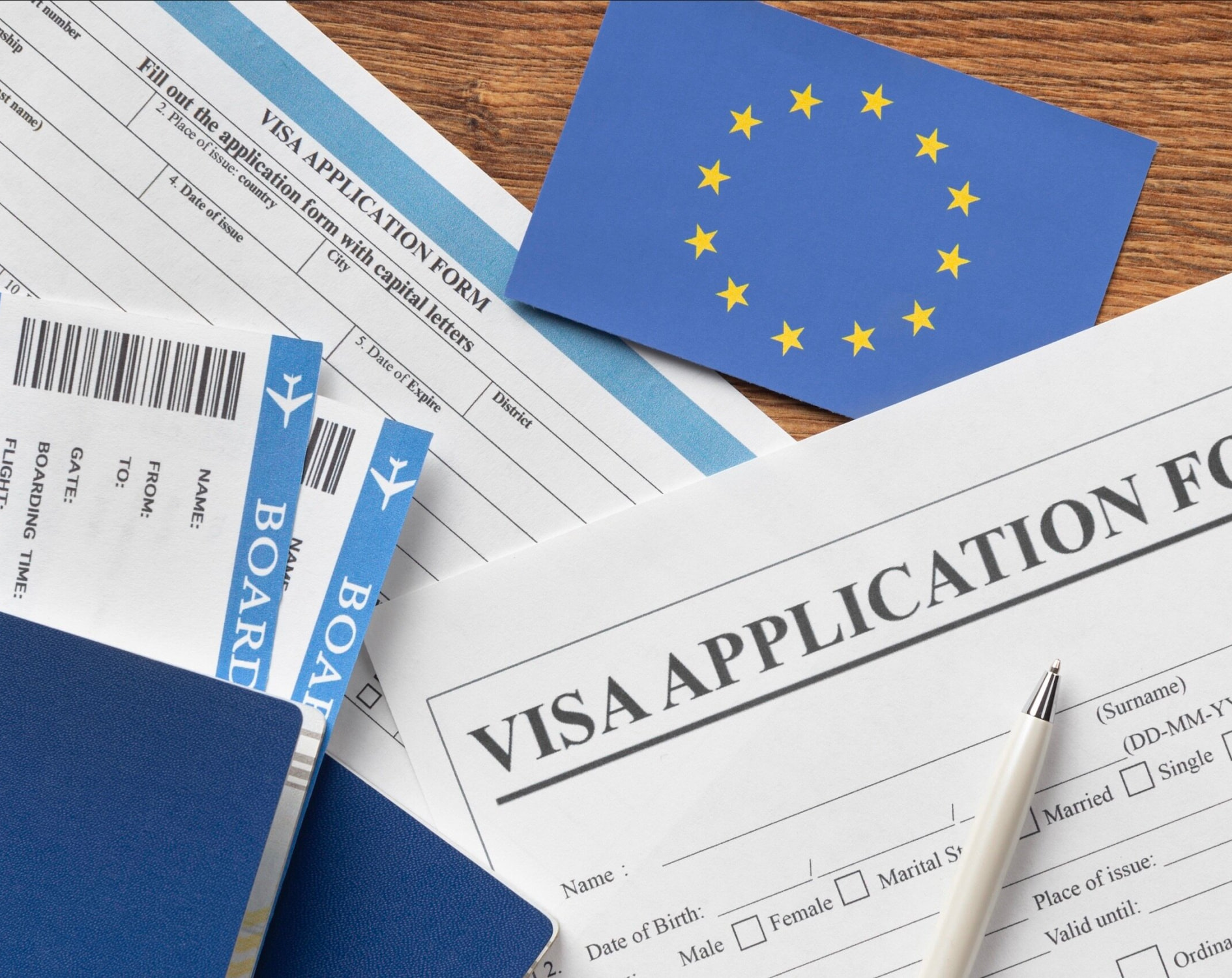
Iranian citizens need a Schengen visa for any short stay in Europe, and a UAE residence visa does not change that requirement. This guide to the Schengen visa for Iranian citizens is written for UAE residents: it explains how to apply for a Schengen visa from Dubai or Abu Dhabi, what the €90 fee covers, which documents to prepare and how long processing takes.
Quick Summary
Iranian citizens resident in the UAE need a Schengen Type C visa, pay a €90 fee, and should allow 15 to 45 calendar days for a decision. A valid UAE residence visa and Emirates ID let you apply from Dubai or Abu Dhabi rather than Iran. Apply six to eight weeks before travel.
| Question | Answer |
| Do Iranian citizens need a Schengen visa? | Yes. Iran is listed in Annex I of Regulation (EU) 2018/1806, so a Schengen short-stay Type C visa is required for tourism, business and family visits. |
| What visa type is issued? | A Schengen Type C visa permits stays of up to 90 days in any 180-day period across the Schengen Area. |
| What is the fee? | The adult fee is €90. Children aged 6 to 11 pay €45, children under 6 are exempt. |
| How long does processing take? | A decision takes 15 calendar days from the date the consulate receives an admissible application, extendable to 45 calendar days where further checks are needed. |
| Where do you apply? | At the consulate of the Schengen state of your main destination — the country where you will spend the most nights. Where nights are equal, apply to the state of first entry. |
| When should you apply? | No earlier than 6 months before travel and no later than 15 calendar days before departure. Applying 6 to 8 weeks ahead is advisable. |
| What passport validity is required? | Your passport must have been issued within the last 10 years, be valid at least 3 months beyond your intended departure from the Schengen Area, and contain at least 2 blank pages. |
Do Iranian citizens need a Schengen visa?
Iranian citizens need a Schengen visa for any short stay in the Schengen Area. Iran appears on Annex I of Regulation (EU) 2018/1806, the list of nationalities subject to the visa requirement, and this applies equally to tourism, business travel and family visits.
The visa issued is a Schengen Type C short-stay visa. It permits a maximum stay of 90 days in any 180-day period across all Schengen states combined. The 90/180 rule is calculated on a rolling basis, so every day spent inside the Schengen Area in the preceding 180 days counts toward the limit.
A UAE residence visa does not exempt an Iranian passport holder from this requirement. Residence changes where you apply, not whether you need a visa.
| Schengen visa | ETIAS | |
| Who it is for | Nationals of Annex I countries, including Iran | Nationals of visa-exempt countries only |
| What it is | A visa authorising entry and short stay | A travel authorisation linked to a visa-exempt passport |
| Fee | €90 per adult applicant | €20 |
| Biometrics | Fingerprints and facial image collected at the application centre | Not applicable |
| Does it apply to you? | Yes — an Iranian passport holder requires a Schengen visa | No — ETIAS never replaces a Schengen visa |
What your UAE residence changes — and what it does not
Your nationality determines whether you need a Schengen visa. Your UAE residence determines where you can apply for it. An Iranian passport holder holding a valid UAE residence visa applies in the UAE, at the consulate or visa application centre responsible for Dubai or Abu Dhabi, rather than in Iran.
A stable UAE profile strengthens the application. A long-term employment contract or trade licence, a regular salary, a tenancy contract and a consistent UAE bank history all provide evidence of ties to the country of residence, which consulates weigh when assessing whether an applicant will return.
Residence does not reduce the fee, shorten the statutory processing window or remove the requirement to attend in person for biometrics where fingerprints have not been enrolled previously.
Not sure which country to apply to?
Contact our team
Which Schengen country should you apply to?
You must apply to the Schengen state that is your main destination — the country where you will spend the most nights. If your itinerary gives equal nights to two or more states, you apply to the state of first entry into the Schengen Area. Applying to the wrong consulate is a ground for refusal, not a procedural formality.
Applying for a multi-country trip
Consider a ten-night itinerary: four nights in France, four nights in Italy and two nights in Spain, entering through Paris. France and Italy are tied on nights, so the main destination rule falls to the state of first entry — France. The application goes to the French consulate. If the itinerary were five nights in Italy, three in France and two in Spain, Italy would be the main destination and the Italian consulate the correct one.
Documents for a Schengen visa for UAE residents
The core document set for a Schengen visa for UAE residents is straightforward, but every item must be current and consistent.
- Passport. Issued within the last 10 years, valid at least 3 months beyond your intended departure from the Schengen Area, with at least 2 blank pages.
- UAE residence visa and Emirates ID. Both must be valid. Most consulates ask for residence validity of at least 3 months beyond your return date.
- Completed application form. Signed and dated, with all fields completed accurately.
- Photograph. Recent, in the format specified by the consulate.
- Travel medical insurance. Cover of at least €30,000, valid across all Schengen states for the full duration of the trip.
- Flight and accommodation reservations. Round-trip flight reservations and hotel bookings, or an invitation letter when staying with a host.
- Bank statements. Typically the last 6 months of UAE bank statements showing regular activity and sufficient balance.
- Employment or business evidence. A salary certificate and employment letter, or a trade licence for business owners.
Documents Iranian applicants are commonly asked for on top of the core set
Additional evidence of ties to the UAE rather than to Iran is frequently requested. A tenancy contract, a salary certificate or trade licence, six months of UAE bank statements and an employer NOC all serve this purpose.
Consistent transliteration of names across the passport, Emirates ID and every supporting document matters. A mismatch between the spelling on a bank statement and the spelling in the passport causes avoidable delays and, in some cases, a request for further documents.
Fee payment and insurance purchase are normally handled through a UAE bank card or account. Confirm the accepted payment method with the visa application centre before the appointment.
Fees and processing times
The Schengen visa fee is €90 per adult applicant. Children aged 6 to 11 pay €45, and children under 6 are exempt. The fee is non-refundable regardless of the outcome.
| Processing stage | Time |
| Appointment wait (peak season) | 1–4 weeks |
| Standard decision | 15 calendar days |
| Extended decision (further checks) | Up to 45 calendar days |
| Total planning window | 6–8 weeks before travel |

Umer, visa expert at The Visa Services:
“The number we give applicants is not fifteen days — it is eight weeks from the day they start assembling documents. The consulate’s fifteen-day clock only begins once an admissible file lands on its desk, and the appointment wait sits in front of that. Iranian applicants who plan around the statutory minimum rather than the realistic total are the ones who end up rebooking flights.”
Our team prepares your full Schengen application in Dubai
Contact our team
How to apply for a Schengen visa from the UAE, step by step
- Choose the consulate. Identify the Schengen state of your main destination using the night-count rule, then confirm which consulate or visa application centre serves your emirate.
- Complete the application form. Fill in every field accurately, matching the spelling in your passport exactly, then sign and date it.
- Book the appointment. Slots are released on a rolling basis. Book as early as possible — appointment wait is 1 to 4 weeks in peak season.
- Gather the core set plus evidence of UAE ties. Check that every document is current, legible and consistent with the passport.
- Attend the appointment in person. Fingerprints and a facial image are collected; previously enrolled biometrics can be reused for 59 months. The decision runs from 15 calendar days after the consulate receives an admissible application, up to 45 where further checks are needed.
- Pay the visa fee and any service charge. The fee is non-refundable regardless of the outcome.
- Track the application. Use the reference number issued at the appointment to track progress.
- Collect the passport with the decision, or arrange courier delivery where offered.
Where to apply in Dubai and Abu Dhabi
Which consulate you attend depends on your main destination and, in some cases, on your emirate of residence. Several Schengen states maintain consulates in Dubai, while others are represented in Abu Dhabi. The visa application centre handles document submission and biometric collection on behalf of the consulate.
Appointment slots in peak season should be booked early. The summer months and the period before major holidays see the longest waits, and a late appointment can push the decision past your intended departure date.
Extra checks Iranian applicants should plan for
Some applications take longer than the standard 15 calendar days, and the extra checks below explain why. Planning for the full 45-day ceiling rather than the 15-day standard is the practical approach.
Prior consultation between member states under the Visa Code can extend the decision window toward 45 calendar days even when the file is complete. First-time applicants with no prior Schengen travel record may take longer to verify. Payment and insurance logistics from a UAE bank account should be confirmed in advance.
| Airport transit visa | Short-stay visa | |
| Purpose | Passing through the international transit zone of a Schengen airport | Entering and staying in the Schengen Area |
| Stay permitted | None — you remain in the transit zone | Up to 90 days in any 180-day period |
| When required | For certain nationalities connecting through a Schengen airport to a non-Schengen destination | For any short stay in the Schengen Area |
| Exemptions | Certain visa and residence permit holders may be exempt | Not applicable |
An airport transit visa may be required when connecting through a Schengen airport to a non-Schengen destination without entering the Schengen Area. Iranian passport holders need an airport transit visa (Type A) to change planes in the international zone of a Schengen airport.
EES, ETIAS and what changed in 2026
The EU Entry/Exit System has been fully operational since 10 April 2026. Passport stamping has been replaced by a biometric record taken at the border, and overstays are logged automatically.
ETIAS is not in operation at the time of writing and is expected in late 2026, subject to further delay. ETIAS applies to visa-exempt nationals only. It does not apply to Iranian passport holders and will never replace a Schengen visa.
Why applications are refused – and how to avoid it
Most refusals trace back to a small number of avoidable issues.
- Wrong consulate. Applying to a state that is not your main destination is a refusal ground. Fix: calculate nights per country before choosing the consulate.
- Thin or inconsistent financial evidence. Statements that do not show regular activity or a sufficient balance weaken the file. Fix: submit six months of UAE bank statements and a salary certificate.
- Insurance below the minimum. Cover under €30,000 does not meet the requirement. Fix: verify the policy covers all Schengen states for the full trip.
- Unclear purpose of travel. Reservations that do not match the stated itinerary raise questions. Fix: align flight, hotel and form details exactly.
- Weak ties to the UAE. A short residence history with little documentation suggests weak ties. Fix: add a tenancy contract, employment letter or trade licence.
- Applying too late. A late appointment can push the decision past departure. Fix: apply 6 to 8 weeks ahead, and earlier in summer.
Why apply for a Schengen visa through The Visa Services?
Applying for a Schengen visa is a standard procedure, but nevertheless it requires very careful preparation. We know the UAE very well. We understand the specifics of submitting documents through local visa centres and what visa officers usually pay attention to when reviewing documents. Our visa experts know how to prepare a convincing application, even if family members have passports from different countries, you need a visa urgently, or you have recently received a refusal.
The Visa Services was named UAE’s Leading Visa Services Agency at the World Travel Awards in 2025 and 2026. We help UAE residents of every nationality prepare visa applications for 40+ countries.
Planning Europe on an Iranian passport?
Contact our team
Do Iranian citizens need a visa for the Schengen Area?
Yes. Iranian citizens need a Schengen Type C short-stay visa for any visit to the Schengen Area, including tourism, business and family visits. Iran is listed in Annex I of Regulation (EU) 2018/1806.
Can Iranian citizens apply for a Schengen visa from Dubai?
Yes. An Iranian passport holder with a valid UAE residence visa can apply from Dubai or Abu Dhabi at the consulate of the main destination. You must hold a valid UAE residence visa and Emirates ID, and most consulates require residence validity of at least 3 months beyond your return date, verify per consulate before travel.
How long does a Schengen visa take for Iranian applicants?
A decision takes 15 calendar days from the date the consulate receives an admissible application. The window can extend to 45 calendar days where further checks, including prior consultation between member states, are required. Apply 6 to 8 weeks before travel.
Do Iranian passport holders need an airport transit visa?
Some nationalities require an airport transit visa to pass through the international transit zone of a Schengen airport, with exemptions for certain visa and residence permit holders. Verify the current list and exemption conditions against the European Commission list before booking.
What documents do Iranian citizens need for a Schengen visa?
The core set is a passport, UAE residence visa and Emirates ID, a completed application form, a photograph, travel medical insurance of at least €30,000, flight and accommodation reservations, six months of UAE bank statements, and employment or business evidence. Evidence of ties to the UAE is commonly requested on top of this.
Which passport should an Iranian dual national travel on?
Where you also hold a visa-exempt passport, the visa requirement may not apply. Check the entry conditions attached to that passport and confirm them with the consulate before booking. This is a point to verify, not advice on which nationality to declare.
Can I apply for a Schengen visa in AbuDhabi on an Iranian passport with a UAE residence visa?
Yes. A valid UAE residence visa and Emirates ID allow you to apply in the UAE rather than in Iran. The application goes to the consulate of the main destination, and biometrics are given in person unless previously enrolled within the last 59 months.
Which Schengen country should I apply to for a multi-country trip?
Apply to the Schengen state where you will spend the most nights. If nights are equal across states, apply to the state of first entry into the Schengen Area. Applying to the wrong consulate is a ground for refusal.
This guide provides general information on Schengen visa applications for Iranian citizens resident in the UAE. It is not legal advice. No agency can guarantee a visa outcome — the consulate of the relevant Schengen state decides on every application, and the visa fee is non-refundable regardless of the result. Fees, processing times and ETIAS/EES status should be verified against official sources before you apply.