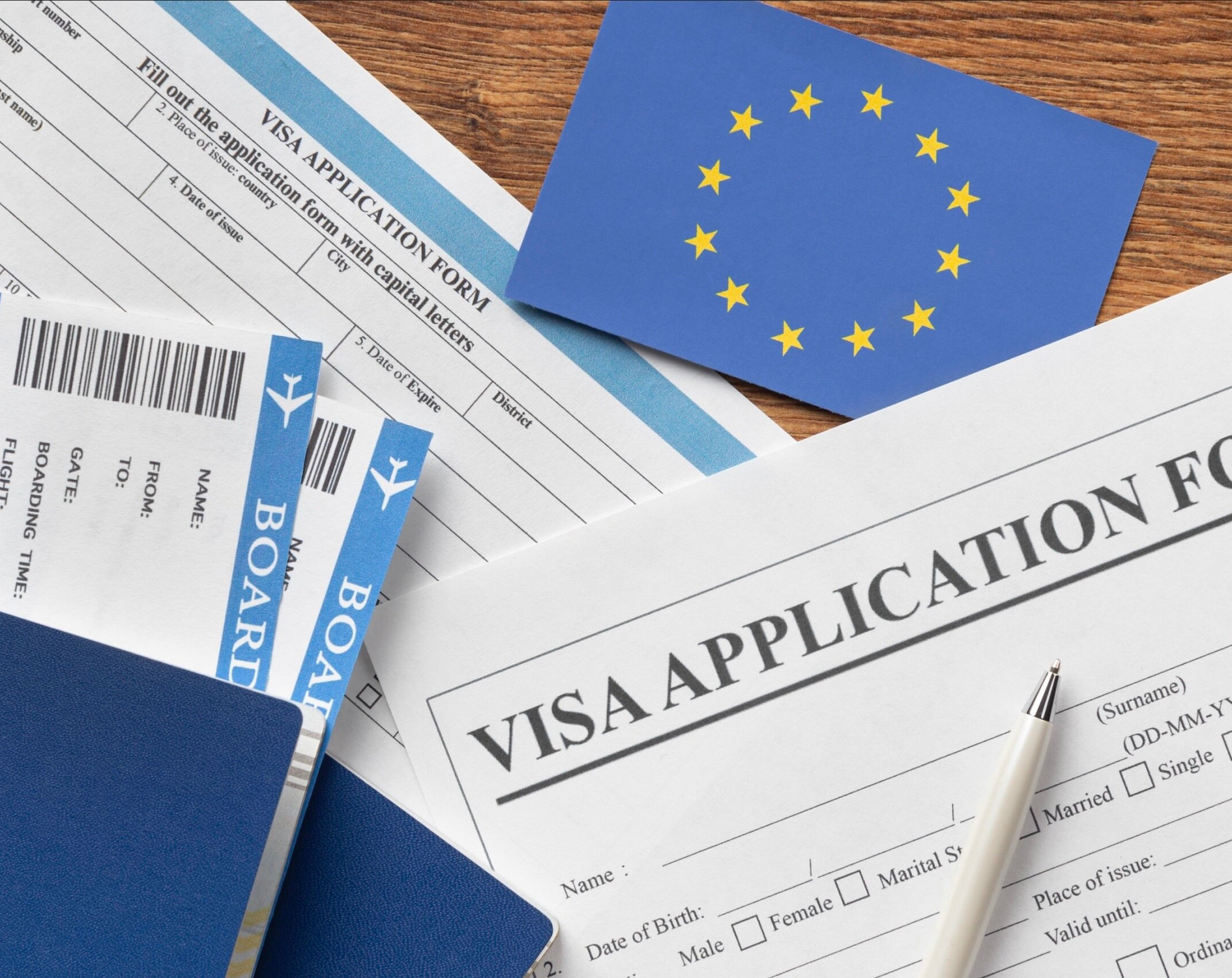

Filipino passport holders living in the UAE need a Schengen Visa for short-term travel to Europe. The upcoming ETIAS system does not apply to Philippine passport holders. For residents of Dubai and Abu Dhabi, the application process is straightforward. This guide covers everything from choosing the right country to submit your application to gathering documents and avoiding common mistakes.
Do Filipinos need a Schengen visa?
Yes, the Philippines is on the list of countries whose citizens must obtain a visa before entering the Schengen Area. If you are planning a short trip for tourism, business meetings, or visiting family, you will need a Schengen Type C visa. This permit allows travel across all 29 European countries that are part of the Schengen Agreement.
ETIAS vs Schengen visa
The European Travel Information and Authorisation System (ETIAS) often causes confusion, but it is only for citizens of countries that can enter the Schengen Area without a visa. Since the Philippines is not on that list, ETIAS is not relevant for Filipino passport holders. You need a Schengen visa – not an ETIAS authorisation.
Which Schengen country should you apply to?
This is a critical decision if you are visiting multiple countries. The main destination rule applies: you must submit your application to the embassy or visa application centre of the country where you will spend the most nights. If you will spend an equal number of days in two or more countries, you should apply to the country of first entry. Choosing the wrong country is one of the most common reasons for visa refusal.
Applying from the UAE as a Filipino citizens
As a legal resident of the UAE (Dubai, Abu Dhabi, or any other emirate), you are entitled to submit your Schengen visa application from the UAE. Your UAE residence visa and Emirates ID must remain valid for at least three months after your planned return date from Europe. The application is processed through the authorised visa application centre in Dubai or Abu Dhabi, where you will also provide your biometric data.
Need fast, professional visa assistance?
Contact our team
How to apply: step by step
The application process involves several stages. Here is a clear step-by-step guide:
Step 1: Complete the application form
Fill out the Schengen visa application form, usually available online through the visa application centre’s website or the consulate’s portal.
Step 2: Book your appointment
Advance booking is mandatory. During peak travel seasons, appointment slots can fill up weeks ahead, so plan early.
Step 3: Prepare and submit your documents
On your appointment day, visit the visa application centre in Dubai or Abu Dhabi with your complete document package.
Step 4: Provide biometrics
At the centre, your fingerprints and photograph will be taken. This procedure is required for adults and children aged 12 and over.
Step 5: Wait for the consulate’s decision
After submission, the consulate reviews your application. The standard processing time is approximately 15 calendar days, but in some cases, it may take up to 45 days.
Aruna, The Visa Services expert:
“If you work as a domestic worker or nanny and are travelling with your sponsoring family, your file looks different from a solo tourist’s. You will usually need a letter from your employer confirming the trip and covering your expenses, alongside their own travel bookings. Travelling with your sponsor is generally a stronger, easier-to-document profile.”
Documents, insurance & funds
To submit a complete application, you will need the following documents:
- Passport – valid for at least three months beyond your planned departure from the Schengen Area, with at least two blank pages.
- UAE residence visa / Emirates ID – valid for at least three months after your return date.
- Travel insurance – medical coverage of at least €30,000, valid throughout the Schengen Area for the entire duration of your stay.
- Bank statements – covering the last 3–6 months, showing sufficient funds to cover your trip.
- Employment proof – a No Objection Certificate (NOC) from your employer stating your position and approved leave.
- Itinerary and accommodation – confirmed flight bookings and hotel reservations (ensure these remain valid during processing).
Need help with the visa assistance?
Contact our team
Fees & processing time in 2026
The consular fee for adults is €90. Children aged 6 to 11 pay a reduced fee of €45, while children under 6 are exempt. Please note that the fee is non-refundable, even if your application is refused. In addition to the consular fee, you will pay a service charge at the visa application centre and the cost of your travel insurance.
| Category | Fee (EUR) | Fee (AED) |
| Adults | €90 | ~AED 360–390 |
| Children 6–11 | €45 | ~AED 180–195 |
| Children under 6 | Free | Free |
Processing usually takes around 15 calendar days, but can extend to 45 days during busy periods. Always verify the current exchange rate and exact fees with official sources before submitting.
The 90/180 rule & multi-country trips
A Schengen Type C visa permits a maximum stay of 90 days within any 180-day period across the entire Schengen Area – not per country. If your visa allows multiple entries, you may leave and re-enter the zone, as long as your total number of days does not exceed the limit. This rule applies regardless of how many countries you visit.
Common mistakes to avoid
Many applicants face refusal due to avoidable errors. Here are the most frequent pitfalls:
- Applying to the wrong country – submitting to a transit country’s consulate instead of the main destination.
- Insufficient funds – bank statements that do not convincingly show you can finance your trip.
- Late submission during peak seasons – summer and holiday periods increase processing times; apply 4–6 weeks in advance.
- Outdated or non-compliant photos – photographs that do not meet the official specifications.
- Weak or missing supporting documents – such as unclear itineraries or unconfirmed accommodation bookings.
Going to Europe? Apply for your Schengen with us
Applying for a Schengen visa is a standard procedure, yet it requires very careful preparation. We know the UAE well. We understand the specifics of submitting documents through local visa application centres and what visa officers usually pay attention to when reviewing applications. We also know how to prepare a convincing cover letter.
Case story: The Visa Services

John and Mia (names changed) – a Filipino couple residing in Dubai. John is an engineer with a stable salary, and Mia works shifts at a store. They dreamed of visiting Europe together and had been saving up as a couple.
But Mia received a refusal from the Schengen consulate. The stated reason: “Insufficient proof of financial means and lack of guarantees of return to the UAE.” Since the trip had already been planned and time was running out, Mia and John reached out to us for a consultation.
Our experts immediately spotted the classic “red flags.”
Mia had received a large transfer from John to her account just a couple of days before submitting the application, and the consul treated it as “borrowed funds.” The bank statement showed no pattern of savings accumulation.
Mia submitted a standard letter from her employer that simply stated she was employed. It did not include the exact dates of approved leave (she had requested a generic letter, not an NOC).
We didn’t file an appeal. Instead, we prepared a fresh application, recompiling the documents from scratch.
Step 1. We gathered a six‑month bank statement that clearly showed how John’s salary is deposited into the account, with a portion allocated to combined family income.
Step 2. NOC from the boss. We asked Mia to contact her employer and prepared a template letter, strictly on company letterhead, stating: “Mia works under Contract No. …, in the position of [position], her salary is X, her annual paid leave is approved from [date] to [date], and she is required to return to work on [date].” This sent a clear signal to the consulate that her employer needs her back and that she is certain to return.
Two weeks after the re‑submission, Mia received her Schengen visa. The trip took place, and we are delighted that our clients fulfilled their dream.
Have you been refused a visa?
Contact our team
This article is for informational purposes only and does not constitute legal or immigration advice. The final decision on any visa application rests solely with the consulate or embassy. Fees, exchange rates, and processing times are subject to change; always verify current details with official sources before submitting your application.
Do Filipinos need a Schengen visa?
Filipino citizens need a Schengen visa. ETIAS is not relevant for Philippine passport holders, as it is intended for visa-free nationals only.
How much does a Schengen visa cost in 2026?
The adult fee is €90, children aged 6–11 pay €45, and children under 6 are exempt.
Can a Filipino apply for a Schengen visa from the UAE?
Yes, legal UAE residents can apply through the authorised visa application centre in Dubai or Abu Dhabi.
Which country should I apply to for a Schengen visa?
Apply to the country where you will spend the most nights (main destination). If equal, apply to your first point of entry.
How long does a Schengen visa take from the UAE?
The standard processing time is approximately 15 calendar days, though it may extend to 45 days in certain cases.