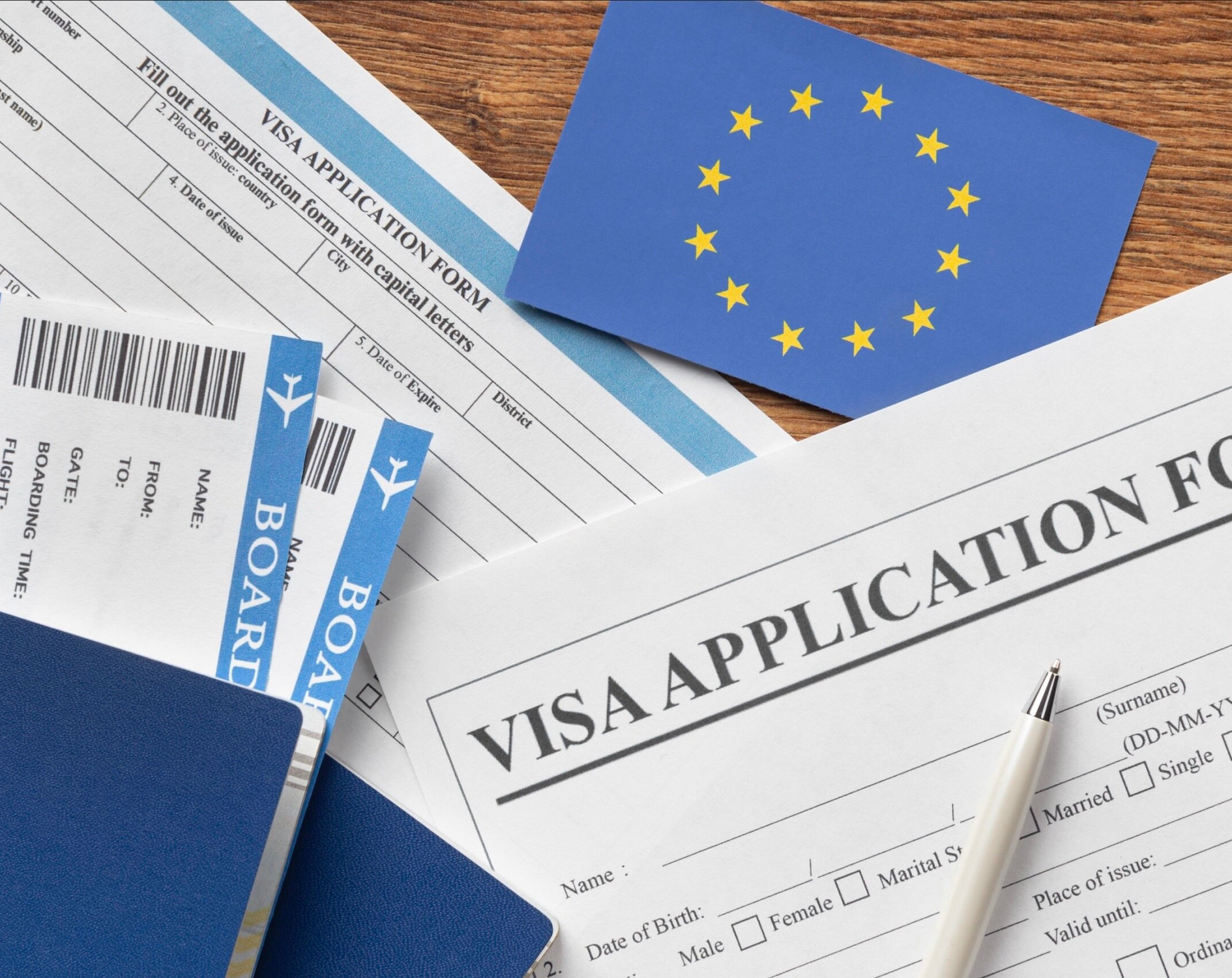

Yes — but she needs her own Schengen visa from Dubai. There is no such thing as a “companion visa” or including a domestic worker in the employer’s visa application. Every traveller, including household staff, must have their own entry document. This article explains how to properly apply for a nanny Schengen visa from Dubai, what documents are required, how much it costs, and how to strengthen the application to avoid refusal.
Which visa does a nanny need?
A nanny requires a Schengen Type C visa for short stays. This visa permits stays of up to 90 days within any 180-day period across all 29 Schengen countries. While there is no dedicated “nanny visa” category, some consulates offer a specific purpose of travel labelled “accompanying employer” or “domestic staff.” You should check the website of the embassy of your main destination country to confirm whether this category exists and what additional requirements may apply.
The purpose of the trip is either tourism or accompanying the employer during a private visit. The nanny cannot work in the Schengen Area under this visa — she remains employed under her UAE contract.
For families planning to travel with their nanny from Dubai, understanding the correct visa category is the first step toward a successful application. You can start the nanny’s Schengen visa application through our service page.
Who applies and where?
The nanny applies in her own name. She completes the application form herself, signs it herself, and attends the biometrics appointment in person. The employer does not apply “on her behalf” — although the employer provides supporting documents.
The passport remains with the nanny at all times. Retaining a domestic worker’s passport is illegal in the UAE.
Where to apply: The application must be submitted to the consulate of the main destination country — the country where the traveller will spend the most nights. If the number of nights is equal between two or more countries, the application goes to the consulate of the country of first entry.
For example:
A family plans 7 days in France, 5 days in Italy, and 3 days in Switzerland → main destination: France → apply at the French consulate.
A family plans 5 days in Spain and 5 days in Portugal → nights are equal → apply at the consulate of the first country of entry.
The application is submitted in person at the visa application centre in Dubai or Abu Dhabi, where the nanny provides biometric data (fingerprints and photo).
The nanny’s application should be synchronised with the family’s application — same travel dates, same itinerary, same accommodation bookings. Discrepancies between the two applications are one of the most common reasons for refusal.
Need fast, professional visa assistance?
Contact our team
Documents the nanny provides
The nanny must prepare the following documents for her Schengen visa application from Dubai:
Valid passport issued within the last 10 years, valid for at least 3 months after the intended departure date from the Schengen Area, with at least two blank pages for the visa sticker.
Copies of all passport pages including pages with stamps and previous visas.
UAE residence visa valid for at least 3 months after the return date.
Emirates ID — copy of both sides.
Completed visa application form filled online via the visa application centre or consulate website, printed, and signed personally by the nanny.
Passport‑size photograph — 3.5 × 4.5 cm, white background, taken within the last 6 months.
Employment contract — registered domestic worker contract.
Salary certificate and bank statements — from the nanny’s personal bank account for the last 3–6 months, stamped by the bank. Even if the employer covers all costs, this shows the nanny has her own financial resources.
Medical travel insurance — minimum coverage of €30 000, valid for the entire duration of the trip and across all Schengen countries.
Flight and accommodation bookings — return flight itinerary and hotel or rental confirmation.
Copies of previous Schengen visas from the last 3–5 years, if available. This can strengthen the application.
These documents demonstrate the nanny’s personal financial standing and ties to the UAE.
Documents the employer provides
The employer (the family) prepares a separate supporting package. This is critical for a nanny Schengen visa from Dubai because the consulate needs to see that the employer takes full financial responsibility for the trip.
Employer support letter (NOC) written in English and signed by the employer. It must include:
- employer’s full name, passport details, and contact information,
- nanny’s full name, position, and start date of employment,
- purpose of travel — accompanying the family, childcare during the holiday,
- exact travel dates,
- commitment that the nanny will continue employment upon return to the UAE.
Confirmation that the employer covers all costs: flights, accommodation, meals, insurance, and pocket money.
Supporting documents from the employer:
- Copy of the employer’s passport and UAE residence visa.
- Financial documents: bank statements for the last 3–6 months, salary certificate, proof of income.
- Flight and accommodation bookings — identical to the nanny’s documents.
- NOC from the sponsor if the nanny’s UAE residence visa is held under a different sponsor (e.g., an agency).
The employer’s documents must match the nanny’s application exactly — same dates, same itinerary. This synchronisation is essential to show the consulate that the trip is genuine and coordinated.
Fees, biometrics and processing time
Understanding the costs and timeline helps avoid surprises and last‑minute stress.
| Item | Amount (€) | Amount (AED, approx.) |
| Consular fee (adult) | €90 | ~380–390 |
| Service fee (visa application centre) | €30–€50 | ~120–200 |
| Medical insurance (€30,000 coverage) | €15–€60 | ~60–250 |
Important: the consular fee is non‑refundable — even if the application is refused. All amounts are approximate; check current exchange rates and official sources before applying.
Processing time
- Standard: ~15 calendar days
- Complex cases or additional document requests: up to 45 calendar days
- Peak season (summer, Christmas): processing may take longer
Submission window — 6 months before travel. Not later than 15 calendar days before departure.
Our recommendation: apply 4–6 weeks before travel, especially during peak seasons, to allow for delays.
What EES means at the border in 2026
From 10 April 2026, the Entry/Exit System (EES) is fully operational across all 29 Schengen countries. This affects every non‑EU traveller, including visa holders.
Key changes
- Passport stamps are replaced with a digital entry and exit record
- Biometric data (fingerprints and facial photo) is collected at the first entry after 10 April 2026
- The system automatically tracks the 90/180 rule — overstays are detected instantly
For nannies and families, this means
- The visa application process itself does not change
- Border control may take longer, especially in the early months of EES operation
- The nanny must still have a valid Schengen visa and travel insurance
ETIAS is not required for Schengen visa holders. ETIAS is only for nationals of visa‑free countries and is expected to launch no earlier than late 2026. Beware of fraudulent websites offering to “apply for ETIAS now” — this is a scam.
Before she leaves the UAE: exit rules by nationality
Some countries have specific exit requirements for their citizens working abroad. For example, Filipino nationals may need to present a valid employment contract or obtain clearance from the Migrant Worker Office before departing the UAE.
Important: This is not a requirement for everyone. The nanny must check with her own embassy in the UAE to confirm what documentation (if any) she needs for exit from the UAE and re‑entry upon return.
Do not assume “everyone needs this” — each nationality has different rules. Verify directly with the relevant consulate.
Rules once you are in Europe
Once the nanny arrives in the Schengen Area with her visa, there are several important rules to keep in mind:
90/180-day rule: The nanny may stay in the Schengen Area for a maximum of 90 days within any 180‑day period. This is cumulative across all Schengen countries and all trips. The EES system tracks this automatically.
No right to work in the Schengen Area: a Schengen Type C visa does not grant the right to work or seek employment in any Schengen country. The nanny remains employed under her UAE contract. She cannot take on paid work, offer services to third parties, or seek local employment. Her role is to accompany the family and provide childcare during the holiday.
The travel insurance policy must cover the entire duration of the trip and all countries visited. Minimum coverage remains €30 000 for emergency medical treatment and repatriation.
Passport stays with the nanny: under UAE law and Schengen regulations, the nanny retains her passport at all times. The employer must not hold it.
Why these applications get refused — and how to strengthen the file
Refusal of a nanny Schengen visa from Dubai is not uncommon. Understanding the common reasons helps you avoid them.
What are common refusal reasons?
Weak financial guarantees — insufficient proof that the employer will cover all costs, or the nanny’s own financial documents do not show adequate personal funds.
Weak ties to the UAE — the consulate needs to see that the nanny will return. A valid employment contract, active UAE residence visa, and family or property ties help demonstrate this.
Mismatch between the nanny’s application and the family’s application — different travel dates, different hotels, or different main destination countries. This is one of the most frequent reasons for refusal.
Incomplete documentation — missing even one mandatory document (e.g., a bank statement, insurance, or contract) can lead to refusal.
Late application during peak season — if the consulate cannot process the application before travel, they may refuse or ask for resubmission.
Poorly written employer support letter — a vague or unconvincing letter that lacks essential details (dates, costs, commitment to re‑employment).
How to strengthen the file
- Submit the family’s application and the nanny’s application together, with identical travel details.
- Ensure the employer support letter is detailed, precise, and signed.
- Include the nanny’s own bank statements — even if the employer covers everything.
- Apply early — at least 4–6 weeks before departure.
- Verify that all dates, names, and passport details match across all documents.
- Include copies of previous Schengen visas if available (last 3–5 years).
Step-by-step application process
Follow these steps for a smooth nanny Schengen visa application from Dubai:
- Determine the main destination country — Count the nights; if equal, use the country of first entry.
- Check passport validity — Ensure the nanny’s passport is valid for at least 3 months after return and has 2+ blank pages.
- Verify UAE residence visa validity — Must be valid for at least 3 months after return.
- Book refundable flights and accommodation — Use bookings that can be cancelled if needed.
- Purchase travel insurance — Minimum €30,000 coverage, valid across all Schengen countries.
- Gather nanny’s documents — Use the checklist above.
- Prepare employer documents — Including the employer support letter and financial proof.
- Fill out the application form — Online, print, and sign personally.
- Schedule an appointment — At the visa application centre in Dubai or Abu Dhabi. Book at least 3–4 weeks in advance during peak season.
- Attend the appointment — Submit documents, pay fees, and provide biometrics (photo and fingerprints).
- Wait for processing — Standard: ~15 days. Track your application status.
- Collect passport — If approved, verify the visa sticker details (dates, entries, validity).

Zarina, Expert at The Visa Services:
“The scenario where the nanny is refused but the family is approved is possible. The reason is always stated in the refusal letter. If your nanny was not granted a visa, you should identify the cause based on the refusal letter, understand how to address it, gather a new strengthened package of documents, and submit a new application. This is a smarter and more effective approach than filing an appeal.”
How we handle refusal cases
The experts at The Visa Services have encountered many situations where a family has already planned their trip to Europe, but the nanny did not receive a visa. In such cases, our first step is to review the employer’s financial documents and collect additional supporting evidence to guarantee that the family will cover all travel expenses.
Next, we reinforce the application with additional documents that demonstrate the nanny’s strong ties to the UAE and her intention to return. We also prepare a detailed cover letter outlining the travel plan and providing a clear justification for why the nanny’s presence on the trip is essential.
This article is for informational purposes only and does not constitute legal or immigration advice. The final decision on any visa application rests solely with the consulate or embassy. Fees, exchange rates, and processing times are subject to change; always verify current details with official sources before submitting your application.
Need help with the visa application?
Contact our team
Do Filipinos need a Schengen visa?
Yes, Filipino passport holders require a Schengen visa for any short-term entry into the Schengen Area.
Do Filipinos need ETIAS or a Schengen visa?
Filipino citizens need a Schengen visa. ETIAS is not relevant for Philippine passport holders, as it is intended for visa-free nationals only.
How much does a Schengen visa cost in 2026?
The adult fee is €90, children aged 6–11 pay €45, and children under 6 are exempt.
Can a Filipino apply for a Schengen visa from the UAE?
Yes, legal UAE residents can apply through the authorised visa application centre in Dubai or Abu Dhabi.
Which country should I apply to for a Schengen visa?
Apply to the country where you will spend the most nights (main destination). If equal, apply to your first point of entry.
How long does a Schengen visa take from the UAE?
The standard processing time is approximately 15 calendar days, though it may extend to 45 days in certain cases.