
Planning a trip to the United States from Spain? You’re probably wondering whether you need to go through the hassle of getting a visa. Here’s the good news: Spanish citizens don’t need a traditional tourist visa for short visits to the US. But that doesn’t mean you can just show up at the airport with your passport and hop on a plane.
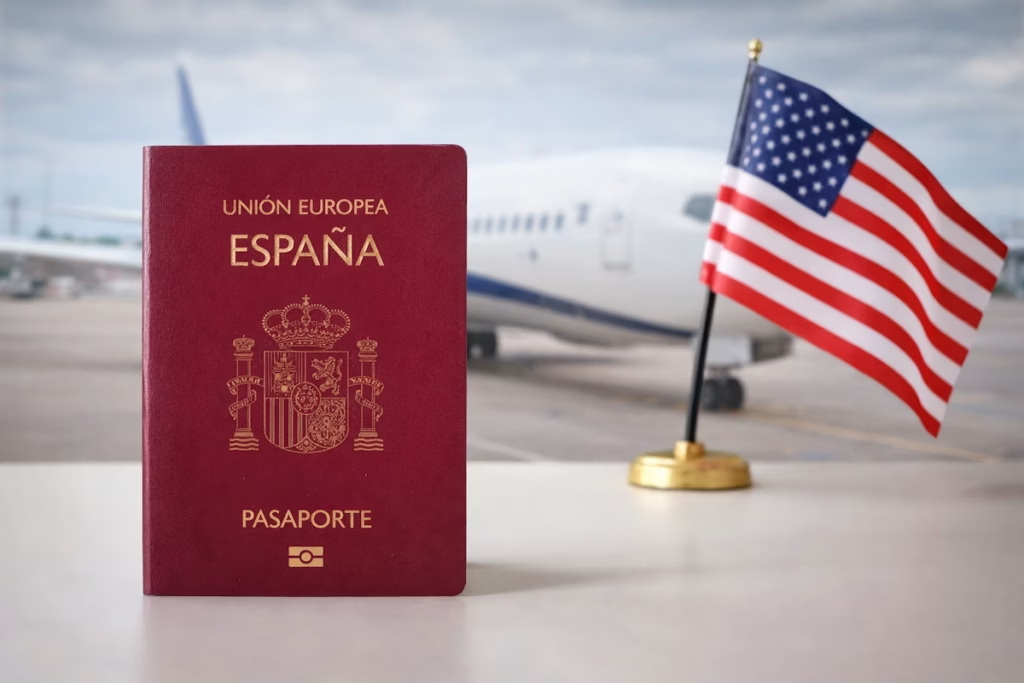
Spain is one of participating countries in the Visa Waiver Program, which means Spanish passport holders can travel to the United States without applying for a visa at a US embassy or consulate. Instead, you’ll need something called an ESTA—a much simpler online authorization that takes minutes to complete.
Sound too good to be true? It isn’t. But there are specific requirements you need to meet, situations where you might actually need a visa, and important details that could affect your travel plans. Let’s break it all down.
Understanding the Visa Waiver Program for Spanish Citizens
The Visa Waiver Program (VWP) is administered by the Department of Homeland Security in consultation with the State Department. According to official government sources, this program allows citizens of participating countries to travel to the United States for tourism or business purposes for stays of up to 90 days without obtaining a visa.
Spain has been part of this program for years, making travel between the two countries significantly easier for Spanish nationals. The program was designed to facilitate international travel while maintaining security standards.
What the VWP Actually Means for You
Here’s the thing though—being part of the Visa Waiver Program doesn’t mean you can just waltz into the US without any documentation. You still need authorization, just not a traditional visa stamp in your passport.
The VWP requires travelers to obtain an ESTA before boarding a plane or cruise ship bound for the United States. Think of ESTA as a pre-screening process that determines whether you’re eligible to enter the country under the visa waiver provisions.
This system benefits Spanish travelers in several ways. You don’t need to schedule an interview at the US Embassy in Madrid. You won’t pay the higher visa application fees. And you definitely won’t wait weeks for processing.
What Is ESTA and How Does It Work?
ESTA stands for Electronic System for Travel Authorization. It’s an automated system that determines whether you’re eligible to travel to the United States under the Visa Waiver Program. The application is completed entirely online, and most applicants receive a response within minutes—though it can take up to 72 hours in some cases.
According to the US Embassy in Spain, Spanish citizens must apply for ESTA authorization before traveling to the United States, even for a brief stopover or connection flight. The authorization is valid for two years or until your passport expires, whichever comes first.
ESTA Requirements for Spanish Citizens
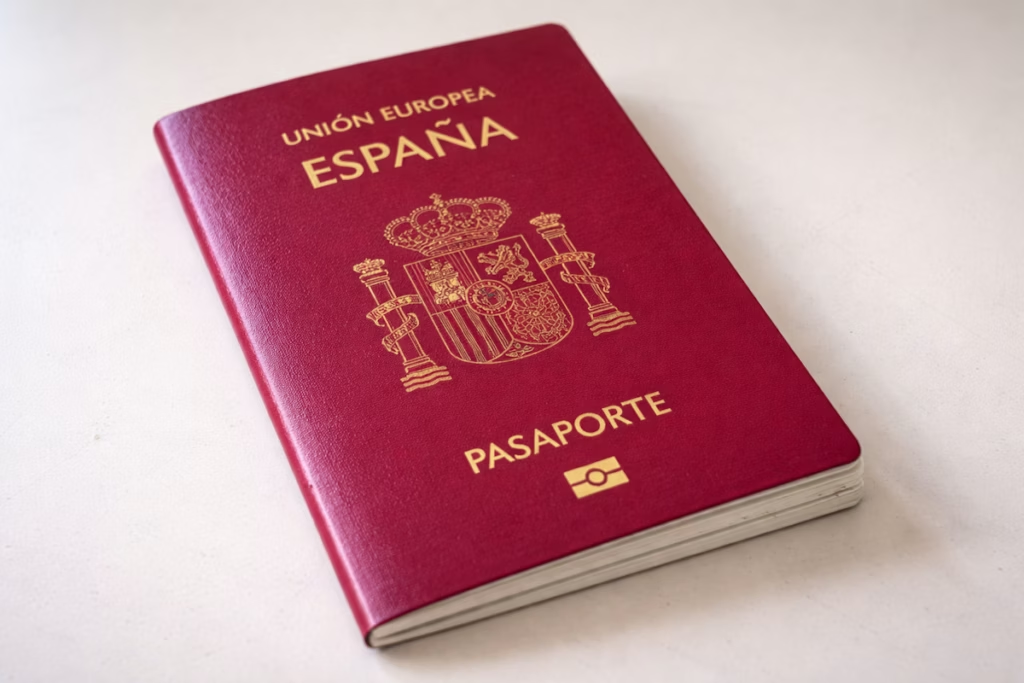
To qualify for ESTA, you need to meet specific criteria. Your passport must be an electronic passport with a digital chip containing biometric information. Most Spanish passports issued in recent years meet this requirement, but it’s worth checking if you have an older passport.
Your travel purpose must be tourism, business, or transit. You can’t work or study under ESTA authorization. And you can’t stay longer than 90 days—there’s no option to extend your stay once you’re in the United States.
Community discussions reveal that many travelers don’t realize ESTA is mandatory even for short layovers. If you’re flying from Spain to another country and your flight connects through a US airport, you’ll need ESTA approval. No exceptions.
How to Apply for Your ESTA
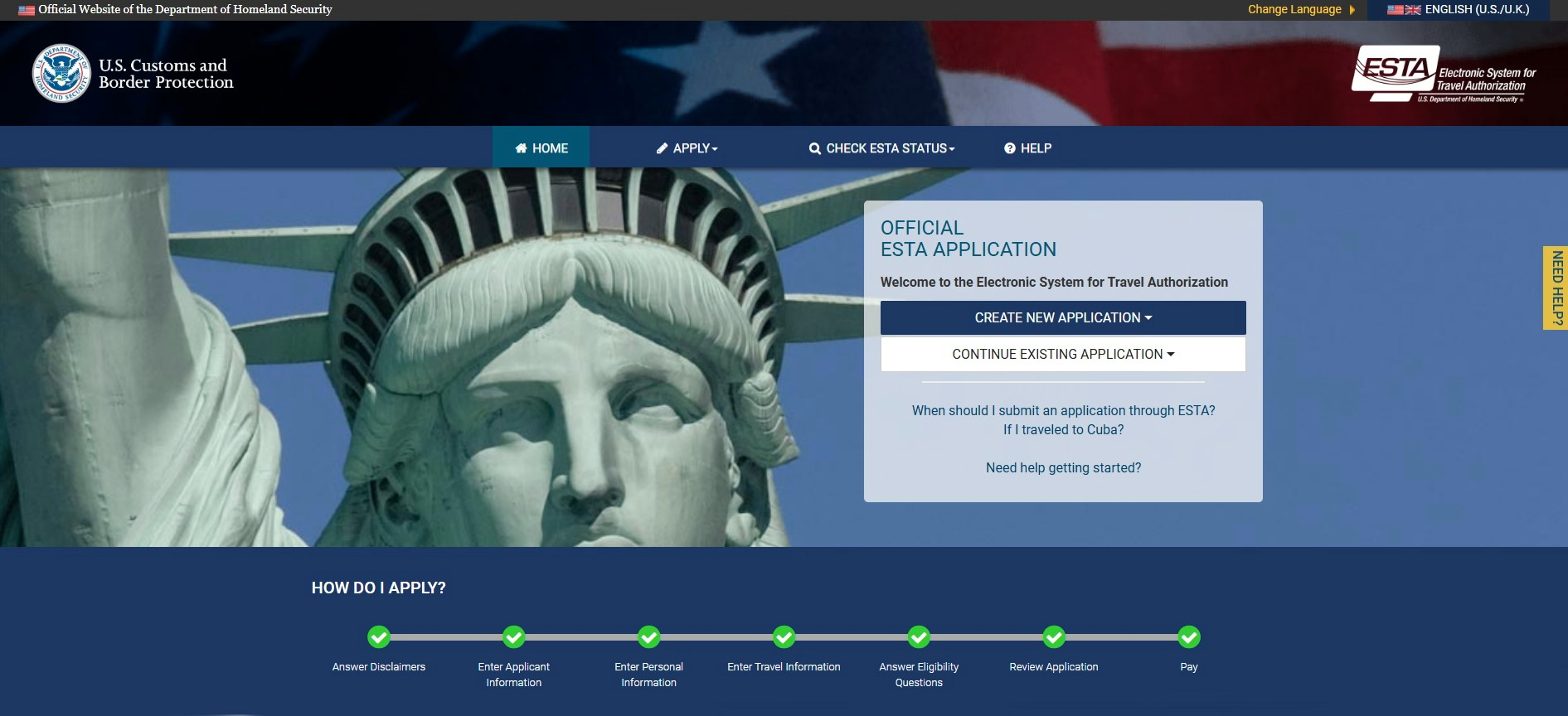
The application process is straightforward. You’ll visit the official ESTA website (never use third-party sites that charge inflated fees), complete the online form with your personal and passport information, answer security and eligibility questions, and pay the application fee.
The fee is $40.27 USD as of 2024, but it is subject to change; travelers should verify the current fee on the official CBP website. Once submitted, you’ll typically receive an answer quickly. Most applications get approved within minutes, though some may require additional processing time.
Here’s what many find helpful: apply for your ESTA at least 72 hours before your departure, even though you might get instant approval. Technical issues happen, and you don’t want to be stuck at the airport with a denied or pending application.
| ESTA Feature | Details |
| Application Fee | $40.27 USD |
| Processing Time | Usually minutes, up to 72 hours |
| Validity Period | 2 years or until passport expires |
| Maximum Stay | 90 days per visit |
| Purpose of Travel | Tourism, business, or transit only |
| Application Method | Online only |
When Spanish Citizens DO Need a Traditional Visa
Okay, so what about situations where ESTA won’t cut it? There are several scenarios where Spanish citizens actually need to apply for a traditional US visa at the embassy or consulate.
If you’re planning to work in the United States, you’ll need an employment visa like an H-1B or L-1. Students require an F-1 or M-1 visa depending on their course of study. And if you want to stay longer than 90 days—even as a tourist—you’ll need a B-2 visitor visa instead of ESTA.
The Cuba Travel Complication
Here’s a curveball many Spanish travelers don’t expect: if you have ever traveled to or been present in Cuba, or in Afghanistan, Burkina Faso, Mali, Niger, or South Sudan since 2011, you are ineligible for ESTA. According to the US Embassy in Spain, people who have traveled to Cuba after this date must apply for a traditional visa to enter the United States.
This policy catches many travelers off guard, especially those who’ve taken quick trips to Havana from Madrid. The restriction applies regardless of the purpose of your Cuba visit or how long ago it occurred.
Previous Immigration Issues
If you’ve ever overstayed a previous US visit, been denied entry, or had visa issues in the past, you might not be eligible for ESTA. The same applies if you’ve been arrested or convicted of certain crimes, even minor ones.
Community discussions reveal that the ESTA application asks detailed questions about your criminal and immigration history. Answer these honestly—lying on the application is grounds for permanent inadmissibility to the United States.

Expert Assistance for Your US Visa with The Visa Services
While the ESTA is a convenient tool for many, we understand that travel history—such as a recent visit to Cuba—or the need for a longer stay can complicate your plans. In these cases, navigating the traditional B-1/B-2 visa process requires meticulous attention to detail to avoid delays or denials. Our team at The Visa Services specializes in streamlining these complex applications, leveraging eight years of expertise to provide a 45% increase in approval rates for our clients. Whether you are preparing for a business venture or securing your spot at the FIFA World Cup 2026, we handle the rigorous paperwork and scheduling on your behalf.
We take the stress out of the embassy process by ensuring every document is perfectly aligned with current US requirements. By managing the end-to-end application, we help travelers skip the 30-hour headache of manual bookings and form corrections. If you find yourself ineligible for an ESTA or simply require the stability of a long-term visa, you can rely on our proven track record of 20,000 successfully processed visas to get you to the United States quickly and securely.
Important Travel Requirements Beyond ESTA
Getting ESTA approval is just one piece of the puzzle. Spanish citizens need to ensure they meet several other requirements before traveling to the United States.
Passport Validity Rules
Your Spanish passport must be valid for the entire duration of your stay in the United States. The US requires validity only through your planned departure date for Spanish citizens, as Spain has a passport validity agreement with the United States.
That said, it’s always smart to have at least six months of validity just to avoid potential complications. Some travelers with passports expiring shortly after their trip report facing additional scrutiny at immigration.
Return Ticket and Proof of Funds
US Customs and Border Protection expects you to have a return or onward ticket when you enter on ESTA. They want proof that you plan to leave within the 90-day limit.
You should also be prepared to show that you have sufficient funds to support yourself during your stay. There’s no specific amount required, but immigration officers may ask about your financial situation, especially for longer visits.
The 90-Day Limit Is Firm
Unlike traditional visas, ESTA stays cannot be extended under any circumstances. Once you enter the US on ESTA, you must leave within 90 days. Period.
But wait. There’s another restriction many travelers don’t know about: you can’t use ESTA to make frequent trips to the US while essentially living there. If you spend 90 days in the US, leave for a week, and try to return for another 90 days, immigration officers will likely deny you entry for abusing the program.
Entering the US From Spain: What to Expect
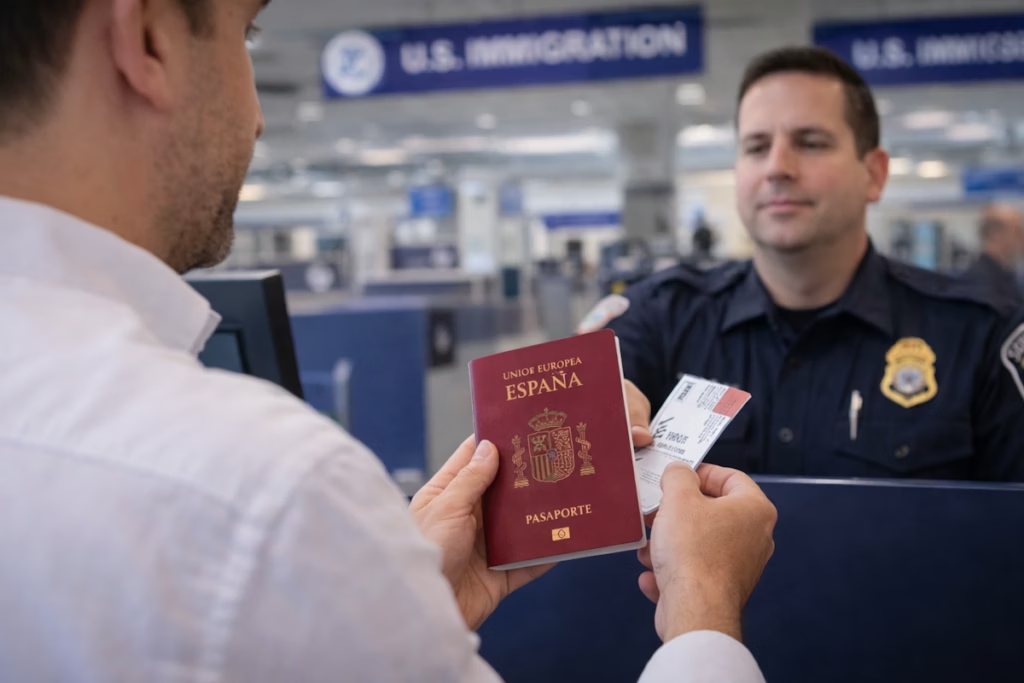
When you arrive at a US airport from Spain, you’ll go through Customs and Border Protection inspection. Even with ESTA approval, you’re not guaranteed entry—the final decision always rests with the immigration officer.
The officer will ask about your trip purpose, where you’re staying, how long you plan to visit, and what you do for work in Spain. Answer clearly and honestly. Most interactions are brief and straightforward, especially for tourists with hotel bookings and return flights.
What Border Officers Look For
Immigration officers are trained to identify people who might overstay their authorization or work illegally. They look for red flags like one-way tickets, vague travel plans, or insufficient ties to Spain.
Having strong connections to your home country—like a job, property, or family—makes approval more likely. If you’re visiting family in the US, be prepared to explain your relationship and have their contact information ready.
Special Considerations for Land Border Crossings
The Spanish Ministry of Foreign Affairs notes that Spanish citizens entering the US through the land border with Mexico need to double-check their travel document validity. While the same ESTA and passport requirements apply, border procedures differ from airport arrivals.
If you’re planning an overland entry from Mexico or Canada, make sure your ESTA is approved before you reach the border. Unlike airports where you might have assistance, land borders expect you to have everything sorted in advance.
| Entry Point | Special Considerations |
| Air Travel | Must show ESTA approval, return ticket, passport valid through stay |
| Sea Travel (Cruise) | Same ESTA requirements, cruise itinerary serves as proof of onward travel |
| Land Border (Mexico) | Pre-verify all documents, different procedures than air travel |
| Land Border (Canada) | ESTA required for entry, Canadian transit rules may also apply |
Common Mistakes Spanish Travelers Make
After reviewing community discussions and official guidance, several mistakes come up repeatedly. Let’s address them so you don’t make the same errors.
Assuming ESTA Means Guaranteed Entry
This is probably the biggest misconception. ESTA approval doesn’t guarantee admission to the United States. It simply allows you to board a plane or ship bound for the US. The immigration officer at the port of entry makes the final decision about whether you can enter.
Think of ESTA as a pre-screening tool, not a visa or entry permit. You still need to satisfy the officer that you meet all entry requirements and have legitimate travel purposes.
Waiting Until the Last Minute
Some travelers apply for ESTA the day before their flight. While you might get lucky with instant approval, technical issues or additional screening could delay your authorization. Always apply at least 72 hours before departure.
Your ESTA is valid for two years, so you can apply weeks or months before your trip without any problem. In fact, that’s the smart approach.
Using Third-Party Application Sites
A quick Google search for “ESTA application” brings up dozens of commercial sites that charge $50, $80, or even more for “assistance” with your application. These sites are legal but completely unnecessary.
The official ESTA application costs $40.27 and is just as easy to complete. These third-party sites don’t provide any real value—they’re just middlemen who submit the same form you could complete yourself.
Forgetting to Check ESTA Status Before Traveling
Your ESTA can be revoked at any time if you become ineligible—for example, if you get a new passport or travel to certain countries. Before each trip to the US, check your ESTA status on the official website to confirm it’s still valid.
Working and Studying Under ESTA: What’s Allowed?
Now, this is where it gets interesting. The line between acceptable activities under ESTA and activities requiring a work or study visa can be surprisingly blurry.
Business Activities vs. Employment
You can conduct business activities on ESTA—like attending meetings, conferences, or negotiations. You can’t accept employment or receive payment from a US company for work performed in the United States.
The distinction matters. A Spanish business owner visiting clients in New York? That’s fine under ESTA. The same person working for a US client while physically in New York? That requires a work visa.
Community discussions indicate confusion about digital nomads and remote work. If you’re employed by a Spanish company and continue working remotely while vacationing in the US, that’s generally considered acceptable—you’re not working for a US employer. However, this is a gray area where immigration officers have discretion.
The Marriage Visa Question
Can you enter the US on ESTA, get married, and adjust your status to become a permanent resident? Spanish citizens entering on ESTA with the preconceived intent to marry and apply for a Green Card are generally ineligible for adjustment of status and may be charged with visa fraud.
While spontaneous marriage is possible, the ’90-day rule’ used by USCIS often presumes that those who marry and file for adjustment shortly after arrival misrepresented their intentions.
Traveling to the US for Special Events
The US Embassy in Spain has provided guidance for Spanish citizens planning to attend major events like the FIFA World Cup 2026, which will be held partly in the United States.
For sporting events, concerts, or festivals, ESTA remains the appropriate authorization for Spanish citizens as long as your stay doesn’t exceed 90 days. You’ll want to apply early given that thousands of other visitors will be doing the same.
Medical Travel
Many Spanish citizens travel to the US for medical treatment. ESTA covers medical tourism as long as you’re not staying beyond 90 days. Bring documentation about your medical appointments and proof that you can pay for treatment—medical bills are a common concern for immigration officers.
Tips From Experienced Spanish Travelers
Based on real experiences shared in community forums, here are practical tips that aren’t always covered in official guides.
- First, keep a digital copy of your ESTA approval on your phone. While airlines and immigration have electronic access to your status, having your own copy provides peace of mind and can resolve issues quickly if systems are down.
- Second, be prepared to explain your US visit in one or two sentences. Immigration officers appreciate clear, concise answers. “I’m visiting friends in California for two weeks” is better than a rambling explanation of your entire itinerary.
- Third, if you’re visiting family or friends in the US, have their contact information readily available—addresses and phone numbers. Officers often ask for this information to verify your plans.
The 90-Day Reset Myth
Some travelers believe they can visit the US for 90 days, leave briefly to Mexico or Canada, and return for another 90 days. This doesn’t work the way people think.
When you use ESTA, immigration officers consider the entire Western Hemisphere as a single region for timing purposes. A short trip to Cancún doesn’t reset your 90-day clock. Officers will see this as an attempt to circumvent the rules and may deny you entry.
If you need to stay in the US for longer periods or make frequent visits, you should apply for a B-1/B-2 visitor visa instead of relying on ESTA.
What If You’re Denied ESTA or Entry?
Most Spanish citizens get ESTA approval without issues, but denials do happen. If your ESTA application is denied, you’ll receive a notification but typically not a detailed explanation of why.
Common reasons include previous immigration violations, certain criminal history, or travel to restricted countries. If you’re denied ESTA, you can apply for a B-1/B-2 visitor visa at the US Embassy in Madrid, where you’ll have an interview and can explain your situation.
Denial at the Border
Even with ESTA approval, you could be denied entry at the US port of entry. This is rare for Spanish citizens with legitimate tourist plans, but it happens if officers suspect you intend to work illegally, overstay, or have provided false information.
If denied entry, you’ll typically be put on the next flight back to Spain. You might also face future travel restrictions. The lesson? Always be honest with immigration officers and ensure your travel purposes genuinely fit within ESTA guidelines.
Resources and Official Information
For the most current and accurate information, rely on official government sources. The US Embassy in Spain provides comprehensive visa and ESTA information in both English and Spanish at es.usembassy.gov.
The official ESTA application website is the only place you should apply. The Spanish Ministry of Foreign Affairs (Ministerio de Asuntos Exteriores) also provides travel recommendations and guidance for Spanish citizens visiting the United States.
The US State Department’s Travel.State.gov website offers detailed information about entry requirements, travel advisories, and consular services for Americans and foreign visitors alike.
| Resource | What You’ll Find |
| US Embassy Spain (es.usembassy.gov) | ESTA information, visa services, emergency assistance |
| Official ESTA Website | Online applications, status checks, requirements |
| Spanish Ministry of Foreign Affairs | Travel recommendations, citizen services abroad |
| US Customs and Border Protection | Entry procedures, what you can bring, traveler programs |
| Travel.State.gov | Travel advisories, country information, passport services |
Final Thoughts: Making Your US Trip Smooth
So here’s the bottom line: Spanish citizens have it relatively easy when it comes to visiting the United States. The Visa Waiver Program and ESTA system make short trips straightforward without the hassle of traditional visa applications.
But don’t treat ESTA approval as a guarantee or an afterthought. Apply at least three days before your trip, ensure your passport meets requirements, have your travel plans organized, and be prepared to explain your visit clearly at immigration.
The vast majority of Spanish travelers enter the US without any problems. As long as you’re honest about your intentions, stay within the 90-day limit, and follow the rules, your American adventure should start smoothly.
Remember that travel requirements can change, especially in response to security concerns or diplomatic developments. Always check official government sources before booking your trip and again before you depart. The US Embassy in Spain and the Spanish Ministry of Foreign Affairs provide current information about travel requirements and any temporary restrictions.
Whether you’re visiting New York, exploring California, attending a conference in Chicago, or road-tripping through national parks, understanding the entry requirements is the first step to a successful trip. Now that you know Spanish citizens don’t need a traditional visa but do need ESTA, you can plan your American journey with confidence.
Ready to start your application? Head to the official ESTA website, gather your passport information, and complete your authorization. With your ESTA approved and your plans in place, you’ll be ready to experience everything the United States has to offer.
Frequently Asked Questions
No, Spanish citizens do not need a traditional visa for tourism or business visits under 90 days. Spain is part of the Visa Waiver Program, which allows Spanish passport holders to travel to the US with ESTA authorization instead of a visa. However, you must apply for ESTA online before your trip, and it only covers short stays for specific purposes.
The official ESTA application fee is $40.27 USD, payable by credit or debit card when you submit your application online. Be wary of third-party websites that charge significantly more—you can complete the same application yourself on the official government website for just $40.27. The authorization is valid for two years or until your passport expires.
No, ESTA does not permit employment in the United States. You can conduct business activities like attending meetings, conferences, or negotiations, but you cannot work for a US employer or receive payment for work performed in the US. If you want to work in America, you must apply for an appropriate work visa such as an H-1B, L-1, or other employment-based visa category.
Most ESTA applications receive approval within minutes of submission. However, some applications may require additional processing time of up to 72 hours. It’s recommended to apply at least 72 hours before your departure to avoid potential complications. Your ESTA remains valid for two years, so you can apply well in advance of your travel dates.
Overstaying your ESTA authorization has serious consequences. Your ESTA will be immediately revoked, you’ll likely be barred from using the Visa Waiver Program in the future, and you may face difficulties obtaining any US visa. Immigration violations can result in multi-year or permanent bans from entering the United States. The 90-day limit cannot be extended under any circumstances.
If you’ve traveled to Cuba on or after January 12, 2021, you are no longer eligible for ESTA authorization. According to the US Embassy in Spain, travelers who have visited Cuba after this date must apply for a traditional B-1/B-2 visitor visa at the embassy or consulate. This restriction applies regardless of the purpose or duration of your Cuba visit.
Yes, Spanish citizens need ESTA approval even for brief transit through US airports. If your flight from Spain to another destination connects through any US airport, you must pass through US immigration, which requires valid ESTA authorization. There are no transit-without-visa provisions for flights connecting through the United States.