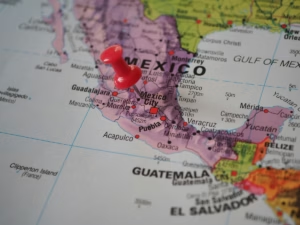
If you’re a Mexican citizen planning a trip to the United States, you’ve probably asked yourself this question. And I’ll give you the straight answer right up front: yes, Mexican citizens do need a visa to enter the USA.
This catches a lot of people off guard. After all, the borders are right next to each other, and Americans can visit Mexico relatively easily. But the visa requirements aren’t reciprocal, and there are specific reasons why.
Here’s what makes this topic more complex than a simple yes or no: there are different types of visas depending on why you’re visiting, some Mexican citizens already have Border Crossing Cards that work differently, and the application process can feel overwhelming if you don’t know what to expect.
I’m going to walk you through everything you need to know about US visa requirements for Mexican citizens—from tourist visas to work permits, the actual application process, and what happens if you’re denied.
Why Mexican Citizens Need a US Visa
Let’s address the elephant in the room first. According to community discussions and real experiences, many people wonder why it’s so easy for Americans to visit Mexico but not the other way around.
The reason comes down to US immigration policy and concerns about illegal immigration. The US government requires tourist visas for Mexican nationals because of historically high rates of visa overstays and unauthorized immigration from Mexico to the United States.
Mexico is not part of the Visa Waiver Program, which allows citizens from 40 countries to visit the US for up to 90 days without a visa. Countries in this program typically have low visa refusal rates, strong economies, and minimal illegal immigration issues.
But here’s the thing—this doesn’t mean getting a US visa as a Mexican citizen is impossible. Based on Department of State data, many nonimmigrant visa applications by Mexican nationals are approved. That’s actually a decent approval rate for a large volume of applicants.
Types of US Visas Available for Mexican Citizens
Not all visas are created equal. The type of visa you need depends entirely on why you’re traveling to the United States.
B-1/B-2 Tourist and Business Visitor Visa
This is the most common visa for Mexican citizens visiting the US. The B-1/B-2 visa covers both tourism and business activities.
You’ll need a B-2 tourist visa if you’re planning to:
- Visit family or friends
- Go on vacation or sightseeing
- Receive medical treatment
- Participate in social events or activities
The B-1 business visa is for things like:
- Attending business meetings or conferences
- Negotiating contracts
- Consulting with business associates
Here’s what’s convenient: the US often issues these as combined B-1/B-2 visas, so you don’t need to choose just one category. These visas are typically valid for 10 years, though each stay is limited to six months at a time.
Border Crossing Card (BCC)
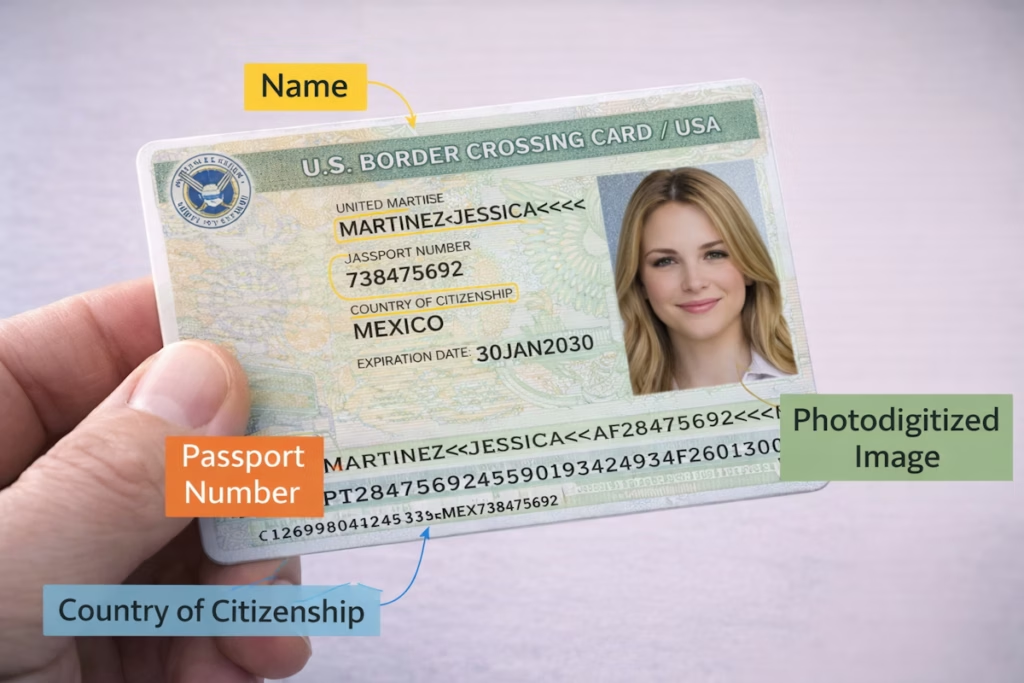
Now, this is where things get interesting. Some Mexican citizens already have what’s called a Border Crossing Card, also known as a “laser visa” or DSP-150.
According to US Customs and Border Protection, the Border Crossing Card is specifically for Mexican citizens who live in Mexico and want to visit the US border region frequently. It’s valid for multiple entries.
But there are strict limitations:
- You can only use it to travel within 25 miles of the US-Mexico border
- Your stay can’t exceed 30 days
- Is valid for entry by air, provided that the traveler also presents a valid Mexican passport.
If you want to travel beyond the border zone or stay longer than 30 days, you’ll need a regular B-1/B-2 visa instead. And here’s something important: to travel to the US by air from Mexico as a tourist, you’ll need a valid passport and either a BCC with a valid I-94 or a B-1/B-2 visa.
Work Visas for Mexican Citizens
Planning to work in the United States? You’ll need a different type of visa entirely.
The most relevant work visa for Mexican citizens is the TN visa, created under the United States-Mexico-Canada Agreement (USMCA), formerly known as NAFTA. According to USCIS, the TN nonimmigrant classification permits qualified Mexican citizens to seek temporary entry into the United States to engage in business activities at a professional level.
The TN visa covers specific professional occupations, including:
- Accountants
- Engineers
- Scientists
- Teachers
- Computer systems analysts
- Management consultants
Real talk: the TN visa is actually one of the easier work visas to obtain if you qualify. Mexican professionals must obtain a TN visa at a US consulate before entering the country, unlike Canadian citizens who can apply at the port of entry.
Other work visa options include H-1B (specialty occupations), H-2A (agricultural workers), H-2B (seasonal non-agricultural workers), and L-1 (intracompany transfers).
The Complete US Visa Application Process
Okay, so what about the actual application process? Let me break this down step by step because getting organized from the start makes everything easier.
Step 1: Complete the Online Visa Application
Everything starts with Form DS-160, the Online Nonimmigrant Visa Application. You’ll complete this on the State Department’s website.
Here’s what you’ll need ready:
- Your passport (valid for at least six months beyond your intended stay)
- Travel dates and itinerary
- Previous US travel history
- Employment information
- Family information
- A digital photo meeting specific requirements
The form takes about 90 minutes to complete if you have everything prepared. Save your work frequently—the system times out after 20 minutes of inactivity, and nobody wants to start over.
Once submitted, you’ll receive a confirmation page with a barcode. Print this—you’ll need it for your interview.
Step 2: Pay the Visa Application Fee
The visa application fee for a B-1/B-2 vis ain 2026 is $435 (comprising the $185 application fee and the $250 Visa Integrity Fee).. You’ll pay this through the designated payment system for your location in Mexico.
Keep your receipt. You’ll need the payment confirmation number to schedule your interview appointment.
Step 3: Schedule Your Visa Interview
Most visa applicants between ages 14 and 79 must attend an in-person interview at a US Embassy or Consulate in Mexico. According to the US Embassy, there’s currently a program to allow eligible US visa applicants to reschedule to an earlier date if appointments become available.
Wait times for interview appointments vary by location and time of year. During peak travel seasons, you might wait several weeks or even months for an appointment slot.
Some applicants qualify for interview waivers. The US Embassy periodically updates its policy on interview waivers for nonimmigrant visas, particularly for visa renewals.

Step 4: Gather Required Documentation
This is where preparation really matters. You’ll need to bring several documents to your visa interview.
Required documents include:
- Valid passport (with at least six months validity)
- DS-160 confirmation page with barcode
- Visa application fee payment receipt
- Interview appointment confirmation
- One photograph meeting US visa photo requirements
But here’s what many people don’t realize: you should also bring supporting documents that prove you have strong ties to Mexico and intend to return after your visit.
Additional documentation that strengthens your application:
- Proof of employment (letter from employer, pay stubs)
- Bank statements showing financial stability
- Property deeds or rental agreements
- Family ties documentation (marriage certificate, children’s birth certificates)
- Evidence of previous international travel
- Invitation letter from US host (if applicable)
- Detailed travel itinerary
According to US immigration policy, consular officers want to see that you have compelling reasons to return to Mexico. The stronger your ties to Mexico, the better your chances of approval.
Step 5: Attend Your Visa Interview
Interview day can feel nerve-wracking, but knowing what to expect helps.
Arrive early—security screening takes time. The US Embassy has specific barcode policies for nonimmigrant visa interviewees, so follow their instructions carefully.
During the interview, a consular officer will ask questions about:
- Your purpose for visiting the US
- How long you plan to stay
- Who you’ll visit or where you’ll go
- Your employment and financial situation
- Your ties to Mexico
- Previous US travel (if any)
Be honest and direct. Inconsistencies or suspected dishonesty are major red flags. And here’s a tip from real user experiences: speak clearly and confidently, but don’t volunteer unnecessary information.
The interview itself typically lasts only 3-5 minutes. The officer will inform you whether your visa is approved, denied, or requires additional administrative processing.
After the Interview: What Happens Next?
- If approved, your passport with the visa will be returned to you via courier service within a few days to two weeks, depending on the location.
- If your visa requires administrative processing, it might take several weeks or longer. This happens when additional security checks or document verification is needed.
- If denied, you’ll receive a letter explaining the reason. The most common reason is failure to overcome the presumption of immigrant intent—basically, the officer wasn’t convinced you’d return to Mexico.

Navigating the Application with The Visa Services
The process of securing a US visa can be daunting, especially when facing long appointment wait times and the meticulous documentation required to prove strong ties to your home country. At The Visa Services, we specialize in streamlining this journey for our clients, leveraging our eight years of experience and a track record of over 20,000 successful visas. Our team provides a dedicated personal assistant to handle the complex Form DS-160 and document selection, which has helped our clients see a 45% increase in their approval rates.
Whether you are planning to attend the FIFA 2026 games or visiting family, we understand that timing is everything. Our team works to bypass the standard stress of booking by offering an ultra-fast service that can secure an urgent US Visa in 2 weeks. We take the guesswork out of the interview preparation and itinerary planning, ensuring that your application is professional, error-free, and positioned for the best possible outcome.
Visa Requirements and Eligibility Criteria
So what exactly are consular officers looking for when they evaluate Mexican citizens for US visas?
The primary concern is what’s called “immigrant intent.” US immigration law presumes that every visa applicant intends to immigrate permanently unless proven otherwise.
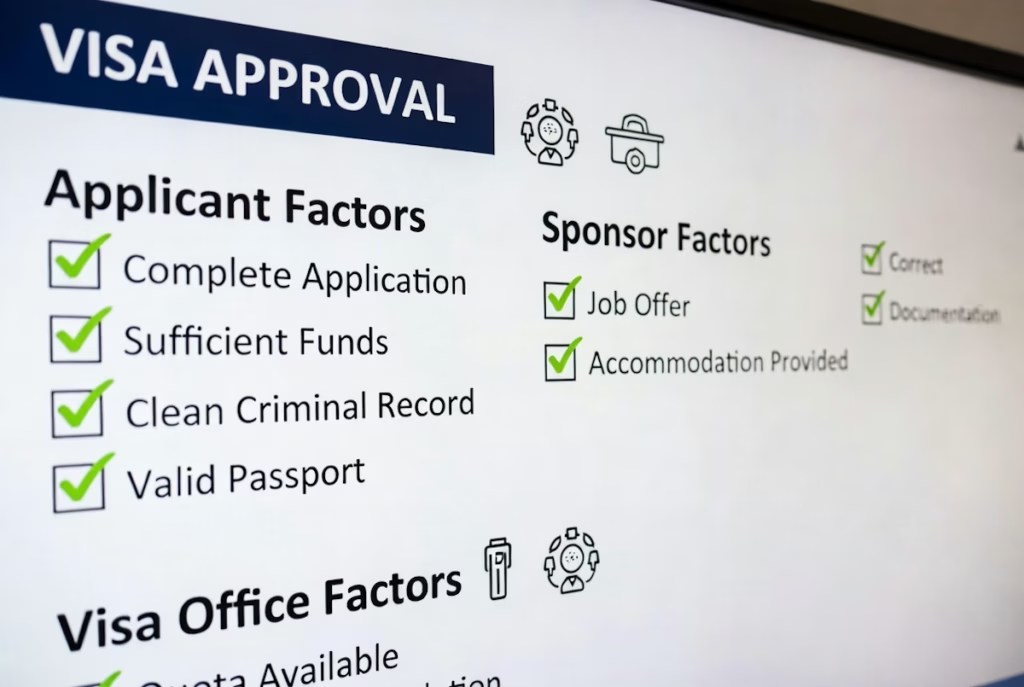
You must demonstrate:
- Strong ties to Mexico: Job, property, family, or other commitments that ensure you’ll return
- Financial ability: Sufficient funds to cover your trip without working illegally in the US
- Clear purpose: Legitimate reason for visiting that matches your stated visa category
- Good character: No criminal record or previous immigration violations
Generally speaking, applicants with stable employment, property ownership, family responsibilities in Mexico, and previous international travel have higher approval rates.
Common Reasons for Visa Denial
Let’s talk about what can go wrong. Understanding common denial reasons helps you avoid these pitfalls.
According to community discussions and real experiences, here are the most frequent reasons Mexican citizens face visa denials:
1. Insufficient Ties to Mexico
This is the number one reason. If you’re unemployed, have no property, limited family ties, or no clear reason to return to Mexico, officers assume you might overstay.
Young, single applicants with no dependents face extra scrutiny because they’re statistically more likely to overstay.
2. Inadequate Financial Resources
If you can’t demonstrate sufficient funds to support yourself during your US visit, that’s a red flag. The concern is that you might seek unauthorized employment.
3. Inconsistent or Incomplete Information
Contradictions between your application form, supporting documents, and interview answers raise suspicions. So does failing to provide requested documentation.
4. Previous Immigration Violations
If you’ve previously overstayed a visa, worked without authorization, or violated other US immigration laws, getting approved again becomes extremely difficult.
5. Criminal Record
Certain criminal convictions make you inadmissible to the United States. Drug offenses, crimes involving moral turpitude, and multiple criminal convictions are particularly problematic.
How to Strengthen Your Visa Application
Want to maximize your chances of approval? Here’s what actually works.
- First, be completely honest on your application and during your interview. Lying or misrepresenting facts can result in permanent visa ineligibility.
- Second, bring extensive documentation. More is better. Show employment letters, bank statements from the past 6-12 months, property documents, business registration if you own a business, and evidence of community involvement.
- Third, explain your itinerary clearly. Have a detailed travel plan showing where you’ll stay, what you’ll do, and when you’ll return. Vague travel plans suggest you haven’t thought things through—or worse, that you don’t actually plan to return.
- Fourth, demonstrate previous international travel if possible. If you’ve visited other countries and returned to Mexico on time, that shows you respect visa terms.
Fifth, have someone in the US write an invitation letter if you’re visiting friends or family. The letter should include their immigration status, address, relationship to you, and confirmation they’ll help support your visit.
Entering the United States with Your Visa
Getting your visa approved is just the first step. Now you need to understand what happens when you actually arrive at the US border.
Here’s something critical that catches people off guard: having a visa doesn’t guarantee entry to the United States. The visa only gives you permission to travel to a US port of entry and request admission.
US Customs and Border Protection officers at the border make the final decision about whether you can enter and for how long.
Required Documents at Port of Entry
When entering the United States, Mexican nationals must present:
- Valid passport
- Valid US visa
- Supporting documents about your visit
The CBP officer will ask questions about your visit. Answer honestly and provide the same information you gave during your visa interview.
The I-94 Arrival/Departure Record
Upon entry, you’ll receive an I-94 form (electronically for air travelers, paper form for land entries). Travelers have an obligation to obtain an I-94 admission permit when entering the United States, in addition to having a valid visa.
Your I-94 shows:
- Your admission date
- Your visa classification
- How long you’re authorized to stay
Keep track of your I-94 expiration date. Overstaying can result in serious consequences, including visa cancellation and bars to future US entry.
Understanding Your Stay Duration and Limitations
So how long can you actually stay in the United States?
For B-1/B-2 visas, the typical authorized stay is up to six months per visit. But—and this is important—the CBP officer determines your specific authorized stay when you enter. It might be less than six months depending on your stated purpose.
Your visa validity period is different from your authorized stay. A 10-year visa means you can use it to request entry multiple times over ten years, but each individual visit has its own time limit.
Extending Your Stay
What if you need to stay longer than originally authorized? You can apply for an extension by filing Form I-539 (Application to Extend/Change Nonimmigrant Status) with USCIS before your authorized stay expires.
You must apply:
- Before your I-94 expires
- With evidence of why you need more time
- Showing you can financially support the extended stay
- Demonstrating you still intend to return to Mexico
USCIS doesn’t guarantee approval, and you should apply at least 45 days before your current stay expires.
Changing Your Status
Sometimes circumstances change. Maybe you came as a tourist but received a job offer, or you decided to enroll in a US school.
You can apply to change your nonimmigrant status by filing Form I-539. But here’s the catch: you must file before your current status expires, and you cannot work or study until USCIS approves the change.
Special Considerations for Dual Citizens
What if you’re a dual citizen of Mexico and another country?
Here’s where it gets nuanced. According to community discussions, if you’re a Mexican-US dual citizen, you cannot get a Mexican visa to enter the US because you’re already a US citizen. You must enter using your US passport.
If you’re a dual citizen of Mexico and a Visa Waiver Program country (like Spain or Chile), you can potentially use your other passport to enter the US without a visa under ESTA. However, you must be traveling with that country’s passport and meet all VWP requirements.
Some travelers ask about entering Mexico as a Mexican citizen and then transiting through the US. If you’re not a US citizen and your stay will extend beyond 90 days from when you first entered the United States, you’ll require a visa regardless of dual citizenship with a VWP country.
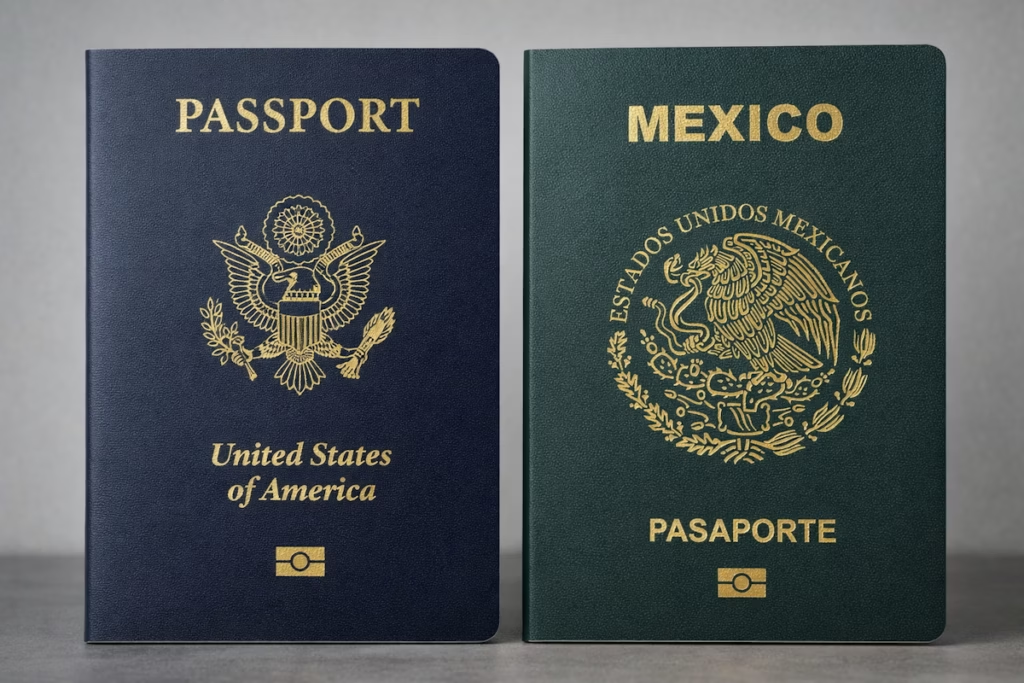
Cost Breakdown for US Visa Application
Let’s talk money. What does it actually cost to get a US visa as a Mexican citizen?
| Expense | Cost (USD) | Notes |
| B-1/B-2 Visa Application Fee | $435 | Non-refundable, required for all applicants |
| Passport Photos | $10-30 | Professional photos meeting US requirements |
| Travel to Embassy/Consulate | Varies | Transportation, accommodation if needed |
| Document Translation | $20-100 | If documents aren’t in English |
| Legal Assistance (optional) | $500-2,000+ | Immigration attorney consultation |
The visa application fee is the same whether you’re approved or denied—there are no refunds. And remember, if you’re denied and reapply, you’ll pay the fee again.
Comparing Different Visa Types for Mexican Citizens
Not sure which visa type you need? Here’s a quick comparison.
| Visa Type | Purpose | Duration | Work Allowed? |
| B-1/B-2 Tourist/Business | Tourism, family visits, business meetings | Up to 6 months per visit | No |
| Border Crossing Card (BCC) | Short visits to border region | Up to 30 days within 25 miles | No |
| TN Professional | Professional-level work | Up to 3 years, renewable | Yes, for sponsoring employer |
| H-1B Specialty Occupation | Specialized professional work | Up to 6 years total | Yes, for sponsoring employer |
| F-1 Student | Academic study | Duration of studies | Limited on-campus work |
| J-1 Exchange Visitor | Cultural exchange, internships | Varies by program | Within program guidelines |
What Happens If You Overstay Your Visa?
Let’s address something serious: overstaying your authorized period in the United States.
Overstaying isn’t just a minor issue—it has significant consequences. When you overstay, even by a single day, your visa is automatically voided. You’ll need to apply for a new visa before your next US visit.
But it gets worse. US immigration law imposes bars on reentry based on how long you overstayed:
- Overstay of 180 days to 1 year: 3-year bar from reentering the US
- Overstay of more than 1 year: 10-year bar from reentering the US
These bars take effect when you depart the United States. There are limited waivers available, but they’re difficult to obtain.
The lesson? Take your I-94 departure date seriously. Set reminders. Don’t risk it.
Resources and Where to Get Help
Navigating US visa requirements can feel overwhelming, but you’re not alone in this process.
Official US Government Resources
Start with official sources for accurate, up-to-date information:
- Travel.State.Gov: The US Department of State’s official visa information website
- USCIS.gov: US Citizenship and Immigration Services for forms and policy guidance
- CBP.gov: Customs and Border Protection for entry requirements
- US Embassy Mexico: Country-specific visa information and appointment scheduling
The US Embassy in Mexico is now operating at its new location. Check their website for updated addresses and contact information.
Mexican Government Resources
The Mexican government also provides information for citizens traveling abroad:
- Mexican Consulates in the US: Can provide assistance if issues arise during your visit
- SRE (Secretaría de Relaciones Exteriores): Mexico’s foreign ministry with travel guidance
When to Consult an Immigration Attorney
Consider getting legal help if:
- You’ve been denied a visa before
- You have a criminal record
- You’ve previously overstayed or violated US immigration laws
- Your case is complex or unusual
- You’re applying for a work visa and your employer isn’t providing legal support
Many experts suggest that having professional guidance can significantly improve your approval chances in complicated situations.

Tips for a Successful US Visit
You’ve got your visa approved and you’re planning your trip. Here are some final tips to ensure everything goes smoothly.
Before You Travel:
- Make copies of all important documents (passport, visa, I-94)
- Purchase travel insurance that covers medical emergencies
- Register with the nearest Mexican Consulate in the US
- Keep your Mexico ties current (don’t quit your job or sell property right before traveling)
During Your Visit:
- Always carry your passport and visa
- Keep track of your I-94 expiration date
- Don’t work without authorization—even unpaid work or volunteering can be problematic
- Maintain evidence that you’re a temporary visitor (return flight tickets, hotel reservations)
- Stay out of trouble—any arrest can affect future visa applications
Before Returning to Mexico:
- Leave before your authorized stay expires
- Keep boarding passes and travel receipts as proof of timely departure
- If entering by land, ensure your departure is properly recorded
Final Thoughts: Planning Your US Visit
So here’s the bottom line: yes, Mexican citizens need a visa to visit the United States, but it’s absolutely achievable with proper preparation.
The key to success is demonstrating strong ties to Mexico, having clear travel plans, and presenting yourself honestly during the application process. The vast majority of visa denials happen because applicants can’t convince the consular officer they’ll return home—not because of minor application errors.
Start your application early. Don’t wait until a few weeks before your planned trip. Interview appointment availability varies, and you don’t want scheduling delays to derail your travel plans.
Gather extensive documentation proving your ties to Mexico. Employment letters, bank statements, property documents, and family obligations all strengthen your case. The more evidence you provide, the better your chances.
Be completely honest throughout the process. Misrepresentations or fraud can result in permanent visa ineligibility. Even if the truth seems less favorable, honesty is always the better strategy.
And once you receive your visa, respect its terms. Don’t overstay your authorized period, don’t work without authorization, and maintain your status as a temporary visitor. Your future ability to visit the United States depends on following the rules during your current visit.
Traveling between Mexico and the United States might require more paperwork than crossing some other borders, but millions of Mexican citizens successfully obtain US visas every year. With the right preparation and documentation, you can too.
Frequently Asked Questions
No, Mexican citizens cannot visit the US without a visa. Mexico is not part of the Visa Waiver Program. Mexican nationals must obtain either a B-1/B-2 visitor visa, a Border Crossing Card (for limited border region visits), or another appropriate visa type before entering the United States. There are no exceptions for short visits.
The timeline varies but generally takes 3-6 weeks from application to receiving your passport back with the visa. This includes time to complete the DS-160 form, schedule an interview (wait times vary by location), attend the interview, and receive your passport via courier. During peak seasons, the process can take longer. If your application requires administrative processing, it might take several additional weeks.
A Border Crossing Card (BCC) allows Mexican citizens to visit within 25 miles of the US-Mexico border for up to 30 days, and can only be used for land or sea entry. A B-1/B-2 visa allows travel anywhere in the United States for up to six months per visit and can be used for air travel. B-1/B-2 visas are more flexible and suitable for tourists wanting to travel beyond border areas or stay longer.
The application fee for a B-1/B-2 tourist visa is $435 USD. This fee is non-refundable regardless of whether your visa is approved or denied. Additional costs include passport photos ($10-30), travel to the embassy or consulate, and potentially document translation fees. If you hire an immigration attorney, legal fees typically range from $500-2,000 or more.
No, you cannot work in the United States with a B-1/B-2 tourist visa. These visas are strictly for tourism, visiting family and friends, or business activities like attending meetings or conferences—not for employment. Working without authorization violates your visa terms and can result in deportation, visa cancellation, and bars to future US entry. If you want to work in the US, you need an appropriate work visa like a TN, H-1B, or other employment-based visa.
If your visa is denied, you’ll receive a written explanation citing the legal grounds for denial. The most common reason is failure to overcome the presumption of immigrant intent—meaning the consular officer wasn’t convinced you’d return to Mexico. You can reapply at any time, but you’ll need to pay the application fee again and address the reasons for the previous denial. If your circumstances haven’t changed, you’ll likely face another denial.
A 10-year B-1/B-2 visa allows multiple entries to the United States over its validity period. There’s no specific limit on the number of visits. However, each visit is limited to a maximum of six months (or whatever duration the CBP officer grants upon entry). You must maintain your residence in Mexico and not attempt to live in the US on a tourist visa. Frequent or extended visits may raise questions about your true intentions.