
Quick Summary: Israeli citizens can visit the United States without a visa under the Visa Waiver Program since October 19, 2023. Travelers must obtain ESTA (Electronic System for Travel Authorization) approval before departure, which costs $21 and allows stays up to 90 days for tourism or business purposes.
The short answer? No, most Israeli citizens don’t need a traditional visa for short visits to the United States anymore.
Israel joined the Visa Waiver Program on October 19, 2023, fundamentally changing how Israeli passport holders travel to America. This means eligible travelers can skip the lengthy visa interview process and instead apply online through ESTA.
But here’s the thing—there are specific requirements and limitations. Not every Israeli passport holder qualifies, and the 90-day stay limit is strict. Understanding these details before booking flights can save considerable time and prevent travel disruptions.
Understanding the Visa Waiver Program for Israeli Citizens
The Visa Waiver Program allows citizens from select countries to travel to the United States for tourism or business without obtaining a traditional visa. Israel became one of these designated countries in late 2023.
According to the U.S. Department of State, this program operates through ESTA—the Electronic System for Travel Authorization. Eligible Israeli nationals can now enter the United States for visits lasting up to 90 days without going through the standard visa application process that requires in-person interviews.
The program covers both tourism and business activities. Travelers can attend meetings, conferences, or explore the country as tourists. What travelers cannot do is work for a U.S. employer, study long-term, or stay beyond the 90-day window.
Who Qualifies for Visa-Free Travel
Not all Israeli passport holders automatically qualify for the Visa Waiver Program. Travelers must hold a valid Israeli passport that meets specific security requirements.
The passport must be electronic with a chip containing biometric information. Additionally, the passport must be valid and meet biometric security requirements. Some older passport types may not meet these technical specifications.
There’s another important restriction. Israeli citizens who have traveled to Iran, Iraq, Libya, Somalia, Sudan, Syria, or Yemen may face eligibility restrictions for ESTA. These travelers would need to apply for a traditional B-1/B-2 visa at a U.S. Embassy.
How to Apply for ESTA as an Israeli Citizen
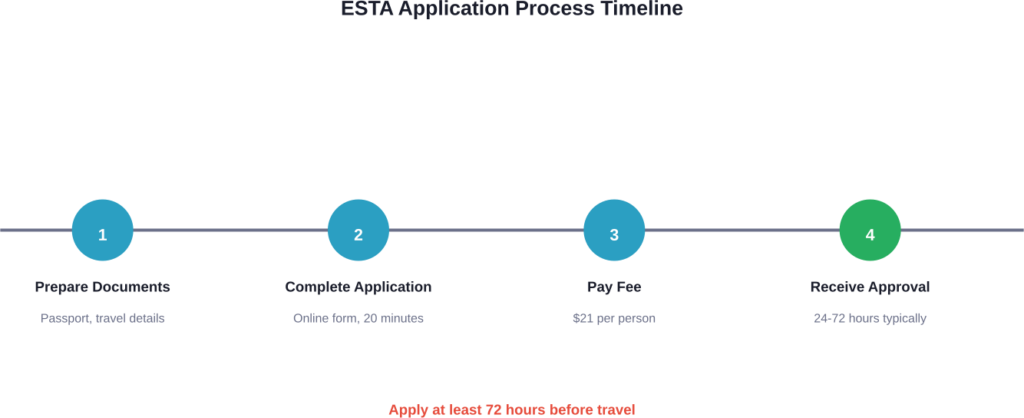
The ESTA application process happens entirely online. Travelers should apply at least 72 hours before departure, though many applications receive approval within minutes.
According to the U.S. Embassy Jerusalem, the application requires personal information, passport details, and answers to security and eligibility questions. The system asks about criminal history, previous visa denials, and visits to certain countries.
ESTA costs $21 per person and allows for multiple entries during the two-year validity period. Payment happens directly through the official ESTA website using a credit or debit card.
ESTA Approval Timeline and Validity
Most ESTA applications receive a response within 24 to 72 hours. Some get approved almost immediately after submission.
Once approved, an ESTA remains valid for two years from the approval date. During this period, travelers can make multiple trips to the United States without reapplying. Each visit can last up to 90 days.
But wait. The ESTA expires if the linked passport expires, even if the two-year period hasn’t ended. Travelers would need to apply for a new ESTA with their new passport.
Important Limitations and Restrictions
The 90-day stay limit is absolute. Extensions are not available under the Visa Waiver Program. If someone overstays even by a single day, they lose the ability to use the Visa Waiver Program in the future permanently.
Travelers cannot change their status while in the United States on ESTA. Someone who enters as a tourist cannot decide to enroll in a degree program or accept employment. These activities require different visa types obtained before arrival.
The program doesn’t allow for adjustment of status to permanent residency either. Anyone planning to pursue a green card should consult with immigration authorities about the appropriate visa category before traveling.
When You Need a Traditional Visa Instead
Some Israeli citizens don’t qualify for ESTA and must apply for a traditional visa. This includes travelers who have visited certain countries, those with previous immigration violations, or anyone planning activities beyond tourism or business.
Students, journalists with media credentials, crew members, and anyone intending to work must obtain the appropriate visa type. The U.S. Embassy in Jerusalem and Branch Office in Tel Aviv process these visa applications.
Traditional visa applications require scheduling an interview, paying separate fees, and providing documentation about the purpose of travel. The process takes significantly longer than ESTA but offers more flexibility for extended stays.
Dual Citizens and Special Cases
Israeli citizens who also hold citizenship in Iran, Iraq, Syria, or Sudan face additional scrutiny. These dual nationals typically cannot use the Visa Waiver Program regardless of which passport they present.
The same restriction applies to anyone who has traveled to these countries or Libya, Somalia, or Yemen since March 2011. Exceptions exist for official government or military travel, but these require documentation.
ESTA vs. Traditional B-1/B-2 Visa
So which option makes more sense? It depends on individual circumstances.
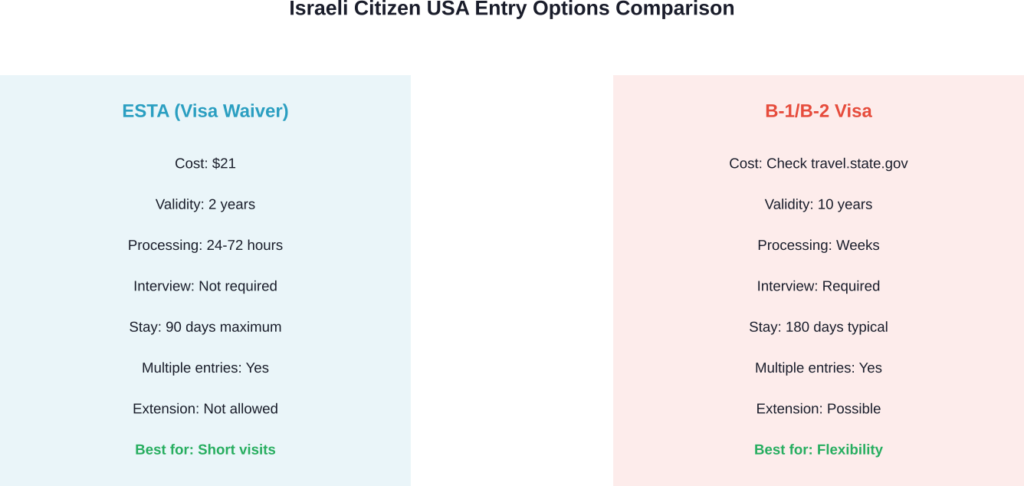
| Factor | ESTA | B-1/B-2 Visa |
|---|---|---|
| Application Process | Online only, no interview | Online form plus in-person interview |
| Processing Time | Usually 24-72 hours | Several weeks |
| Validity Period | 2 years | 10 years |
| Cost | $21 | Check current fees on travel.state.gov |
| Maximum Stay | 90 days per visit | Up to 180 days (at officer’s discretion) |
| Extension Possible | No | Yes, can apply for extension |
| Status Change | Not permitted | May be possible |
ESTA works well for short business trips, vacations, and visiting family. The convenience and speed make it ideal for travelers with straightforward plans.
A traditional visa makes more sense for anyone planning extended stays, those who visit the United States frequently, or travelers who might need flexibility in their plans. The ten-year validity and possibility of extensions provide options that ESTA doesn’t offer.
Common Mistakes to Avoid
Many Israeli travelers make preventable errors when applying for ESTA. Understanding these pitfalls helps ensure smooth approval.
Applying too close to departure causes unnecessary stress. While many applications get approved quickly, some require additional processing. The 72-hour recommendation provides a buffer.
Typographical errors in passport information create problems. The details on the ESTA application must match the passport exactly. Even minor discrepancies can trigger denials or entry issues.
Some travelers forget to check their ESTA status before subsequent trips. Just because the authorization was valid for a previous visit doesn’t guarantee it remains active. Passports expire, and ESTA approval expires with them.
Entry Requirements Beyond ESTA
Having an approved ESTA doesn’t guarantee entry to the United States. Customs and Border Protection officers at the port of entry make the final determination.
Officers may ask about the purpose of the visit, accommodation plans, and return travel arrangements. Having documentation like hotel reservations, return flight confirmations, and proof of sufficient funds helps demonstrate legitimate tourist or business intent.
Travelers should be prepared to explain their plans clearly and concisely to Customs and Border Protection officers. Inconsistent answers or suspicious circumstances can result in denied entry even with valid ESTA authorization.
Security Considerations for 2026
Global security situations affect travel requirements. The U.S. Department of State issues travel advisories that Israeli citizens should monitor before planning trips.
Recent security alerts following regional tensions have impacted visa processing and entry procedures. Travelers should check the latest guidance from the U.S. Embassy Jerusalem before finalizing travel plans.
The Department of State operates a 24/7 Task Force available at +1-202-501-4444 (from abroad) and 1-888-407-4747 (from the U.S. and Canada). While this primarily serves U.S. citizens, understanding current security postures helps Israeli travelers assess whether their trip timing is appropriate.
Frequently Asked Questions
Most ESTA applications for Israeli passport holders receive a response within 24 to 72 hours. Some applications get approved within minutes of submission. Travelers should apply at least 72 hours before their departure date to allow for any unexpected processing delays or requests for additional information.
No. The Visa Waiver Program does not allow extensions under any circumstances. The 90-day limit is absolute. Overstaying even by one day results in permanent loss of Visa Waiver Program eligibility and potential immigration consequences. Travelers needing longer stays should apply for a traditional B-1/B-2 visa before traveling.
If an ESTA application receives a denial, the traveler must apply for a traditional B-1/B-2 visa through the U.S. Embassy in Jerusalem or Branch Office in Tel Aviv. This process requires scheduling an interview, completing additional forms, and providing supporting documentation. The visa application allows for a more thorough review of eligibility.
Generally speaking, remote work for a foreign employer during a short visit exists in a gray area. ESTA covers tourism and certain business activities like attending meetings or conferences. Working remotely may technically violate the terms. Anyone planning significant work activities should consult with immigration authorities about the appropriate visa category.
Yes. Every traveler, regardless of age, needs individual ESTA authorization. This includes infants and children. Parents or guardians can submit applications on behalf of minors, but each child requires a separate application and $21 fee.
Yes. ESTA covers transit through the United States to another destination. The same 90-day maximum applies, though transit stays are typically much shorter. Travelers must have onward tickets and proper documentation for their final destination.
An ESTA is tied to a specific passport. When the passport expires, the ESTA authorization becomes invalid even if the two-year period hasn’t ended. Travelers must apply for a new ESTA using their new passport information and pay the $21 fee again.
Making Your USA Travel Plans
Israeli citizens now enjoy significantly easier access to the United States compared to just a few years ago. The Visa Waiver Program eliminates much of the bureaucracy that previously complicated travel planning.
Understanding the requirements and limitations ensures smooth travel experiences. ESTA works exceptionally well for short visits, while traditional visas remain the better option for extended stays or complex itineraries.
Before booking flights, verify passport validity, check ESTA eligibility, and apply with sufficient time before departure. These simple steps prevent last-minute complications and allow for stress-free travel to the United States.
Ready to visit the USA? Check the official ESTA website to begin your application and verify current requirements for Israeli passport holders.