Quick Summary: Yes, Indian citizens need a visa to visit the USA. India is not part of the Visa Waiver Program, so all Indian nationals must obtain a visa before traveling to the United States, whether for tourism, business, study, or work purposes.
Planning a trip to the United States from India? The visa question comes up first. Unlike citizens from certain countries who can enter visa-free, Indian passport holders face specific requirements before boarding that flight to New York, Los Angeles, or anywhere else in America.
Here’s the thing though—while the answer is straightforward, understanding which visa type suits your purpose and navigating the application process requires clarity. Let’s break down everything Indian nationals need to know about visiting the USA.
Why Indian Citizens Cannot Travel Visa-Free to the USA
The United States operates a Visa Waiver Program (VWP) that permits citizens of 42 countries to travel for business or tourism for up to 90 days without a visa. India is not among these countries.
According to the U.S. Department of State, a citizen of a foreign country seeking to travel to the United States generally must first obtain a visa, which is placed in the traveler’s passport. Indian nationals fall squarely into this category, regardless of the purpose or duration of their visit.
This means every Indian citizen—whether planning a two-week vacation, attending a business conference, or visiting family—must go through the formal visa application process before departure.
Types of US Visas for Indian Citizens
The visa landscape can seem complex, but most Indian travelers fall into one of several common categories. Understanding which applies to your situation streamlines the entire process.
B1/B2 Visitor Visas
The B1/B2 visa is the most common for Indian citizens visiting the USA. This combined category covers both business (B1) and tourism (B2) purposes.
| Visa Type | Purpose | Common Activities |
|---|---|---|
| B-1 (Business) | Business activities | Attending meetings, consultations, negotiating contracts, conferences |
| B-2 (Tourism) | Tourism and personal visits | Vacation, visiting friends or relatives, medical treatment, tourism |
The visa application fee is $185, according to the U.S. Department of State. This fee is non-refundable and non-transferable, regardless of whether the visa is approved or denied.
Work and Study Visas
Indian professionals and students require different visa categories. The H-1B visa serves professionals in specialty occupations, while F and M visas cover students.
Recent policy discussions from the Indian Ministry of External Affairs highlight ongoing attention to H-1B visa processing issues affecting Indian professionals. According to the Indian Ministry of External Affairs statement from February 2026, exceptions to H-1B payment requirements might be granted in ‘extraordinarily rare circumstances’ where the Secretary of Homeland Security determines the worker’s employment is in the U.S. national interest.
The Visa Application Process
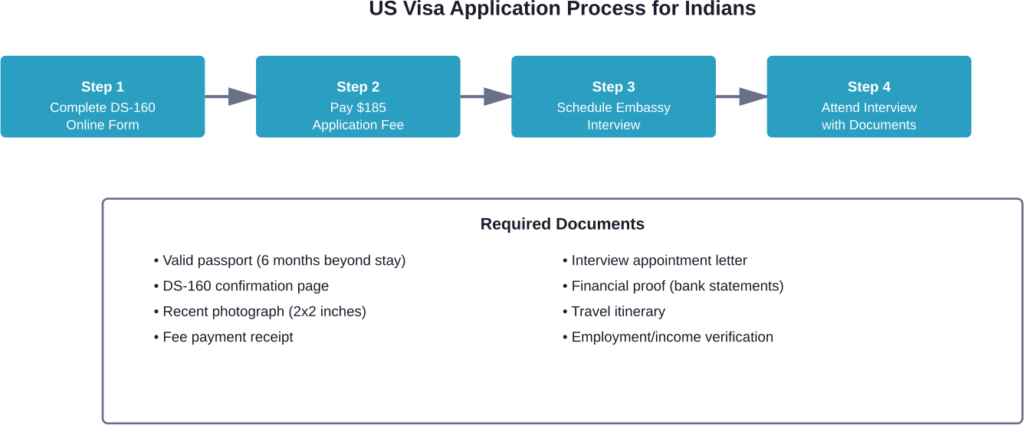
The application process requires several distinct steps. Applicants should schedule their visa interview appointments at the U.S. Embassy or Consulate in their country of residence or nationality, as noted by the U.S. Embassy in India.
Step 1: Complete the DS-160 Form
The DS-160 is the online nonimmigrant visa application form. This comprehensive form collects biographical information, travel plans, and background details. Accuracy matters—errors can delay processing or result in denial.
Step 2: Pay the Application Fee
The $185 visa application fee must be paid before scheduling an interview. This fee applies to B1/B2 visitor visas and is non-refundable regardless of the outcome.
Step 3: Schedule Your Embassy Interview
Indian applicants typically schedule interviews at one of the U.S. Consulates in India—Mumbai, New Delhi, Chennai, Kolkata, or Hyderabad. Wait times vary by location and season.
According to parliamentary questions to the Indian Ministry of External Affairs, waiting periods for US visas have been a concern, with inquiries about whether waiting periods exceed 300 working days, though processing times fluctuate based on demand and consular staffing.
Step 4: Attend the Interview
The consular interview is mandatory for most applicants. Officers assess the purpose of travel, ties to India, and intent to return. Strong documentation supporting these factors improves approval chances.
Required Documentation
Thorough preparation increases approval likelihood. Beyond the DS-160 confirmation and fee receipt, applicants need supporting documents that demonstrate ties to India and legitimate travel purposes.
| Document Category | Examples |
|---|---|
| Identity Documents | Valid passport (minimum 6 months validity), previous passports |
| Financial Proof | Bank statements, income tax returns, salary slips, property documents |
| Employment Verification | Employment letter, business registration, leave approval |
| Travel Plans | Flight itinerary, hotel bookings, invitation letters |
| Personal Ties | Family documents, marriage certificate, property ownership |
Real talk: officers want assurance that applicants will return to India. Strong family ties, stable employment, property ownership, and clear travel purposes all strengthen applications.
Additional Considerations for Indian Travelers
Once approved, visitor visas typically allow multiple entries over several years. The specific validity period depends on reciprocity agreements between the United States and India.
That said, visa validity doesn’t determine how long someone can stay during each visit. The maximum stay duration for B1/B2 visa holders is determined by Customs and Border Protection officers at the port of entry, though Customs and Border Protection officers make the final determination at the port of entry.
REMOVE this claim or soften significantly
Common Reasons for Visa Denial
Understanding denial reasons helps applicants avoid pitfalls. The most common issues include:
- Insufficient ties to India (weak evidence of intent to return)
- Incomplete or inconsistent documentation
- Previous immigration violations or overstays
- Inability to demonstrate financial capacity
- Unclear or suspicious travel purpose
Applicants can reapply if denied, but addressing the underlying issues that caused the initial denial significantly improves chances on subsequent attempts.
Frequently Asked Questions
No. Indian citizens cannot visit the USA without a visa. India is not part of the Visa Waiver Program, so all Indian nationals must obtain appropriate visas before traveling to the United States, regardless of visit duration or purpose.
The B1/B2 visitor visa application fee is $185 for Indian citizens, according to the U.S. Department of State. This fee is non-refundable and non-transferable, even if the visa application is denied.
Processing times vary significantly based on the consulate location, time of year, and current application volume. Wait times for interview appointments can range from several weeks to several months. Applicants should apply well in advance of planned travel dates.
While applicants can technically apply at any U.S. Consulate in India, the U.S. Embassy recommends scheduling interviews in the applicant’s city of residence or nationality. The five locations are Mumbai, New Delhi, Chennai, Kolkata, and Hyderabad.
Visa application fees are non-refundable if denied. Applicants can reapply, but should address the reasons for denial before submitting a new application. There is no waiting period requirement between applications, though applying again without addressing underlying issues typically results in repeated denials.
While B1/B2 visas may be valid for multiple years, the duration of each stay is determined by Customs and Border Protection officers at the port of entry. Typically, visitors are admitted for up to 180 days per entry, though officers have discretion to grant shorter or longer periods based on the stated purpose of travel.
Yes, all travelers including infants and children need individual visas. Each family member must complete a separate DS-160 form and pay the $185 application fee, though families can typically attend interviews together.
Final Thoughts
Indian citizens absolutely need a visa to visit the USA—there are no exceptions or workarounds. But the process, while detailed, is navigable with proper preparation.
Focus on gathering strong supporting documentation, demonstrating clear ties to India, and presenting a legitimate travel purpose. Start the application process well before your intended travel dates to accommodate potential delays.
The investment in time and preparation pays off with the opportunity to experience everything the United States offers, from business opportunities to family reunions to unforgettable vacations across America’s diverse landscapes.