Here’s a question that stresses out international travelers more than lost luggage and delayed flights combined: do you actually need a visa just to catch a connecting flight through the United States?
The short answer? Yes, usually.
But don’t close this tab yet. The type of visa (or visa alternative) you need depends on your citizenship, how long you’re staying, and what exactly you’re doing during your layover. And honestly, the whole process is less scary than it sounds once you know what you’re dealing with.
Whether you’re flying from London to Mexico City with a quick stop in Miami, or connecting through New York on your way from Asia to South America, understanding US transit requirements can save you from getting turned away at the gate. Let’s break down everything you need to know about connecting flights in the USA and what documents you’ll need to make it work.
Why the USA is Different When It Comes to Transit
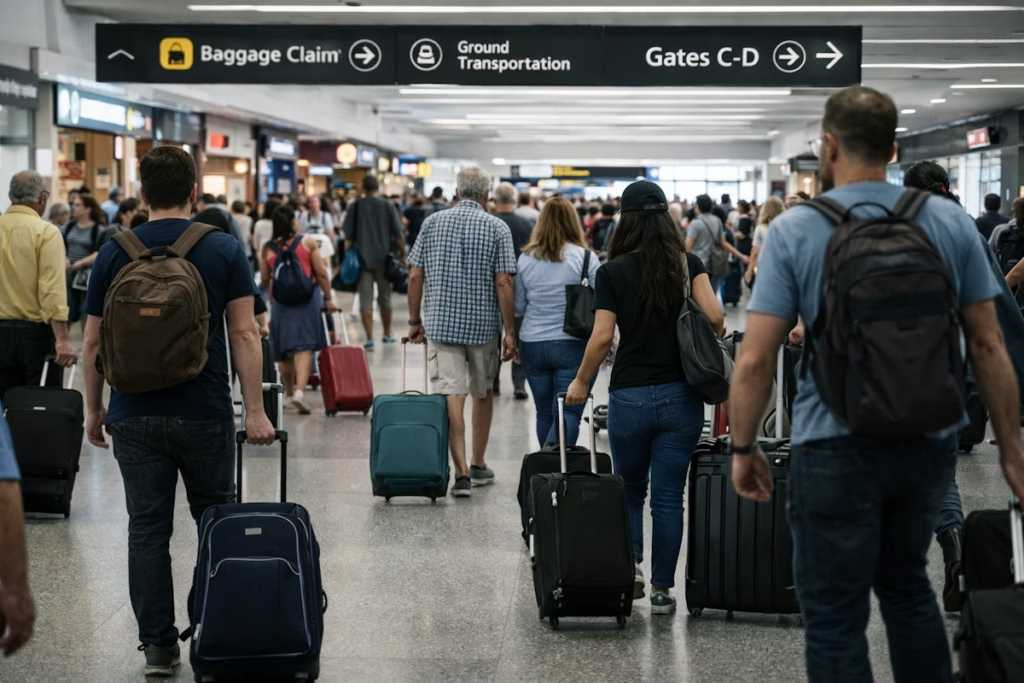
Most countries have international transit areas where you never technically “enter” the country. You stay in this limbo zone between flights, and voila—no visa needed.
The United States doesn’t work that way.
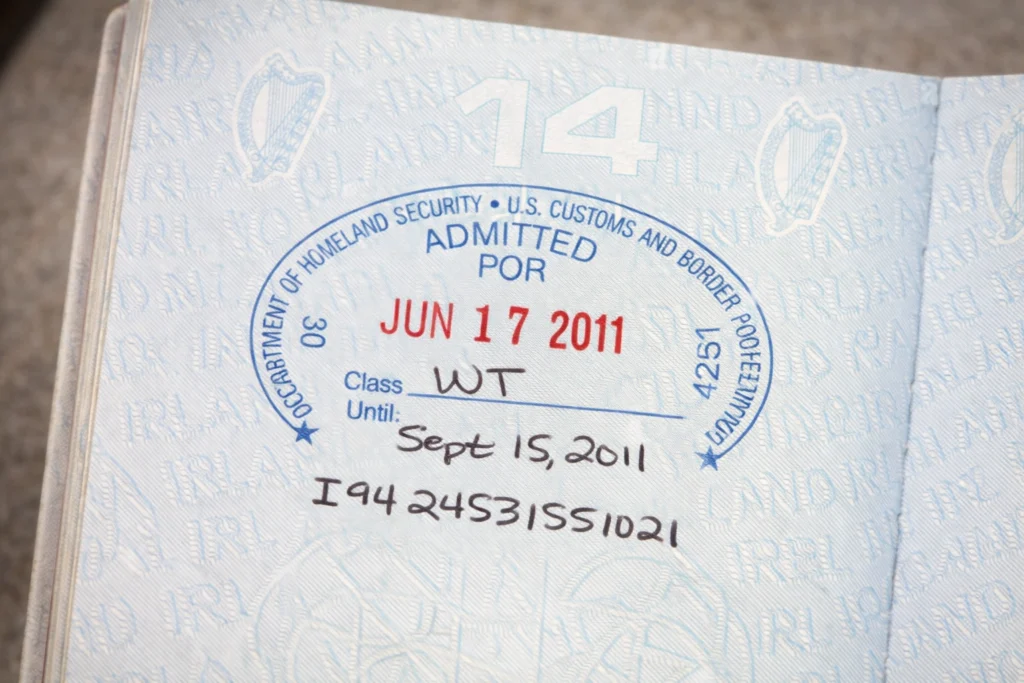
According to U.S. Customs and Border Protection, all passengers arriving at US airports must clear immigration and customs, even if you’re just passing through. There’s no sterile international transit zone. You’re technically entering the United States, collecting your bags (usually), going through immigration, and then re-checking everything for your next flight.
Real talk: this surprises a lot of travelers. Community discussions on travel forums are full of people who booked cheap connecting flights through the US without realizing they’d need authorization to transit. Don’t be that person scrambling at check-in.
Do You Need a Visa Even If You’re Not Leaving the Airport?
Yes. This deserves its own section because it’s the number one misconception.
Even if your layover is just two hours and you plan to camp out at a gate eating overpriced airport food, you still need proper authorization to transit through US airports. You’ll go through the same immigration process as someone staying in the country for a week.
The only exception? If you’re flying through one of the preclearance airports. U.S. Customs and Border Protection operates preclearance facilities at 15 international airports (mostly in Canada, Ireland, and the Caribbean). At these locations, you clear US immigration before boarding your flight, so connecting through the US becomes like a domestic connection.
But for everyone else flying into standard US airports? You’re going through immigration no matter what.
Your Two Main Options: ESTA vs. Transit Visa
Okay, so what exactly do you need? Most travelers fall into one of two categories.
Option 1: ESTA (Electronic System for Travel Authorization)
If you’re a citizen of one of the Visa Waiver Program countries, you can use ESTA instead of getting an actual visa. This is the easiest route by far.
ESTA lets you transit through (or visit) the United States for up to 90 days without a visa. The application is done entirely online through the official U.S. Customs and Border Protection website, costs $40.27, and usually gets approved within 72 hours—though many people get approved in minutes.
Countries in the Visa Waiver Program include most of Western Europe (UK, France, Germany, Spain, Italy, etc.), Australia, New Zealand, Japan, South Korea, Singapore, and several others. If you’re from one of these countries, don’t bother with a transit visa. Just get ESTA.
Here’s what’s beneficial about ESTA: it’s valid for two years, so even if you’re only using it for this one connecting flight, you’re covered for future trips too. Multiple entries, multiple uses, same authorization.
Option 2: C-1 Transit Visa
If you’re not eligible for ESTA, you’ll need a C-1 transit visa. According to the U.S. Department of State’s travel guidelines, this visa is specifically designed for people passing through the United States on their way to another country.
The C-1 transit visa is granted for the duration necessary for transit, and while the maximum period of stay granted at the port of entry cannot exceed 29 days, the visa holder must depart the U.S. on the next available flight or vessel.
Getting a C-1 visa requires more effort than ESTA. You’ll need to apply through a US embassy or consulate, attend an in-person interview, and pay the application fee (currently $185 for most applicants). Processing times vary depending on where you apply, but plan for at least a few weeks.
| Feature | ESTA | C-1 Transit Visa |
| Who qualifies | Citizens of Visa Waiver Program countries | Citizens of countries not in VWP |
| Application process | Online only | Embassy/consulate application + interview |
| Cost | $40.27 | $435 |
| Processing time | Usually within 72 hours | Several weeks to months |
| Validity period | 2 years (multiple entries) | Up to 10 years (at consular discretion) |
| Maximum stay | 90 days | 29 days (transit only) |

The Visa Services: The Smarter Way to Navigate US Transit Requirements
Navigating the complexities of US transit requirements doesn’t have to derail your travel plans. Our team at The Visa Services specializes in removing the friction from international travel, offering expert guidance that saves you up to 30 hours of tedious paperwork and stressful booking. Whether you need a C-1 transit visa or a standard tourist visa to cover your layover, we leverage our 8 years of experience and a vast network of contacts to ensure your application is handled with precision.
We understand that time is often of the essence when you have a flight already booked, which is why we offer an ultra-fast service that can secure your urgent US visa in as little as 2 weeks. With a proven track record of over 20,000 processed visas and a 45% higher approval rate than DIY applications, we take care of everything from correct form filling to arranging your itinerary. Let us handle the bureaucracy so you can focus on your journey, knowing your documentation is in the hands of the UAE’s leading visa agency.
Special Cases and Exceptions You Should Know About
Now, this is where it gets interesting. Not everyone fits neatly into the ESTA or C-1 visa boxes.
Canadian and Bermudian Citizens
If you’re a Canadian or Bermudian citizen, congratulations—you generally don’t need ESTA or a visa for transit. You can typically enter the US with just your passport. This applies to most travel purposes, including connecting flights.
When ESTA Isn’t Enough
Even if you’re from a Visa Waiver Program country, you can’t use ESTA if you’ve recently visited certain countries. If you have traveled to or been present in Cuba (on or after January 12, 2021), Iran, Iraq, Libya, North Korea, Somalia, Sudan, Syria, or Yemen on or after March 1, 2011, you are no longer eligible for ESTA.
The same applies if you’re a dual citizen of one of these countries, even if your other passport is from a VWP country.
Longer Layovers: When You Want to Leave the Airport
Planning to explore during a long layover? If you have ESTA, you’re golden—you can leave the airport, grab dinner, check into a hotel, whatever you want, as long as you’re back for your flight.
With a C-1 transit visa, you’re expected to be in transit. If you have a layover that requires an overnight stay, that’s generally accepted. Just don’t plan a week-long vacation on a transit visa. That’s not what it’s for, and immigration officers will notice.
How to Apply for ESTA (The Easy Route)
Let’s walk through this step-by-step because it’s simpler than you think.
First, go to the official U.S. Customs and Border Protection ESTA website. And I mean the official one—there are tons of scam websites that charge you way more. The real site is run by CBP and costs exactly $40.27.
You’ll need your passport handy. The application asks for basic information: your name, date of birth, passport number, contact details, and your travel plans (though this doesn’t have to be final—you can use ESTA for different trips).
There’s also a series of eligibility questions. Answer honestly. These cover things like past visa denials, criminal history, and whether you have certain communicable diseases.
Pay the $40.27 fee with a credit or debit card. Then wait. Like I mentioned earlier, most applications get approved quickly, but the official guidance says to apply at least 72 hours before your flight.
Once approved, your ESTA is electronically linked to your passport. You don’t need to print anything, though some people like to keep a copy of their approval number just in case.
That’s it. Seriously. ESTA makes connecting through the US remarkably painless for eligible travelers.
How to Apply for a C-1 Transit Visa (When You Need One)
If you need the actual transit visa, here’s what you’re looking at.
Step 1: Complete Form DS-160
This is the Online Nonimmigrant Visa Application. It’s long and asks for detailed information about your travel plans, employment, family, and background. Take your time and answer accurately.
You’ll upload a photo that meets specific requirements (size, background, no glasses, etc.). At the end, you’ll get a confirmation page with a barcode—save this. You’ll need it for your interview.
Step 2: Pay the Visa Application Fee
The total cost for a C-1 transit visa in 2026 is $435 (comprising the $185 MRV fee and the $250 Visa Integrity Fee). Payment methods vary by country, so check your local US embassy website for instructions.
Step 3: Schedule Your Interview
Most applicants between ages 14 and 79 need an in-person interview at a US embassy or consulate. You’ll schedule this through the embassy’s appointment system.
Wait times for interview appointments vary dramatically depending on location and time of year. In some places, you might get an appointment in a few days. In others, you might wait months. Plan accordingly.
Step 4: Prepare Your Documents
For your interview, bring:
- Your passport (valid for at least six months beyond your travel date)
- DS-160 confirmation page
- Application fee payment receipt
- One photograph (if not uploaded with DS-160)
- Your flight itinerary showing your connecting flight
- Proof of onward travel (ticket to your final destination)
- Proof of ties to your home country (employment letter, property ownership, family ties)
Step 5: Attend Your Interview
Arrive early. Go through security. Wait for your turn.
The consular officer will ask about your travel plans. Be clear and honest: you’re transiting through the US to reach another country. Show your flight itinerary. Explain your final destination.
They want to know you’re genuinely in transit and not using this as a sneaky way to enter the US. If you have a job, family, property, or other strong ties to your home country, mention them. This demonstrates you have reasons to leave the US as planned.
Step 6: Wait for Processing
According to the U.S. Department of State, most visa applications are processed within a few days to a few weeks after the interview. If approved, your passport will be returned to you with the visa stamped inside.
Some applications require additional administrative processing, which can take several weeks or months. This is why you should apply well in advance of your travel dates.
| Application Stage | Timeline | Key Actions |
| Form DS-160 | 1-2 hours | Complete online, save confirmation |
| Fee payment | Same day | Pay $435, keep receipt |
| Interview scheduling | Varies (days to months) | Book earliest available appointment |
| Document preparation | 1-3 days | Gather all required paperwork |
| Embassy interview | 15-30 minutes | Answer questions honestly, bring all docs |
| Visa processing | Few days to weeks | Wait for passport return with visa |
What Happens at the Airport: The Reality of Connecting Through the US
Let’s talk about what actually happens when your flight lands at a US airport for a connection.
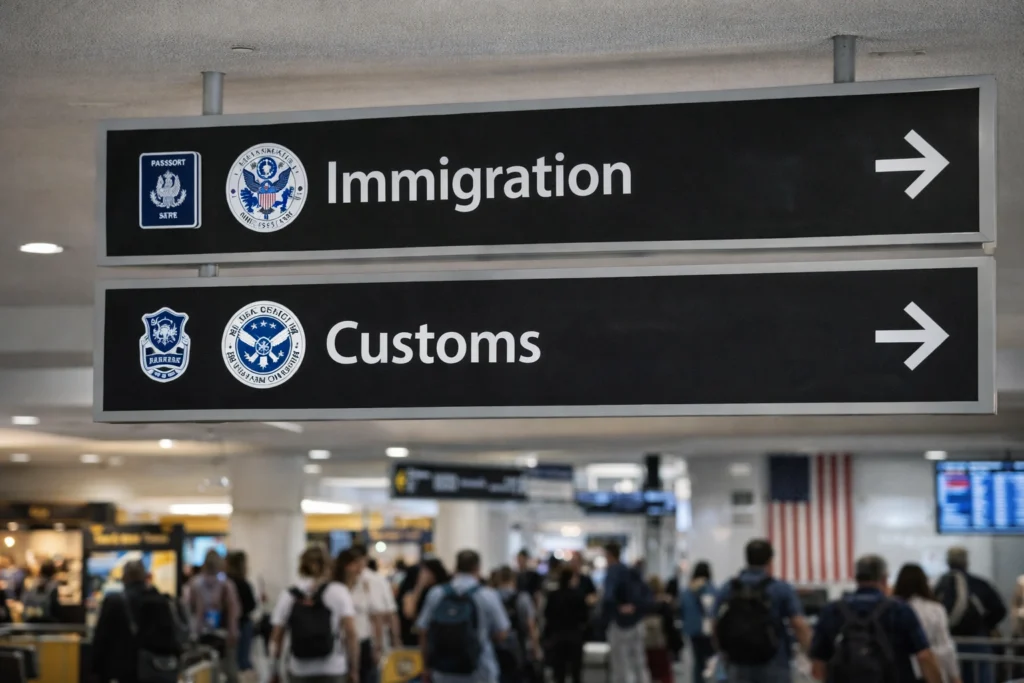
You’ll deplane and follow signs for “Arrivals” or “Immigration.” Even though you’re connecting, you go through the same process as arriving passengers.
- First stop: immigration. Have your passport and authorization (ESTA confirmation or visa) ready. The officer will ask basic questions—where are you coming from, where are you going, how long is your layover. Answer clearly and have your onward flight information handy.
- Next: baggage claim. Here’s something that catches people off guard—if your bags were checked to your final destination, you still need to pick them up, cart them through customs, and then re-check them. Travel forum discussions confirm this is a common point of confusion.
- At customs, you’ll declare anything you’re bringing into the US (even temporarily). For most transit passengers, you won’t have anything to declare.
- Finally, you’ll re-check your bags and go through security again to reach your connecting flight’s gate.
How much time should you allow? Generally speaking, most travelers recommend at least 2-3 hours for international connections through US airports. Major hubs like JFK, LAX, Miami, or Chicago can have long immigration lines. And if you’re flying during peak hours, add more cushion.
What You Can and Can’t Do on a Transit Visa
If you’re traveling on a C-1 transit visa, there are some important restrictions to understand.
You can’t work or study in the United States. The visa is strictly for transit purposes. You can’t accept employment, even temporarily, and you can’t enroll in any educational program.
You can’t stay longer than necessary for your transit. While the visa allows stays up to 29 days, immigration officers at the port of entry decide how long you can actually stay based on your specific travel plans. For a simple connecting flight, that might just be a day or two.
But wait—what if you miss your connecting flight? If it’s due to airline issues (delays, cancellations), you’re generally fine. The airline will rebook you, and your transit visa still covers you. Just keep documentation of the flight disruption.
You can leave the airport if needed. If you have a long layover or overnight connection, you can go to a hotel or explore the city. Just be back for your flight, and don’t overstay your authorized period.
Common Mistakes to Avoid
Over the years, certain mistakes keep popping up in travel forums and community discussions. Here’s what to avoid.
- Booking connecting flights without checking visa requirements first. This is the big one. That cheap flight through New York looks great until you realize you need a visa and the process takes weeks.
- Applying on fake ESTA websites. Scam sites charge significantly more than the official government site. Look for the .gov domain and verify you’re on the real U.S. Customs and Border Protection website.
- Not allowing enough connection time. Travel forum discussions consistently show that US airport immigration and customs take longer than expected. Don’t book a 60-minute connection for international flights through the US.
- Thinking airport transit zones work like they do in Europe. They don’t. You will go through immigration in the United States, period.
- Lying on your ESTA or visa application. Seriously, don’t. Providing false information can result in permanent visa ineligibility. If you made a mistake on your first ESTA visit, it’s better to disclose it than hope nobody notices.
- Forgetting to check ESTA is still valid. ESTA lasts two years, but your passport might expire before then. If you get a new passport, you need a new ESTA—they’re linked to specific passport numbers.
Tips for Smooth Transit Through US Airports
Want to make your connecting flight experience less stressful? Here are some practical tips.
- Apply for your ESTA or visa well in advance. Don’t wait until the week before your flight. Give yourself breathing room in case there are issues.
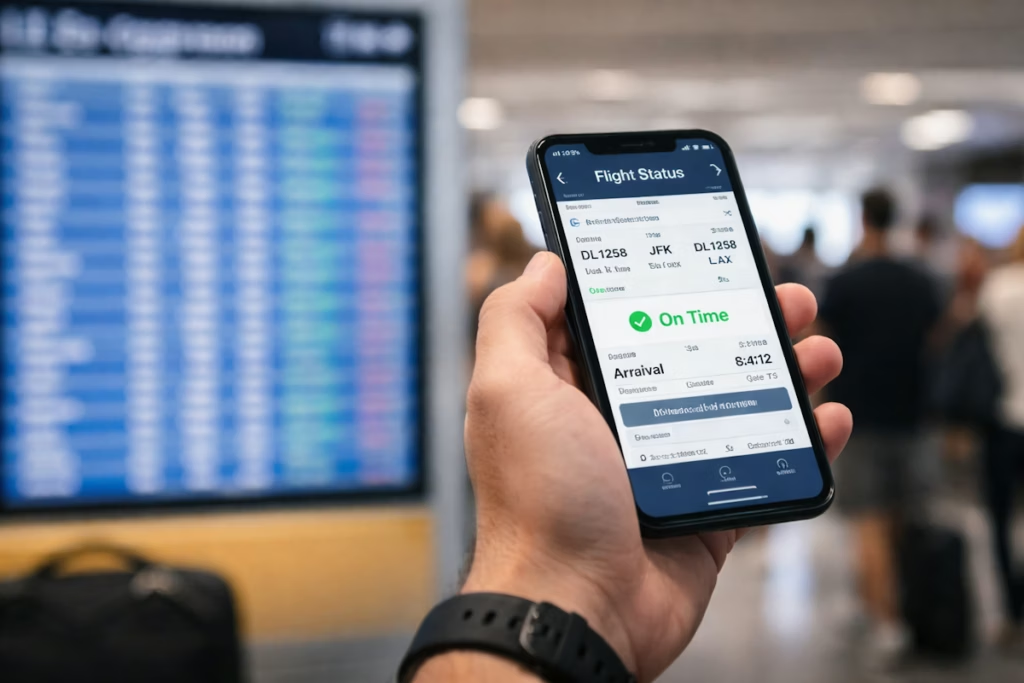
- Download your airline’s app and enable flight notifications. US airlines are generally good about updating you on gate changes and delays.
- Consider Global Entry if you travel frequently. While it’s designed for US citizens and permanent residents, several countries have reciprocal trusted traveler programs that can speed up your immigration experience.
- Pack any medications or essentials in your carry-on. If your checked bags get delayed during the transfer, you’ll still have what you need.
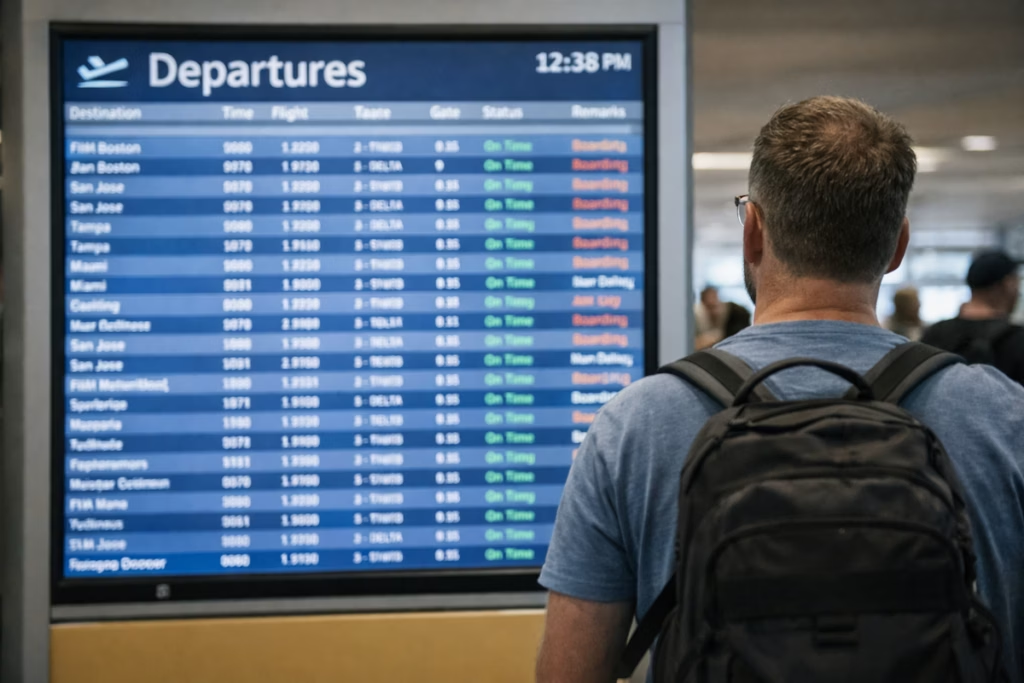
- Have your connecting flight information easily accessible. Screenshot your boarding pass or have your flight details on your phone. Immigration officers often ask where you’re headed next.
- Choose connecting airports strategically if you have options. Smaller airports often have shorter immigration lines than massive hubs like JFK or LAX.
Alternative Routes: When It Makes Sense to Avoid the US
Look, sometimes it’s just easier to avoid transiting through the United States altogether.
- If you’re not eligible for ESTA and the visa application process seems like too much hassle for a simple connection, consider routing through Canada, Panama, or Europe instead. Many routes offer competitive prices without the immigration headaches.
- If you have a criminal record (even minor offenses) or past visa denials, connecting through the US might mean additional scrutiny or even denial of entry. Sometimes it’s not worth the stress.
- If you’re traveling with young children or elderly family members, the US immigration process can be exhausting. A more straightforward connection might make your journey smoother, even if the flight takes slightly longer.
Final Thoughts: Don’t Let Transit Requirements Catch You Off Guard
Connecting flights through the United States require more planning than transit through most other countries. But once you understand the system, it’s totally manageable.
If you’re from a Visa Waiver Program country, get your ESTA sorted early and you’re good to go for two years. If you need a C-1 transit visa, start the application process weeks or even months before your travel date.
The key is not letting this catch you by surprise. Don’t book that amazing deal on a flight through New York until you’ve confirmed you have (or can get) the right authorization.
And remember: US immigration and customs might seem like overkill for a simple connection, but they’re the same for everyone. Give yourself plenty of time, have your documents ready, and you’ll get through it just fine.
Safe travels, and may your connecting flights always have reasonable layover times and short immigration lines.
Frequently Asked Questions
Yes. Even for short layovers, you need either ESTA (if eligible) or a C-1 transit visa. There’s no minimum connection time that exempts you from this requirement. All international passengers must clear US immigration regardless of how long their layover is.
Yes, you can transit through the US on a valid B-2 tourist visa. In fact, if you already have a tourist visa, you don’t need a separate transit visa. The B-2 allows you to transit and also gives you the option to stay longer if you want to visit the US during your trip.
If the delay is the airline’s fault, they’ll rebook you and your visa or ESTA will still be valid for the new connection. Keep all documentation about the delay. If you caused the delay (like arriving late to the airport), you’ll need to work with the airline, but your authorization should still cover you as long as you’re not overstaying significantly.
Yes, every passenger needs their own authorization, regardless of age. Infants, toddlers, and teenagers all need either ESTA or a transit visa. Each person must have their own application—you can’t include children on a parent’s authorization.
The official recommendation is at least 72 hours before departure. Many people get approved in minutes, but some applications require additional review. To be safe, apply a week or two before your flight. Once approved, ESTA is valid for two years, so you can also apply months in advance.
It depends on why you were denied. A previous visa denial doesn’t automatically disqualify you, but you’ll need to address the reasons for the denial in your new application. You’ll also need to apply for a visa rather than using ESTA, as the ESTA application asks about past denials and may not approve you.
Contact your airline immediately. You likely won’t be allowed to board your first flight without proper US authorization, since you need it for the connecting flight. You’ll either need to quickly obtain ESTA (if eligible) or change your flight routing. Airlines check travel documents before boarding to avoid transporting passengers who’ll be denied entry.