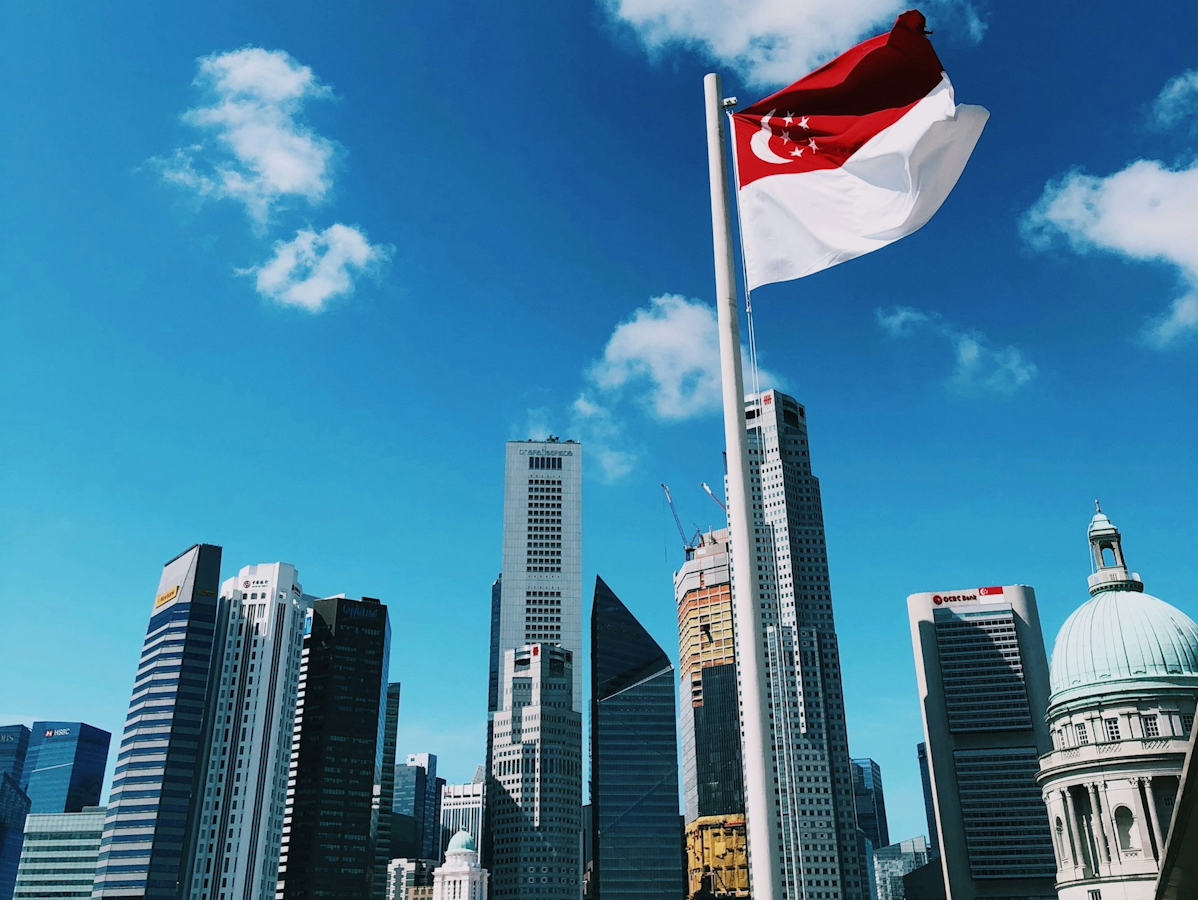
Planning a trip to the United States from Singapore? You’re probably wondering whether you need to go through the hassle of applying for a visa. Here’s the good news: if you’re a Singaporean citizen, the process is significantly easier than you might think.
Singapore holds one of the world’s most powerful passports, and that privilege extends to travel to the United States. But “easier” doesn’t mean visa-free in the traditional sense. Let me break down exactly what you need to know.
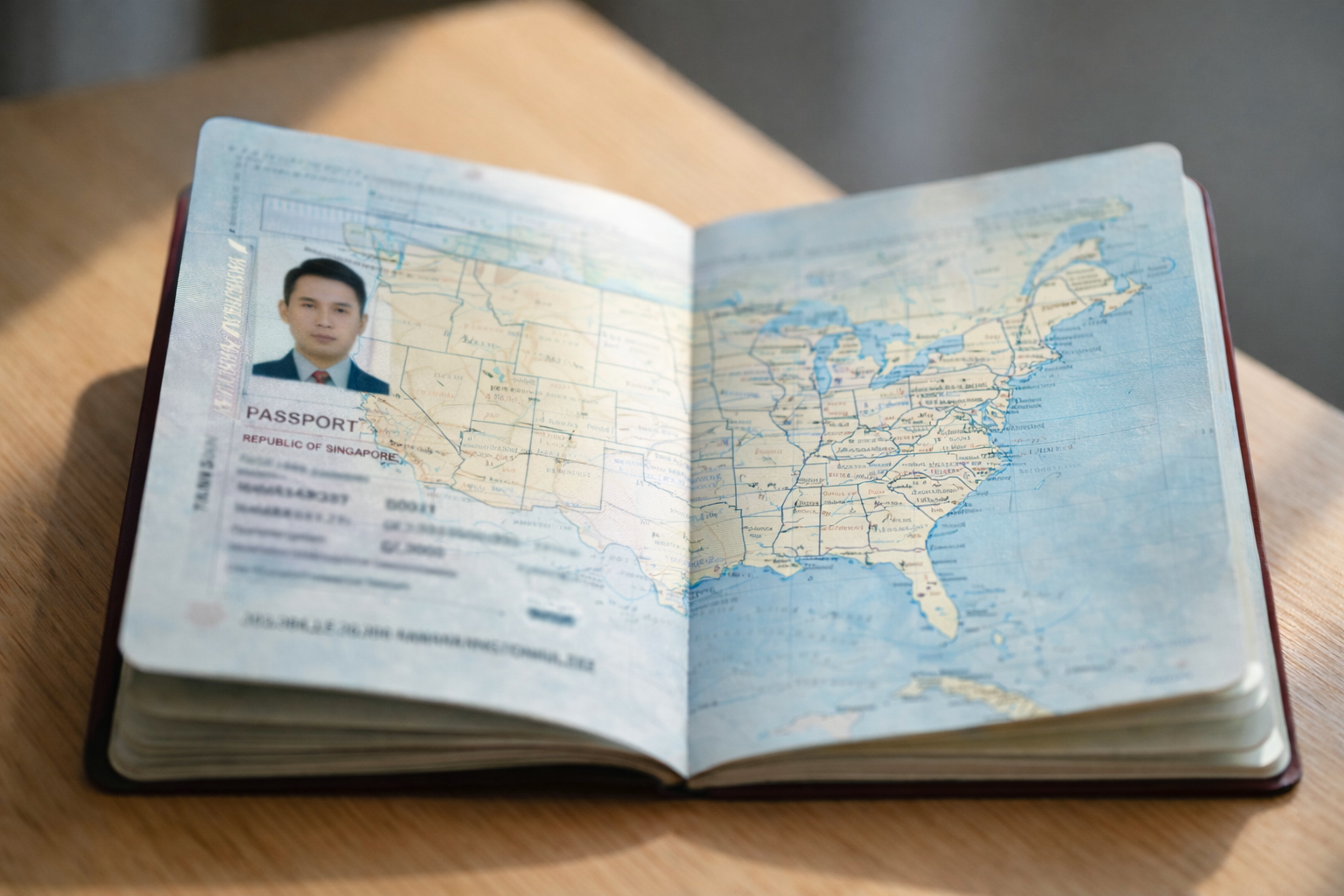
The Short Answer: ESTA, Not a Traditional Visa
Singaporean citizens don’t need a traditional visa for short visits to the United States. Instead, you’ll need something called an ESTA.
Singapore is part of the Visa Waiver Program (VWP), which allows citizens from designated countries to travel to the U.S. for tourism or business without obtaining a traditional visa. But here’s the catch—you still need authorization before you board that plane.
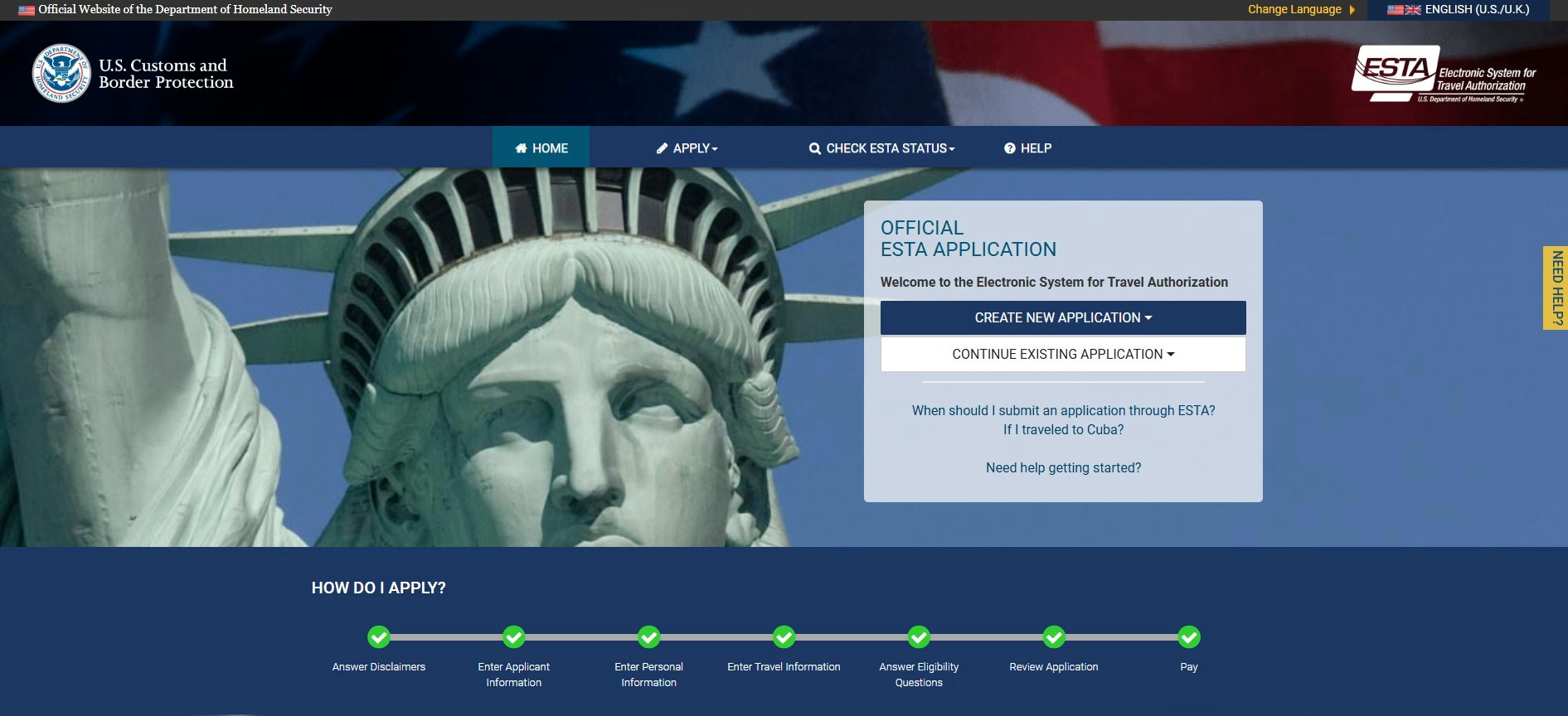
That’s where ESTA comes in. The Electronic System for Travel Authorization is an automated system that determines your eligibility to travel under the VWP. According to the U.S. Embassy in Singapore, an approved ESTA allows citizens to transit or travel to the U.S. for a maximum of 90 days per visit for tourism or business purposes.
Understanding the Visa Waiver Program
The VWP is essentially a partnership between the United States and select countries with strong security relationships. Singapore joined this program thanks to its robust passport security measures and bilateral relationship with the U.S.
Here’s what makes the VWP attractive for Singaporeans:
- No embassy appointment required for short visits
- Faster processing compared to traditional visas
- Valid for multiple entries over two years
- Lower cost than standard visa applications
But the VWP comes with specific rules you absolutely must follow. According to the U.S. Department of State, the Visa Waiver Program Improvement and Terrorist Travel Prevention Act of 2015 introduced additional requirements that still apply today.
Who Qualifies for the Visa Waiver Program?
Not every Singaporean automatically qualifies. You must meet specific criteria:
| Requirement | Details |
| Citizenship | Must be a Singaporean citizen (not just resident) |
| Passport Type | Valid e-passport with biometric chip |
| Trip Duration | 90 days or less |
| Travel Purpose | Tourism, business, or transit only |
| ESTA Status | Approved ESTA before departure |
Real talk: I’ve seen travelers get turned away at the airport because they assumed their Singapore residence permit was enough. It’s not. You need Singaporean citizenship.
How to Apply for ESTA
The ESTA application process is straightforward, but you’ll want to get this done well before your departure date. Here’s what you need to know.
First, only apply through the official website at esta.cbp.dhs.gov. There are dozens of third-party sites that charge inflated fees—don’t fall for them. The official U.S. government fee is significantly lower.
Step-by-Step ESTA Application
The application takes about 20 minutes to complete. You’ll need:
- Your valid Singaporean passport (with at least 6 months validity)
- Contact information and U.S. address (hotel is fine)
- Employment details
- Emergency contact information
- Payment method (credit or debit card)
The system asks various security and eligibility questions. Answer honestly—inconsistencies can lead to denial and complicate future travel. Community discussions on platforms like Reddit reveal that most Singaporeans receive ESTA approval within minutes to a few hours, though the official processing time is up to 72 hours.
ESTA Validity and Updates
Once approved, your ESTA remains valid for two years or until your passport expires, whichever comes first. You can make multiple trips during this period without reapplying, as long as each visit stays under 90 days.
But here’s something important: if your circumstances change, you need to update your ESTA. This includes changes to your name, gender, country of citizenship, or answers to any yes/no questions on the application.
When You Actually Need a Traditional Visa
Okay, so when does ESTA not cut it? Several situations require you to apply for a proper U.S. visa instead.
Staying Longer Than 90 Days
The 90-day limit is non-negotiable under the VWP. And here’s the tricky part—you can’t extend it. One user in a community discussion mentioned their mother-in-law planning to visit for exactly 90 days, and they were advised to make it slightly shorter just in case of flight delays or illness.
If you need to stay longer, you’ll need to apply for a B-1/B-2 visitor visa at the U.S. Embassy in Singapore. These visas typically allow stays of up to six months.
Working in the United States
ESTA doesn’t permit you to work in the U.S. At all. Not even remote work for a Singapore company while physically in the States (technically).
For work purposes, Singaporeans have access to the H-1B1 visa—a special visa category established when Singapore and the U.S. signed their free trade agreement. According to U.S. government sources, this visa is available for Singaporean professionals in specialty occupations requiring a bachelor’s degree or higher, and differs from the regular H-1B visa process.
The H-1B1 is specifically for professionals in specialty occupations requiring a bachelor’s degree or higher. It’s different from the regular H-1B visa and doesn’t require the same lottery system.
Studying in America
Educational programs require student visas (F-1 or M-1), regardless of duration. The VWP doesn’t cover academic study, even for short courses.
| Travel Purpose | Visa/Authorization Needed | Maximum Stay |
| Tourism/Business | ESTA | 90 days |
| Extended Visit | B-1/B-2 Visa | Up to 6 months |
| Work (Specialty Occupation) | H-1B1 Visa | Initially 1 year, renewable |
| Academic Study | F-1 Visa | Duration of program |
| Vocational Training | M-1 Visa | Duration of program |
Recent Changes to U.S. Entry Requirements
Now, this is where it gets interesting. U.S. entry procedures have been tightening, and Singaporeans are feeling the impact.
The U.S. has been enhancing its vetting and screening procedures for foreign nationals. What does this mean in practice?
Increased Interview Requirements
Starting in 2026, the U.S. has moved toward even stricter interview requirements, and interview waivers are no longer guaranteed for most nonimmigrant visa applicants. But here’s the good news for VWP travelers: this primarily affects those applying for traditional visas, not ESTA holders.
That said, user experiences shared in online discussions reveal that immigration officers at U.S. airports have been asking significantly more questions than in previous years. Travelers report being asked about:
- Detailed itineraries and accommodation plans
- Purpose of visit with specific examples
- Work meetings and business contacts
- Financial means to support the trip
One Singaporean traveler mentioned being asked more questions in 2024 than in all previous trips combined. Another prepared by printing their entire itinerary and meeting schedule for a work trip.
Social Media Screening Proposals
There has been discussion about enhanced digital screening procedures for travel authorization. It’s worth being aware that increased digital vetting is an ongoing consideration in U.S. immigration policy.
Practical Tips for Singaporean Travelers
Let me share some practical advice based on current traveler experiences and official guidance.
Before You Fly
Apply for ESTA at least 72 hours before departure, though earlier is better. Airlines check ESTA status during check-in, and without approval, you won’t board.
Print copies of your:
- ESTA approval confirmation
- Complete itinerary with accommodation addresses
- Return flight booking
- Travel insurance details
While digital copies work, having paper backups never hurts.
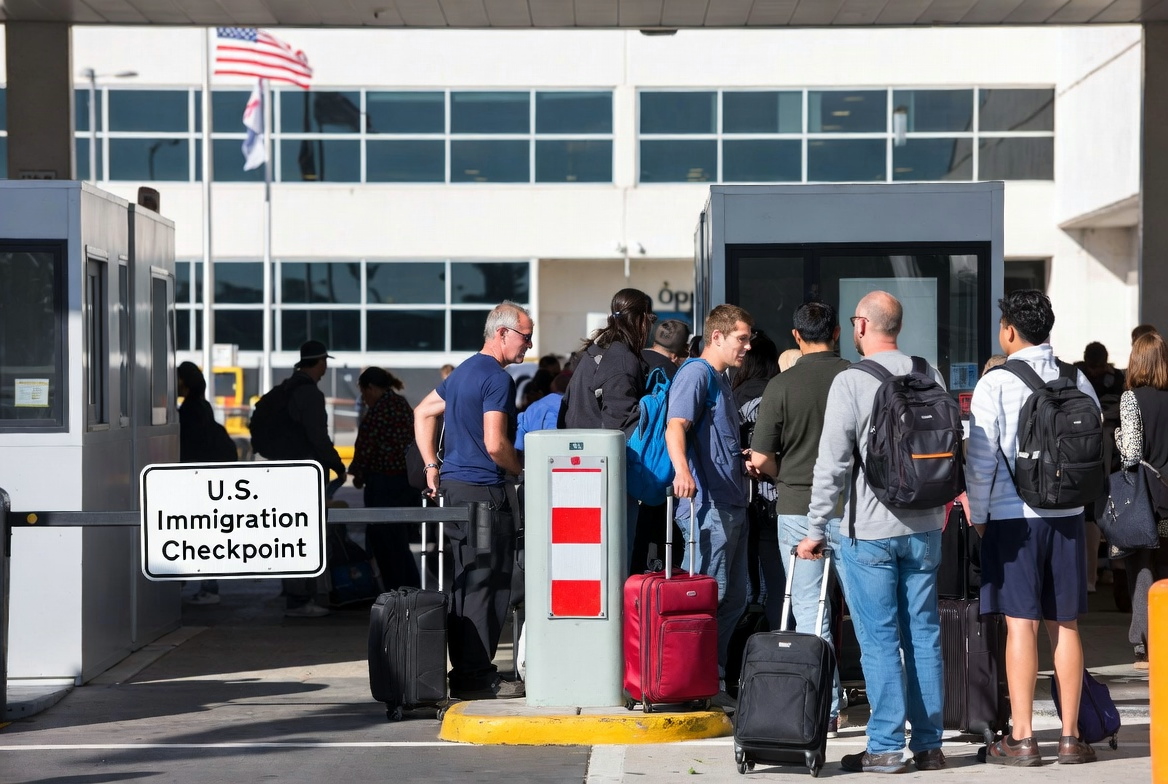
At U.S. Immigration
Be prepared to answer questions clearly and confidently. Immigration officers aren’t trying to trick you—they’re verifying your travel purpose matches VWP requirements.
Common questions include:
- Purpose of your visit
- How long you’re staying
- Where you’re staying
- What you do for work in Singapore
- Whether you have family or business ties in the U.S.
Answer truthfully and concisely. Don’t volunteer unnecessary information, but don’t be evasive either.
The 90-Day Rule Isn’t Negotiable
Seriously, don’t try to game this system. The 90-day clock starts when you enter the U.S., and leaving to Mexico or Canada doesn’t reset it. Those neighboring countries don’t count as meaningful departures for immigration purposes.
If you overstay, even by a day, you lose VWP eligibility permanently. You’d need to apply for traditional visas for all future U.S. visits, and approval isn’t guaranteed.
Common Mistakes to Avoid
Based on real traveler experiences, here are mistakes that trip up even experienced Singaporean travelers:
- Using Third-Party ESTA Sites: These sites charge inflated fees for the same application available on the official government website. They’re legal but unnecessary.
- Applying Too Late: While most approvals come quickly, don’t apply the day before your flight. Technical issues, additional screening, or simple errors can cause delays.
- Assuming Residence Equals Citizenship: Your Singapore PR card doesn’t qualify you for VWP. Only Singaporean citizenship works.
- Not Checking Passport Validity: Your passport needs to be valid for at least six months beyond your planned stay. This catches people off guard when they’re used to other countries’ shorter requirements.
- Booking Only One-Way Tickets: While not strictly required for ESTA, airlines often want to see proof of onward travel before letting you board. A return ticket or onward flight to another country satisfies this requirement.
Alternative Options for Extended Stays
What if 90 days isn’t enough? You’ve got options, but they require more planning.
The B-1/B-2 visitor visa allows stays up to six months. Unlike ESTA, you’ll need to schedule an appointment at the U.S. Embassy in Singapore, pay visa fees, and attend an interview. Processing times vary, but according to official information, Singapore typically has relatively short wait times compared to other countries.
But here’s something interesting: applying for a B-1/B-2 visa when you’re VWP-eligible can sometimes raise questions. Immigration officers might wonder why you need more time, especially if your previous visits were all short-term tourism. Have clear documentation of your reason for the extended stay.
What If Your ESTA Gets Denied?
ESTA denial is rare for Singaporeans, but it happens. Common reasons include:
- Previous immigration violations
- Criminal history
- Travel to restricted countries
- Errors in the application
If denied, you can’t reapply unless your circumstances change. Instead, you’ll need to apply for a traditional visa at the U.S. Embassy. The embassy interview allows you to explain your situation and provide supporting documentation that the automated ESTA system couldn’t consider.
Resources and Contact Information
Having trouble or need clarification? Here’s where to get official help:
- Official ESTA Website: esta.cbp.dhs.gov (never use unofficial sites)
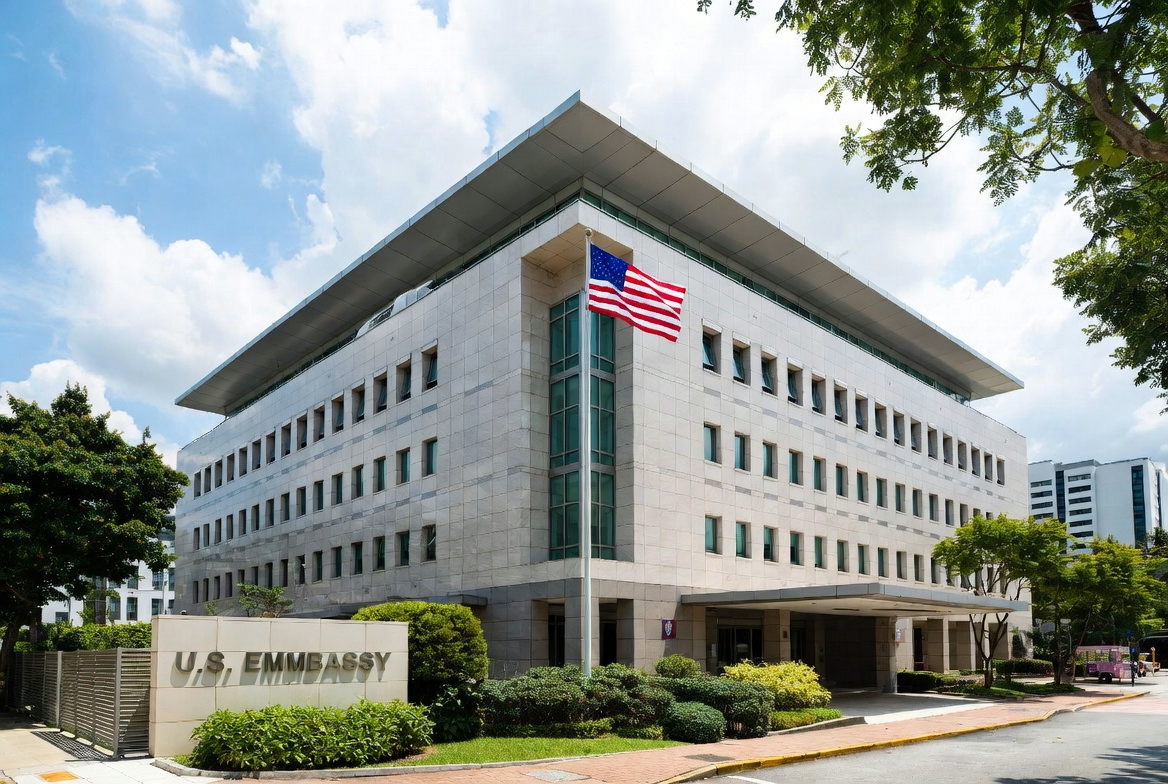
- U.S. Embassy in Singapore: Located at 27 Napier Road, Singapore 258508. They provide visa services and can answer questions about entry requirements.
- Singapore Ministry of Foreign Affairs: Check their travel advisories for the United States for any recent updates affecting Singaporean travelers.
- U.S. Customs and Border Protection: For questions specifically about ESTA and VWP requirements.
Final Thoughts: Make Your USA Trip Smooth
So here’s the bottom line: Singaporeans have it relatively easy when it comes to visiting the United States. No traditional visa means less paperwork, no embassy appointments, and faster processing.
But “easier” doesn’t mean “no requirements.” Get your ESTA sorted early, ensure your passport meets requirements, and prepare documentation for immigration. With enhanced screening procedures in place, being over-prepared beats scrambling at the airport.
The Visa Waiver Program is a privilege that reflects Singapore’s strong international standing. Respecting the rules—especially that 90-day limit—keeps that privilege intact for all Singaporean travelers.
Ready to plan your U.S. trip? Start with your ESTA application at the official government website, double-check your passport validity, and book those flights with confidence. The United States awaits, and as a Singaporean citizen, you’re well-positioned to explore it without the visa hassle that many other nationalities face.
Safe travels, and enjoy everything from the bustling streets of New York to the sunny beaches of California. Your Singaporean passport opens those doors—just make sure you’ve got that ESTA approval in hand first.
Frequently Asked Questions
Yes, if you’re not a Singaporean citizen. The Visa Waiver Program only applies to Singaporean citizens. PR holders must apply based on their passport nationality. Check whether your country of citizenship qualifies for VWP or requires a traditional visa.
The official U.S. government ESTA fee is significantly lower when you apply through the official website at esta.cbp.dhs.gov. Third-party websites charge substantially more for the exact same application. Stick with the official site.
This is a gray area. Technically, ESTA doesn’t permit any work performed in the United States, even if you’re employed by a Singapore company. For short-term remote work, many people do this without issue, but officially, work requires proper work authorization. If your work involves meetings with U.S. clients or business activities, ensure it qualifies as “business” under B-1 purposes.
Overstaying permanently bars you from using VWP in the future. You’d need to apply for traditional visas for all future U.S. visits, and approval isn’t guaranteed. Overstays get recorded in immigration systems, and even a single day over can have serious long-term consequences. There’s no extension process for VWP—the 90 days is absolute.
Yes! An approved ESTA is valid for two years or until your passport expires, whichever comes first. You can make unlimited trips during this period, as long as each individual visit doesn’t exceed 90 days. However, repeatedly using ESTA for extended stays might raise questions about whether you’re actually “residing” in the U.S.
Yes, even for transit. If you’re connecting through a U.S. airport to another destination, you need ESTA approval. The U.S. doesn’t have an airside transit system like some countries—all travelers pass through immigration, even for short connections.
Most Singaporeans report receiving approval within minutes to a few hours. The official guidance says to allow 72 hours, which is smart advice. Some applications require additional review, which can take longer. Apply at least three days before your flight to avoid stress.