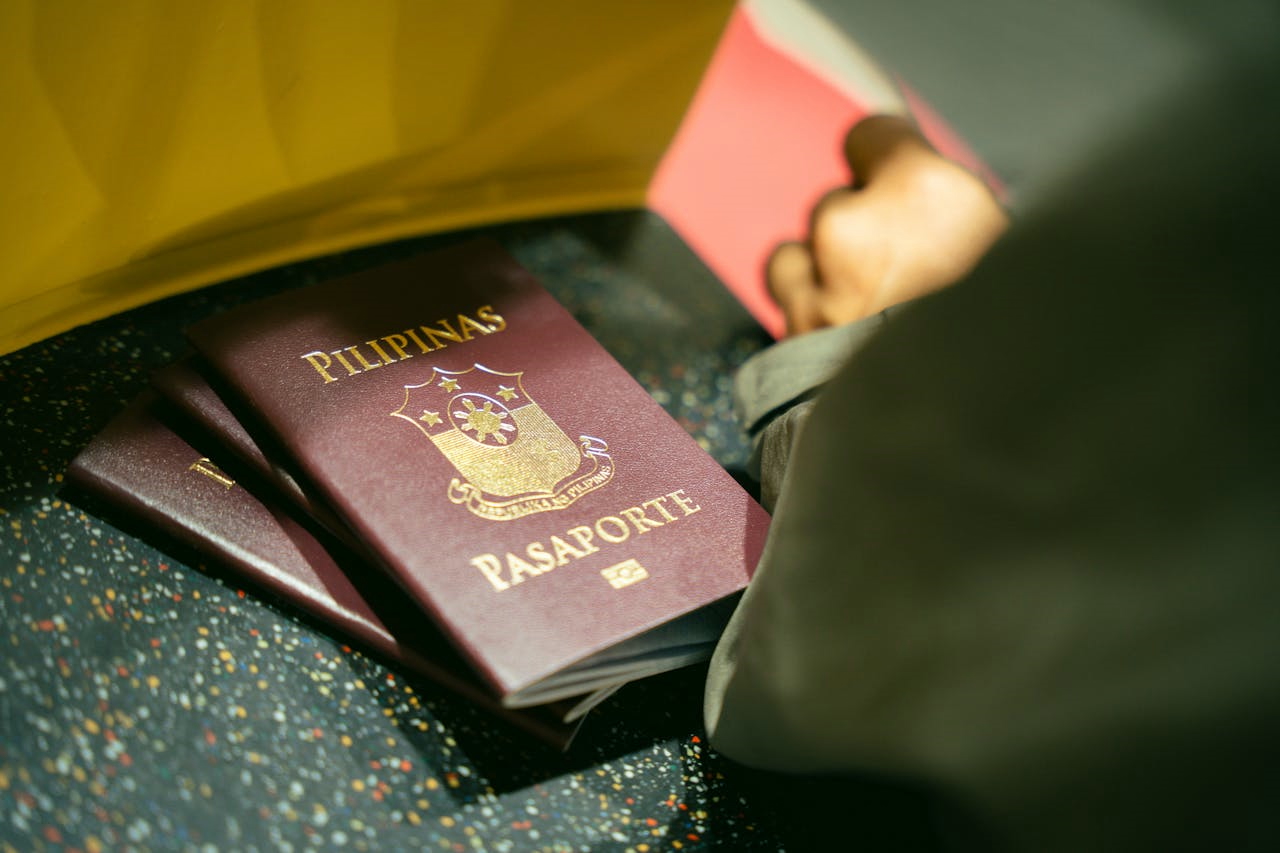
Planning a trip to the United States? Maybe it’s to visit family, see the places you’ve only watched in movies, or finally experience New York or California for yourself. Before you get too deep into booking flights and building an itinerary, there’s one important thing to sort out first.
Do Filipinos need a visa to visit the USA? The answer isn’t complicated, but there are a few details you’ll want to understand early on. Let’s walk through what that really means for you.
Why Filipinos Need a Visa for the United States
Some nationalities can travel to the United States under the Visa Waiver Program, which allows short stays without applying for a traditional visa. Travelers from those countries apply for ESTA instead of going through the full visa process.
The Philippines is not part of that program. This means every Filipino passport holder must apply for and receive an approved visa before traveling to the United States.
There are no exceptions for tourism. Even if your trip is only for a few days. Even if you already hold visas from other countries. Even if you are transiting through a US airport and plan to leave the international zone.
If you are entering US territory, a valid visa is required.

Professional Support for Your US Visa Application
Applying for a US visa from the Philippines can feel overwhelming, especially when deadlines are tight and requirements start to pile up. For many applicants, the hardest part is not the interview but making sure everything is prepared correctly before they even walk into the embassy. That is where structured support can make a real difference.
At The Visa Services, we assist with document preparation, form review, appointment booking, and overall application coordination. We also handle US visa renewals, student visa applications, and urgent cases where time is limited. Beyond US visas, our team supports Schengen, UK, and other international visa categories, as well as business setup and residency services in the UAE. The benefit is simple – fewer mistakes, clearer steps, and a smoother process from start to finish.
US Visitor Visa for Filipinos – Type and Conditions
If you are planning a short trip to the United States, it is important to know not only which visa to apply for, but also what that visa actually allows you to do. Many travelers focus on getting approved, but understanding the conditions of stay is just as important. Below is a clear breakdown of the visitor visa most Filipinos apply for and what comes with it.
What Type of US Visa Do Filipinos Need for Tourism?
For most short visits to the United States, Filipinos apply for the B1/B2 visa. This is a non-immigrant visa intended for temporary travel and is typically issued as a combined category that covers both business and tourism purposes.
B1 – Business purposes
The B1 portion of the visa applies to short-term business activities. This includes attending conferences or professional conventions, meeting with business partners, negotiating contracts, or handling matters such as settling an estate. It is designed for legitimate business visits that do not involve employment in the United States.
B2 – Tourism purposes
The B2 portion covers tourism and personal travel. This includes going on vacation, visiting family or friends, attending social events, or seeking medical treatment. It is the category most leisure travelers use when visiting the US.
What this visa does not allow
The B1/B2 visa does not permit employment in the United States, long-term academic study, or permanent residence. It is strictly for temporary stays.
In many cases, Filipino applicants are granted a multiple-entry visa that can be valid for up to 10 years. This allows repeat visits during that period, provided each stay remains temporary and complies with US immigration rules.
How Long Can You Stay in the US?
Even if your visa is valid for up to 10 years, that does not mean you can stay in the US for that entire period. The length of each visit is determined by US Customs and Border Protection when you arrive at the airport.
Tourist stays are often granted for up to six months, but the final decision is made at the port of entry. You must leave the country before your authorized stay expires. Overstaying can negatively affect future visa applications.
Can You Work in the US with a Tourist Visa?
No. A B1/B2 visa does not allow you to work in the United States. Any form of unauthorized employment can lead to visa cancellation and possible travel restrictions in the future.
If your goal is employment, you must apply for the appropriate work visa sponsored by a US employer.
Overview of the US Visa Application Process in the Philippines
The US visa application system for Filipino applicants has been updated in recent years, and it now requires two separate in-person appointments. While the process may look complicated at first glance, it becomes much clearer once you understand the sequence.
In general, the process follows this order:
- Complete the DS-160 online application form.
- Create an account on the official visa appointment platform.
- Pay the visa application fee.
- Schedule your biometrics appointment and embassy interview.
- Attend both appointments in person.
- Wait for your passport to be returned if your visa is approved.
Each step builds on the previous one, so it is important to follow the order carefully.
Step 1 – Complete the DS-160 Online Form
The DS-160 is the official non-immigrant visa application form and must be completed online. This is where you provide detailed personal information, including your travel plans, employment and education history, family background, prior international travel, social media accounts, and responses to security-related questions.
The form is lengthy and requires attention to detail. It is best to complete it in one focused session if possible, but you can save your progress and return later. Accuracy matters. Review spellings, dates, and employment details carefully before submission. It is also wise to keep a record of your application ID and take note of the travel details you enter, as these may be referenced during your interview.
Once you submit the DS-160, it cannot be edited. If you discover a significant mistake afterward, you would need to complete a new form. After submission, you will receive a confirmation page with a barcode. This document must be printed or saved and brought to your appointments.
Step 2 – Create an Account and Pay the Visa Fee
After submitting the DS-160, the next step is to register on the official US visa appointment website for the Philippines. During this stage, you will enter your DS-160 confirmation number, select the appropriate visa category, choose how you would like your passport returned, and proceed with payment.
The total cost for a B1/B2 visa in 2026 is $435, which includes the $185 MRV fee and the mandatory $250 Visa Integrity Fee. The amount in Philippine pesos depends on the prevailing exchange rate at the time of payment. This fee is non-refundable, but the $250 Visa Integrity Fee is refundable if the traveler complies with all visa conditions and departs the U.S. within the authorized period.
Once payment is confirmed in the system, you can proceed to book your required appointments.
Step 3 – Schedule Two Required Appointments
Applicants in the Philippines must attend two separate appointments: one for biometrics collection and another for the visa interview.
1. Biometrics Appointment at the Visa Application Center
The biometrics appointment takes place at the Visa Application Center in Parañaque and is separate from the embassy. During this visit, your fingerprints are scanned, your photograph is taken, and a QR code sticker is placed on your passport. The process is straightforward and usually takes a short amount of time.
You are required to bring your passport, appointment confirmation, DS-160 confirmation page, and proof of visa fee payment. There is no interview conducted at this stage.
2. Visa Interview at the US Embassy in Manila
The second appointment is held at the US Embassy on Roxas Boulevard in Manila. This is the formal interview with a consular officer.
Security procedures are strict. Electronic devices such as mobile phones, smartwatches, laptops, tablets, and other battery-operated items are not allowed inside the embassy grounds. Since there are no storage facilities available nearby, it is important to plan ahead and avoid bringing prohibited items.
Inside the embassy, applicants go through document verification and fingerprint confirmation before being called for the interview.

US Visa Interview – What to Expect and How to Prepare
The interview is usually short and straightforward. The officer will ask questions based on the information you provided in your DS-160 form. Most of the time, they simply want to confirm your travel plans and understand your background.
You may be asked where you are going, why you are traveling, how long you plan to stay, who you are traveling with, what you do for work, how long you have been employed, whether you have relatives in the US, or if you have traveled abroad before. The key is to make sure your answers match what you submitted in your application.
Before your appointment, review your DS-160 so the details are fresh in your mind. Speak clearly, answer honestly, and keep your responses simple. There is no need to memorize answers or give long explanations unless the officer asks for more information.
At the end of the interview, you will usually be told right away if your visa is approved or denied. If approved, your passport will be kept for visa stamping and returned to you later.
Final Preparation and Important Practical Details
The official list of required documents is actually short.
You must bring:
- Valid passport
- DS-160 confirmation page
- Appointment confirmation page
- Visa fee receipt
That is it.
However, it is wise to prepare additional supporting documents in case they are requested.
These may include:
- Old passports
- Certificate of employment
- Income tax return
- Business registration documents
- Property titles
- Travel itinerary
- Proof of strong ties to the Philippines
Interestingly, bank certificates and bank statements are not officially required. Some applicants bring them anyway, but they are not mandatory unless specifically requested.
Is a Medical Exam Part of the Process?
For short-term visitor visas such as B1/B2, a medical examination is generally not part of the process. Medical checks are more common in immigrant or long-term visa categories. Even so, applicants should always verify current requirements before their appointment, as procedures can change.
Processing Time and Planning Ahead
Waiting times vary depending on appointment availability and overall demand. Some applicants move through the process quickly, while others experience longer gaps between steps. After approval, passport return is typically handled within a few working days through the selected delivery method.
If your travel dates are fixed, it is safer to apply well in advance rather than trying to fit the process into a tight timeline.
If the Visa Is Not Approved
Not every application is successful. A denial usually means the officer was not fully satisfied with certain aspects of the case at that time. Applicants are allowed to submit a new application in the future, but the fee must be paid again. It is often better to reassess your situation first and apply again when your circumstances are stronger.
Conclusion
So, do Filipinos need a visa to visit the USA? Yes, they do. There is no visa waiver option for Philippine passport holders, which means applying for a B1/B2 visitor visa is a necessary step before traveling.
The process may seem detailed at first, but it is manageable when you understand what is required. Complete the form carefully, prepare your documents, attend your appointments, and be clear about your travel plans. Thousands of Filipinos successfully receive US visas every year. With proper preparation and realistic expectations, there is no reason you cannot be one of them.
FAQ
No. The Philippines is not part of the US Visa Waiver Program. All Filipino passport holders must obtain a visa before traveling to the United States, even for short tourist visits.
Most travelers apply for a B1/B2 visitor visa. This visa covers both tourism and certain short business activities. It is issued for temporary visits only.
Even if the visa is valid for several years, the length of each stay is decided at the airport by US border officers. Tourist visits are often allowed for up to six months, but the final decision is made upon entry.
No. A tourist visa does not allow employment in the United States. Working without authorization can lead to visa cancellation and problems with future travel.
In many cases, Filipino applicants receive a multiple-entry visa that can be valid for up to 10 years. This allows repeated travel, as long as each stay remains temporary and follows US immigration rules.
If your visa is refused, you may apply again in the future. However, you must pay the visa fee again and address the concerns that led to the denial before reapplying.