
Planning a trip to the States? Whether you’re heading to New York for a quick city break, visiting family in Boston, or taking that classic road trip across America, you’re probably wondering about visa requirements. Here’s the good news: as an Irish citizen, you won’t need to go through the lengthy traditional visa application process for most short-term visits.
But that doesn’t mean you can just rock up at JFK without any preparation. There’s still paperwork involved, and understanding the rules can save you from a nightmare at immigration. Let me walk you through everything you need to know.
The Short Answer: No Traditional Visa Required
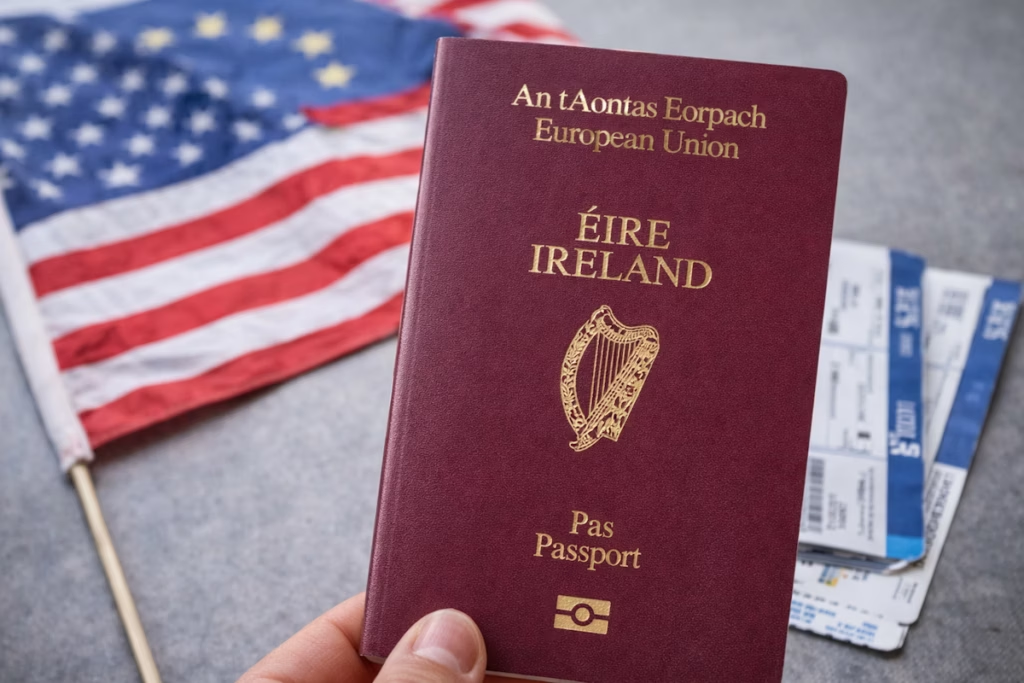
Irish citizens don’t need a traditional visa for tourism or business visits to the United States lasting 90 days or less. Ireland is part of the Visa Waiver Program (VWP), which allows citizens from designated countries to travel to the US without obtaining a visa first.
According to the Irish Department of Foreign Affairs, Irish citizens who hold a valid machine-readable passport and who have acquired Electronic System for Travel Authorization (ESTA) approval may be eligible for the Visa Waiver Program.
But here’s the thing—while you don’t need a visa, you absolutely need ESTA approval. Think of ESTA as the digital gatekeeper that determines whether you’re allowed to board your flight to America.
Understanding the Visa Waiver Program (VWP)
The Visa Waiver Program has been around for decades, and it’s designed to make travel easier between the US and trusted partner countries. Ireland has been part of this program, which means Irish passport holders get preferential treatment when visiting America.
The program lets you visit the United States for tourism, business meetings, or transit purposes without going through the traditional visa interview process at a US embassy. No appointment scheduling, no in-person interviews, no weeks of waiting.
That said, the VWP comes with strict conditions. You can’t just decide to stay longer or change your plans once you’re in the country.
What Activities Are Allowed Under the VWP?
You can travel to the US under the Visa Waiver Program for:
- Tourism and sightseeing
- Visiting friends and family
- Business meetings and conferences
- Consulting with business associates
- Attending educational, professional, or business conventions
- Participating in short-term training
- Negotiating contracts
- Settling estates
What you can’t do is work for a US employer, study long-term, or engage in any paid employment. If you’re planning to work or study, you’ll need the appropriate visa type—B-1 for business, J-1 for exchange visitors, or others depending on your situation.

What Is ESTA and Why Do You Need It?
ESTA stands for Electronic System for Travel Authorization. It’s an automated system that determines your eligibility to travel to the United States under the Visa Waiver Program. Think of it as a pre-screening process that happens online before you even get to the airport.
The US Department of Homeland Security implemented ESTA as a security measure. It collects biographical information and answers to eligibility questions, then runs your details through various databases to check for any red flags.
Real talk: you won’t even be allowed to board your flight to the US without an approved ESTA. Airlines check this before issuing boarding passes, and if your ESTA isn’t approved, you’re not going anywhere.
How to Apply for ESTA
The application process is straightforward, but you need to pay attention to details. Here’s what you’ll do:
First, visit the official ESTA website (there’s only one legitimate site, and it’s run by US Customs and Border Protection). Be careful here—there are loads of third-party websites that charge inflated fees for doing the same thing. The official application fee is $40.27.
You’ll need your Irish passport handy, along with your travel details if you have them (though these aren’t strictly required for the application). The form asks for basic biographical information, passport details, and questions about your eligibility and background.
The questions cover things like:
- Whether you’ve been arrested or convicted of crimes
- If you have serious communicable diseases
- Whether you’ve been denied a US visa previously
- If you’ve overstayed in the US before
- Your travel history to certain countries
Answer everything honestly. Lying on an ESTA application is a serious offense that can result in a permanent ban from the United States.
Most applications are approved within minutes, though some take up to 72 hours. I’ve found that applying at least three days before your departure date is sensible, just in case there are any issues.
How Long Does ESTA Last?
Once approved, your ESTA is valid for two years or until your passport expires, whichever comes first. During that period, you can make multiple trips to the United States without reapplying, as long as each visit is 90 days or less.
This is brilliant if you’re a frequent traveler. Pay once, travel multiple times.
Passport Requirements for Irish Citizens
Not all Irish passports qualify for the Visa Waiver Program. Your passport needs to meet specific requirements, and this is where some travelers get caught out.
You must have a machine-readable passport. Most Irish passports issued in recent years are machine-readable. You can tell if your passport is machine-readable by looking at the bottom of the photo page—there should be two lines of text with lots of strange characters and numbers.
Your passport must also be valid for the entire duration of your stay in the United States. According to the Irish Department of Foreign Affairs, Irish citizens have favorable passport validity requirements when traveling to the US compared to other international destinations. That said, having at least a few months of validity beyond your planned departure date is always wise.
What About Emergency or Temporary Passports?
Here’s where it gets tricky. Emergency or temporary Irish passports typically don’t qualify for the Visa Waiver Program. If you’re traveling on an emergency passport, you’ll likely need to obtain a traditional visa at the US Embassy in Dublin.
This is why losing your passport before a US trip is such a hassle—you can’t just get an emergency document and hop on your flight.
Important Restrictions and Limitations
The Visa Waiver Program sounds brilliant, but it comes with some serious restrictions that catch people out. Understanding these before you travel can save you major headaches.
The 90-Day Rule
You can stay in the United States for a maximum of 90 days per visit. This isn’t negotiable, and you can’t extend it. If you need to stay longer, you should apply for a traditional B-1/B-2 visitor visa before traveling.
The 90 days includes any time spent in Mexico, Canada, or adjacent islands unless you are a resident of those countries. So if you fly into New York, spend a week in Toronto, then return to the US, that entire period counts toward your 90 days.
As one Reddit user noted: “You do not require a visa as an Irish passport holder to enter the USA for up to 90 days as a tourist or on a business trip i.e. normal travel.”
Travel to Certain Countries
The Visa Waiver Program Improvement and Terrorist Travel Prevention Act of 2015 introduced new restrictions. If you have traveled to or been present in Afghanistan, Burkina Faso, Mali, Niger, South Sudan, Iran, Iraq, Libya, North Korea, Somalia, Sudan, Syria, Yemen, or Cuba, you are ineligible for ESTA.
This also applies if you’re a dual national of one of these countries. In these cases, you’ll need to apply for a traditional visa at the US Embassy, even though you’re an Irish citizen.
No Extension, No Status Change
When you enter the US under the Visa Waiver Program, you can’t extend your stay beyond 90 days, and you can’t change to another visa status while in the country. If you decide you want to work or study, you have to leave the US and apply for the appropriate visa from Ireland.
This is different from traditional visitor visas, which sometimes allow extensions or status changes. The VWP is less flexible in exchange for being faster and easier to obtain.
What Happens at US Immigration?
Okay, so you’ve got your ESTA approved and you’ve landed at your US airport. What happens next?
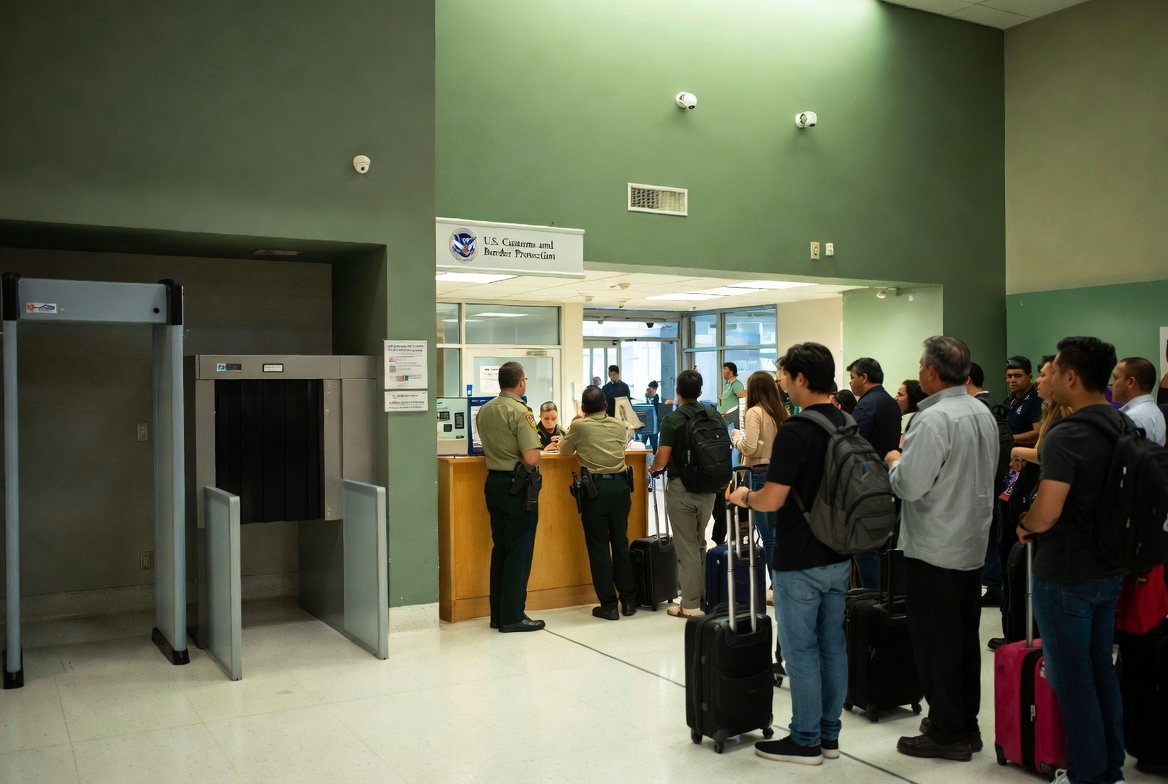
You’ll proceed to immigration control where a US Customs and Border Protection officer will review your documents and ask you questions about your visit. They have the authority to deny you entry, even with an approved ESTA, if they believe you don’t meet the requirements or pose any risk.
Common questions include:
- What’s the purpose of your visit?
- How long are you staying?
- Where will you be staying?
- What do you do for work in Ireland?
- Do you have return tickets?
Be honest, confident, and concise. Have evidence of your return travel and accommodation bookings ready, though they won’t always ask to see them.
The officer will stamp your passport (or you’ll receive an electronic stamp) and note your permitted stay period. Keep track of this date—overstaying can result in serious consequences, including bans from future travel to the US.
When You Actually Need a Traditional Visa
While most Irish citizens can use ESTA for short visits, there are situations where you’ll need to apply for a traditional visa instead:
| Situation | Required Visa Type | Why ESTA Won’t Work |
| Working for a US employer | H-1B, L-1, or others | ESTA prohibits paid employment |
| Studying at a US institution | F-1 or M-1 | ESTA allows only short recreational courses |
| Staying longer than 90 days | B-1/B-2 | ESTA has a fixed 90-day maximum |
| Getting married and staying | K-1 fiancé(e) visa | ESTA doesn’t allow adjustment of status |
| Travel to restricted countries | B-1/B-2 | ESTA denial due to travel history |
| Previous visa denial | B-1/B-2 | May need waiver or traditional visa |
If you need a traditional visa, you’ll apply through the US Embassy in Dublin. This process involves completing a DS-160 form online, paying a visa fee, and attending an in-person interview at the embassy.

Expert Assistance with The Visa Services
While the ESTA is a fantastic tool for many, we know that travel plans aren’t always straightforward. If you find yourself needing a traditional visitor visa due to a stay longer than 90 days, a previous denial, or a complex travel history, the standard embassy wait times can be daunting. Our team at The Visa Services specializes in navigating these hurdles, offering an urgent US visa service that can move your timeline up to just two weeks. We provide a dedicated personal assistant to handle your documentation and travel itinerary, ensuring every form is perfect to maximize your chances of success.
With over 20,000 visas issued and a proven 45% increase in approval rates, we take the stress out of the bureaucracy so you can focus on your trip. Whether you are renewing an existing visa or applying for the first time to attend the 2026 FIFA World Cup, our experts can often secure appointments in as little as two days. We believe that your travel goals shouldn’t be sidelined by paperwork, and we are here to provide the professional support needed to keep your plans moving forward.
Common Mistakes Irish Travelers Make
I’ve seen plenty of Irish travelers make avoidable mistakes when it comes to US travel. Here are the most common ones:
1. Waiting Until the Last Minute
Applying for ESTA the day before your flight is risky. While most applications are approved quickly, some require additional review. Apply at least 72 hours before departure—ideally as soon as you book your flights.
2. Using Third-Party Websites
There are dozens of websites that look official but charge significantly more than the official fee. The official government fee is $40.27. Don’t waste your money on middlemen who add no value.
3. Forgetting About ESTA Expiration
Your ESTA is valid for two years or until your passport expires, whichever comes first. However, if you obtain a new passport, you must apply for a new ESTA.
4. Assuming ESTA Guarantees Entry
ESTA approval means you’re authorized to travel to the US, but it doesn’t guarantee entry. The final decision is made by the immigration officer at the port of entry. If they have concerns, they can deny you entry even with an approved ESTA.
5. Overstaying the 90 Days
This is a serious violation that can result in a ban from the US for years or even permanently. If you think you might need more than 90 days, apply for a B-1/B-2 visa instead, which can be issued for stays up to six months.
Traveling with Children
If you’re traveling with kids, they need their own ESTA approval too. Every traveler entering the US under the Visa Waiver Program needs individual authorization, regardless of age.
Irish children must have their own machine-readable passports. Children included in a parent’s passport aren’t eligible for the VWP and would need a traditional visa.
When completing ESTA applications for children, parents or guardians can apply on their behalf. The same $40.27 fee applies per child.

Dual Citizens and Special Cases
If you hold both Irish and US citizenship, you must enter and exit the United States using your US passport. This is a legal requirement for US citizens.
As one Reddit user mentioned: “I know I need to leave the US on the US passport, but going to China I wouldn’t need a visa with the Irish passport.” This is a common scenario for dual nationals—using different passports for different countries based on visa requirements.
If you’re a dual national of Ireland and a country that would disqualify you from the VWP (like Iran or Syria), you’ll need to apply for a traditional visa.
Transit Through the US
Even if you’re just connecting through a US airport on your way to another country, you need ESTA approval. There’s no “airside transit” in the United States—you’ll go through immigration control even if you’re staying for just a few hours.
A Reddit user confirmed this: “If you are an Irish citizen doing transit in the US you need an approved ESTA. Not a visa.”
Make sure you have enough time between flights (at least 3 hours for domestic connections, 4-5 hours for international) to clear immigration and security.
Updating Your ESTA
If your travel plans change after you’ve received ESTA approval, you might need to update your information. You can update your US address or flight details through the ESTA website without reapplying.
However, if your passport details change, you answer any eligibility questions differently, or you need to update biographical information, you’ll need to submit a new ESTA application and pay the fee again.
Cost Breakdown
Let’s talk about money. The official ESTA application fee is $40.27. This fee includes both processing and authorization charges (the authorization charge is only collected if your application is approved).
Compare this to a traditional B-1/B-2 visitor visa, which costs $435 (comprising the $185 MRV fee and the $250 Visa Integrity Fee). and requires an in-person interview in Dublin. The time and cost savings of the Visa Waiver Program are substantial.
| Authorization Type | Cost | Processing Time | Validity Period |
| ESTA | $40.27 | Minutes to 72 hours | 2 years |
| B-1/B-2 Visa | $435 | Several weeks | Up to 10 years |
Tips for a Smooth US Entry
Want to make your arrival in the United States as painless as possible? Here are some practical tips:
- Have your documentation organized. Print out your ESTA approval confirmation (though technically you don’t need it since it’s electronic). Carry proof of your accommodation bookings and return flight. Have evidence of ties to Ireland, such as employment letters or property documents, in case you’re asked.
- Be prepared to answer questions confidently. Immigration officers ask these questions dozens of times daily. Give clear, direct answers without volunteering unnecessary information. If they ask what you do for work, “I’m a teacher” is better than a ten-minute explanation of your entire career history.
- Don’t carry prohibited items. Check US customs regulations before packing. Certain foods, plants, and products aren’t allowed. Carrying prohibited items can complicate your entry process.
- Dress reasonably. You don’t need to wear a suit, but looking presentable helps. Immigration officers make quick judgments, and appearing like a genuine tourist rather than someone planning to overstay matters.
- Keep your cool. Immigration control can feel intimidating, especially at busy airports like JFK or LAX. Stay calm, polite, and cooperative. Getting defensive or annoyed won’t help your case.
Resources and Official Information
When you need official information about traveling to the US, stick to legitimate government sources:
- The official ESTA application website (operated by US Customs and Border Protection)
- The US Department of State’s travel information pages
- The Irish Department of Foreign Affairs website for guidance specific to Irish citizens
- The US Embassy in Dublin for consular services
Be skeptical of unofficial websites, travel blogs that aren’t regularly updated, or services charging excessive fees for information you can get free from government sources.
The Bottom Line
So, do Irish citizens need a visa for the USA? Not for most short-term visits. The Visa Waiver Program makes traveling to America relatively straightforward for Irish passport holders, as long as you follow the rules.
Get your ESTA sorted well before your departure date. Make sure your passport meets the requirements. Understand the 90-day limitation and don’t overstay. Be honest in your application and with immigration officers. Keep documentation organized.
The US is an incredible country to explore, from the stunning national parks to vibrant cities, historic sites, and diverse cultures. With proper preparation, your entry into the United States should be smooth and stress-free.
Most importantly, don’t let the bureaucracy intimidate you. Thousands of Irish citizens travel to America every week without issues. As long as you’re traveling for legitimate tourism or business purposes, have your paperwork in order, and follow the rules, you’ll be grand.
Ready to book that American adventure? Get your ESTA application in, start planning your itinerary, and enjoy everything the States has to offer. Safe travels!
Frequently Asked Questions
This is a gray area. Technically, the VWP prohibits employment in the US. However, checking emails or attending virtual meetings while on vacation is generally acceptable. Full-time remote work where you’re essentially conducting your Irish job from US soil for weeks is riskier. If your trip is primarily for work purposes, consider a B-1 business visa to be safe.
If your ESTA is denied, you’ll need to apply for a traditional visitor visa at the US Embassy in Dublin. The denial letter should explain the reason. Common reasons include previous immigration violations, criminal history, or travel to restricted countries. You can’t reapply for ESTA immediately—you need to pursue the visa route instead.
Yes, but here’s the catch: the time you spend in Canada, Mexico, and adjacent islands counts toward your 90-day limit. If you fly into New York, spend two weeks in Toronto, then return to the US, you’ll have used about 14 days of your 90-day allowance. The clock doesn’t reset.
It’s not legally required, but it’s strongly recommended. The US has notoriously expensive healthcare, and a single emergency room visit can cost thousands. Travel insurance that covers medical emergencies, trip cancellations, and lost baggage is worth every penny.
Yes, you can legally get married in the US while visiting under the Visa Waiver Program. However, you cannot stay in the US or adjust your status to permanent resident based on that marriage. You’d need to return to Ireland and apply for the appropriate visa (typically a CR-1 spousal visa) if you want to live in the US with your American spouse.
Even accidental overstays have serious consequences. You’ll lose your VWP eligibility permanently and will need to apply for visas for all future US travel. Overstays can also result in bans ranging from three to ten years depending on how long you overstayed. Set calendar reminders and book return flights well within the 90-day window.
For US immigration purposes, what matters is your citizenship, not where you live. Citizens of the Republic of Ireland are eligible for the VWP. UK citizens (including those from Northern Ireland who hold UK passports) are also eligible for the VWP but must apply through the ESTA system separately. If you hold an Irish passport, you follow the rules for Irish citizens regardless of where you live.