
Quick Summary: Yes, Iranian citizens need a visa to visit the UK for any purpose, including tourism, business, or short-term visits. Iran is on the UK’s visa national list, meaning entry clearance must be obtained before travel. No visa-on-arrival or visa-free options exist for Iranian passport holders traveling to the United Kingdom.
Planning a trip to the United Kingdom from Iran? Here’s the thing—you can’t just show up at Heathrow and expect to breeze through immigration. Iranian passport holders face different entry requirements than many other nationalities.
The UK maintains a strict visa policy for Iranian citizens. According to the UK government’s Immigration Rules Appendix Visitor: Visa national list, Iran appears on the visa national list, which means entry clearance is mandatory before departure. This isn’t negotiable.
But what does that actually mean for travelers? And how does the application process work? Let’s break down everything Iranian citizens need to know about UK visa requirements.
The Straight Answer: Visa Requirements for Iranians
Iranian citizens cannot visit the UK without obtaining a visa first. No exceptions exist for short visits, transit, or tourism.
The UK government explicitly lists Iran among countries whose nationals require entry clearance prior to travel. This applies to all purposes—whether visiting family, tourism, business meetings, or medical treatment.
What About Visa-Free Travel or Visa on Arrival?
Neither option exists for Iranian passport holders. The UK doesn’t offer visa-on-arrival facilities for any nationality, and Iran doesn’t qualify for visa-free access.
This differs significantly from EU citizens or nationals from countries like the United States, who don’t need visas but may require an Electronic Travel Authorisation (ETA) starting in 2026. Iranian citizens face a more comprehensive application process.
Types of UK Visas Available to Iranian Citizens
The most common visa category for Iranian visitors is the Standard Visitor visa. This covers tourism, family visits, business activities, and short-term study (up to six months).
According to the UK government’s visa information for Iran, applicants can also pursue other categories including study visas, work visas, family settlement visas, and other specialized permits depending on their circumstances.
| Visa Type | Purpose | Typical Duration |
|---|---|---|
| Standard Visitor | Tourism, family visits, business | 6 months |
| Study Visa | Courses longer than 6 months | Course duration + extra time |
| Work Visa | Employment in the UK | Varies by category |
| Family Visa | Joining family members | 30 months to indefinite |
For short-term visits, the Standard Visitor visa handles most scenarios. Business travelers can attend meetings, conferences, and negotiations under this category.
How to Apply for a UK Visitor Visa from Iran
The application process involves several distinct stages. Iranian citizens must complete everything before traveling—there’s no option to sort it out upon arrival.
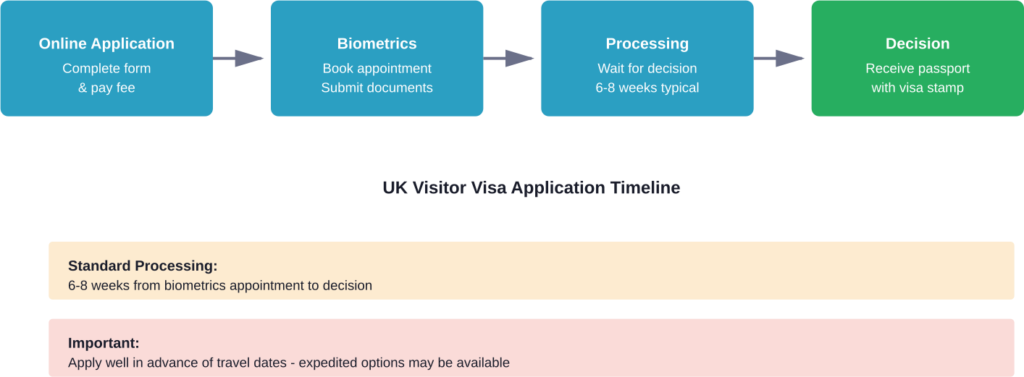
Step 1: Complete the Online Application
Start at the official UK Visas and Immigration website. The online form asks for personal details, travel plans, employment information, and financial circumstances. Accuracy matters here—inconsistencies can trigger refusals.
Step 2: Pay the Visa Fee
The UK government maintains fee information on the visa-fees.homeoffice.gov.uk portal. Iranian applicants select their country and visa category to see applicable charges.
Real talk: these fees aren’t small. And they’re non-refundable, even if the application gets rejected.
Step 3: Book a Biometrics Appointment
After submitting the online application and paying fees, applicants schedule an appointment at a visa application center. Iran has designated centers where fingerprints and photographs are collected.
Bring your passport, appointment confirmation, and supporting documents to this appointment.
Step 4: Submit Supporting Documents
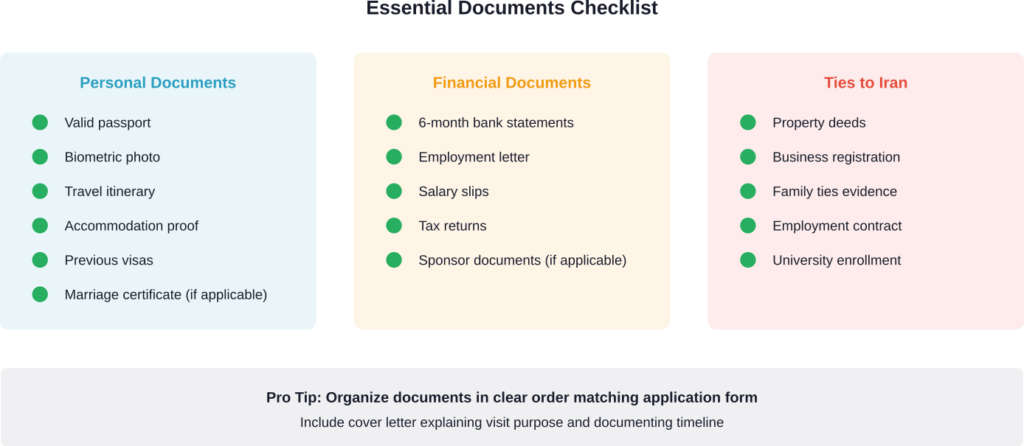
Documentation requirements vary by visa type, but Standard Visitor applications typically need:
- Valid Iranian passport with blank pages
- Proof of financial means (bank statements, employment letters)
- Travel itinerary and accommodation details
- Evidence of ties to Iran (property ownership, family connections, employment)
- Previous travel history if applicable
The UK government doesn’t publish an exhaustive list because each case differs. But demonstrating genuine visitor intent and ability to support yourself financially strengthens applications considerably.
Processing Times and Approval Rates
Standard processing for UK visitor visas typically takes approximately six to eight weeks. That’s from the biometrics appointment date, not from when the online application starts.
Expedited processing options may be available with additional fees.
What about approval rates? Visa service providers report UK visitor visa approval rates for Iranian citizens at approximately 96% or higher. That’s actually quite favorable compared to some other nationalities.
| Metric | Standard Processing | Expedited Processing |
|---|---|---|
| Processing Time | 6-8 weeks | 3-6 weeks |
| Typical Approval Rate | 96%+ | 96%+ |
| Application Volume | High volume | Lower |
But here’s the catch—those approval rates assume properly prepared applications. Incomplete documentation, insufficient financial proof, or unclear travel purposes drive most refusals.
Key Documents Iranian Applicants Must Provide
Documentation makes or breaks visa applications. UK Visas and Immigration assesses whether applicants genuinely intend to visit temporarily and have means to support themselves.
Financial Evidence
Bank statements covering six months demonstrate financial stability. Employment letters confirm income sources. For business owners, company registration documents and tax records help.
The UK doesn’t specify minimum bank balance requirements, but statements should show regular income and sufficient funds for the planned visit duration.
Proof of Ties to Iran
This addresses the critical question: will the applicant return home? Property deeds, family ties, ongoing employment, and business ownership all demonstrate reasons to return to Iran after the UK visit.
Travel History
Previous visas to countries like the United States, Canada, or Schengen nations strengthen applications. They establish a pattern of complying with visa terms and returning home.
Sound familiar? The UK wants evidence that Iranian applicants won’t overstay or work illegally.
Common Reasons for UK Visa Refusals
Despite favorable approval rates, some Iranian applications still face refusal. Understanding common pitfalls helps avoid them.
Insufficient evidence of funds ranks among top refusal reasons. Vague travel plans or inability to explain visit purpose also trigger skepticism. Immigration officers need clear, credible explanations.
Lack of ties to Iran concerns decision-makers too. If an applicant appears likely to overstay or work illegally, refusal follows. Previous immigration violations anywhere—overstays, illegal work, providing false information—severely damage new applications.
Inconsistencies between application forms and supporting documents raise red flags. Employment letters contradicting bank statements, for example, suggest dishonesty.
Travel Advisory Considerations
Here’s something Iranian applicants should know: the UK Foreign, Commonwealth & Development Office advises against all travel to Iran. According to GOV.UK travel advice, this advisory remains in effect.
But wait—does this affect Iranian citizens applying for UK visas? Not directly. The travel advisory applies to British citizens considering travel to Iran, not the other way around.
Iranian citizens can still apply for and receive UK visas. The advisory doesn’t create additional barriers for Iranian applicants.
After Receiving the Visa
Once approved, the visa gets stamped in the passport. Standard Visitor visas typically allow stays up to six months, though the exact duration appears on the visa sticker.
The visa specifies permitted activities—tourism, visiting family, business meetings, short courses. Work isn’t allowed on visitor visas, even unpaid work or volunteering in most cases.
Border officers at UK ports of entry conduct final admission checks. They may ask about travel plans, accommodation, and return tickets. Having documents readily available—itinerary, hotel bookings, return flight confirmation—smooths this process.
Costs and Fees
UK visa fees vary by category and processing speed. The official visa fees portal at visa-fees.homeoffice.gov.uk provides information on charges for applications from Iran.
Beyond government fees, third-party visa services may charge additional fees. These services handle form completion, document preparation, and application tracking.
Remember: all fees are non-refundable regardless of outcome. That includes both government charges and third-party service fees.
Getting Help with Applications
The UK Visas and Immigration service offers official guidance through GOV.UK. Applicants from Iran can contact UK Visas and Immigration (UKVI) for help with applications and related support.
Many Iranian applicants use visa agencies or immigration lawyers, particularly for complex cases like family visas or work permits. For straightforward visitor visas, though, the process is manageable independently if applicants carefully follow instructions.
Frequently Asked Questions
No. Iranian passport holders cannot obtain visas on arrival in the UK. All visas must be secured before traveling through the standard application process at a visa application center.
Standard Visitor visas typically allow stays up to six months. The specific duration granted appears on the visa stamp in the passport. Multiple-entry visas valid for longer periods are sometimes issued.
No. The Electronic Travel Authorisation system applies to nationals from countries that don’t require visas. Since Iranian citizens need full visas, the ETA doesn’t apply to them.
Refusal letters explain the reasons. Applicants can reapply, addressing the issues identified in the refusal. In some cases, administrative review or appeal options exist, though these have strict deadlines and specific circumstances where they apply.
No. Standard Visitor visas prohibit work, paid or unpaid. Business activities like meetings and conferences are allowed, but actual employment isn’t. Working on a visitor visa violates immigration rules and can result in deportation and future visa bans.
The UK doesn’t specify minimum amounts. Financial evidence should demonstrate ability to cover trip costs and support yourself without working or accessing public funds. Six months of bank statements showing regular income and adequate savings strengthen applications.
Student visas have different requirements than visitor visas. Acceptance at a UK educational institution that’s a licensed sponsor is required. Financial proof covering tuition and living costs matters significantly. Processing and requirements differ from standard visitor applications.
Final Thoughts: Planning Ahead Is Everything
Iranian citizens absolutely need visas before visiting the UK. No shortcuts exist—no visa-free travel, no visa on arrival, no exceptions.
The process involves online applications, biometrics appointments, document submission, and waiting periods of six to eight weeks minimum. Starting early prevents missing travel dates due to processing delays.
With proper preparation—complete documentation, clear travel purpose, demonstrated ties to Iran, and sufficient financial evidence—Iranian applicants see favorable approval rates. The UK welcomes Iranian visitors who follow proper procedures.
Check the official GOV.UK website for current visa fees, requirements, and application procedures. Rules and fees change periodically, so confirming details before starting applications ensures accuracy.
Ready to begin your UK visa application? Visit the official UK Visas and Immigration portal to start the process and access current requirements specific to your situation.