
Here’s the good news: if you’re an Australian citizen planning a quick holiday to the States, you won’t need to go through the traditional visa application process. Australia is one of participating countries in the Visa Waiver Program, which makes travel to the USA significantly easier.
But there’s always a but, you can’t just rock up at LAX with your passport and expect smooth sailing. You’ll need to understand the ESTA system, know what qualifies you for visa-free travel, and be aware of situations where you actually do need a proper visa.
Let’s break down everything you need to know about traveling from Australia to the USA in 2026.
Can Australians Enter the USA Without a Visa?
Yes, most Australians can enter the United States without obtaining a traditional visa. This is thanks to the Visa Waiver Program (VWP), which Australia joined decades ago as part of its strong diplomatic relationship with the United States.
The VWP allows Australian citizens to travel to the USA for tourism or business purposes for stays of 90 days or less without going through the lengthy visa application process at a U.S. consulate. Instead, you’ll apply online for something called an ESTA.
That said, there are specific requirements you must meet, and certain situations where the VWP won’t apply to you at all. If you’ve traveled to certain countries, have specific criminal convictions, or plan to work or study in the USA, you’ll need to apply for an actual visa.
What is the Visa Waiver Program (VWP)?
The Visa Waiver Program is a U.S. government initiative that allows citizens from participating countries to travel to the United States without obtaining a visa. According to the U.S. Department of State, the program was designed to facilitate tourism and business travel while maintaining strong security standards.
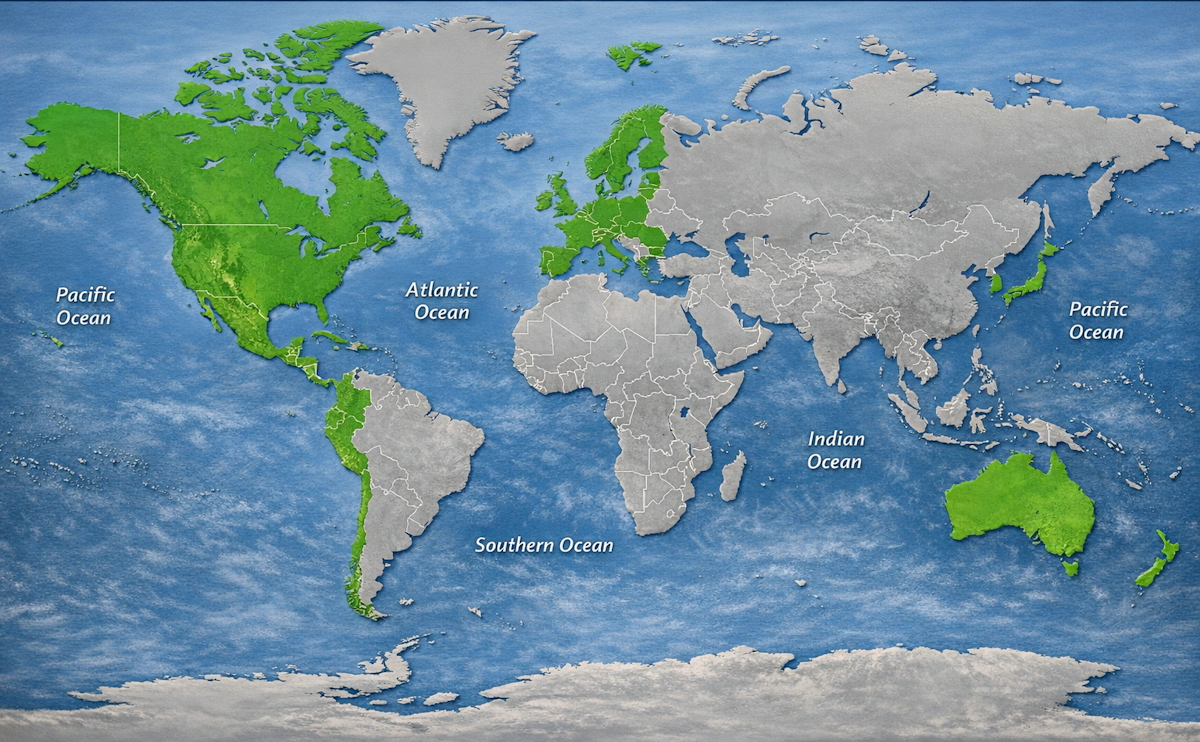
Australia is one of the designated countries in the program, alongside nations like the UK, Japan, Germany, and New Zealand. The program covers both tourism and business purposes, including:
- Holiday travel and sightseeing
- Visiting friends and family
- Attending business meetings or conferences
- Negotiating contracts
- Short-term training that isn’t paid employment
What the VWP doesn’t cover is work, study, or stays longer than 90 days. For those purposes, you’ll need the appropriate visa category.
Visa Waiver Program Improvement and Terrorist Travel Prevention Act
Here’s where things get a bit more complicated. In 2015, the U.S. Congress passed additional restrictions to the VWP to address security concerns. These restrictions affect Australian citizens who have traveled to or are dual nationals of certain countries.
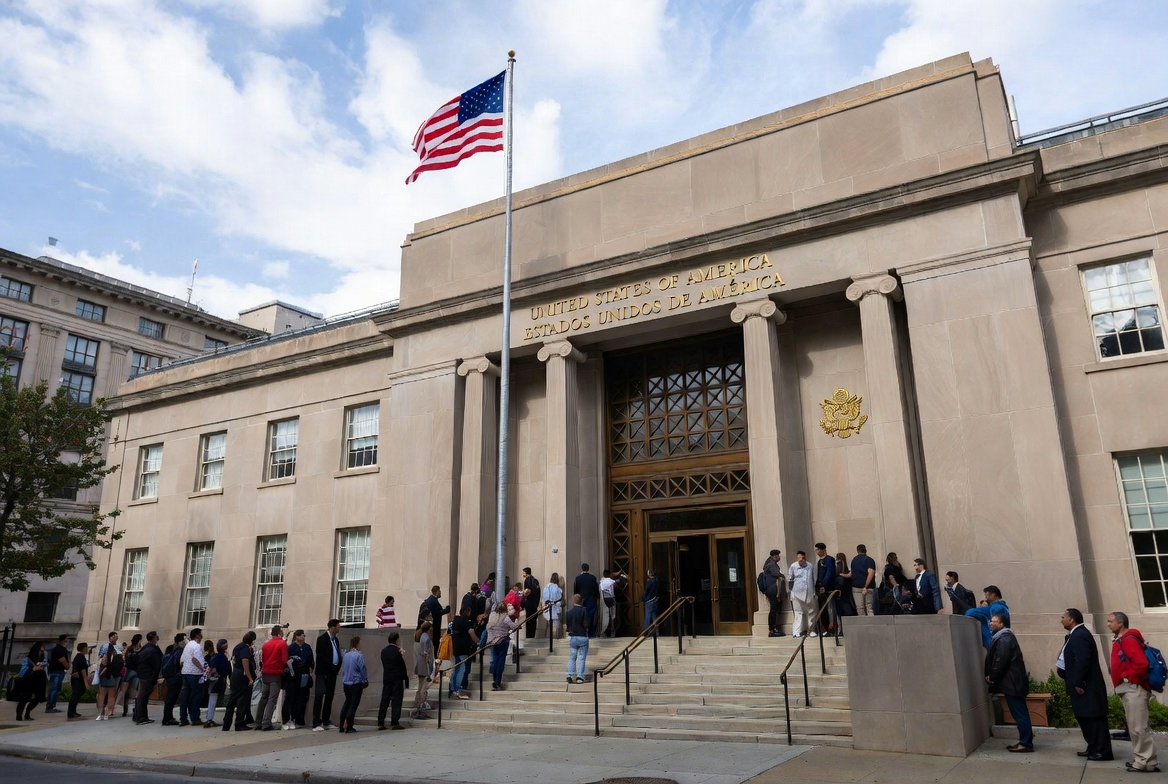
You’re not eligible for the Visa Waiver Program if you’ve traveled to or been present in Iraq, Syria, Iran, Sudan, Libya, Somalia, Yemen, or North Korea on or after March 1, 2011, or Cuba on or after January 12, 2021. There are limited exceptions for diplomatic or military travel, but generally speaking, if you’ve visited these countries, you’ll need to apply for a proper visa at the U.S. Embassy or Consulate.
If you are a dual national of Cuba, North Korea, Iran, Iraq, Sudan, or Syria, you are ineligible for the VWP
What is ESTA and How Does It Work?
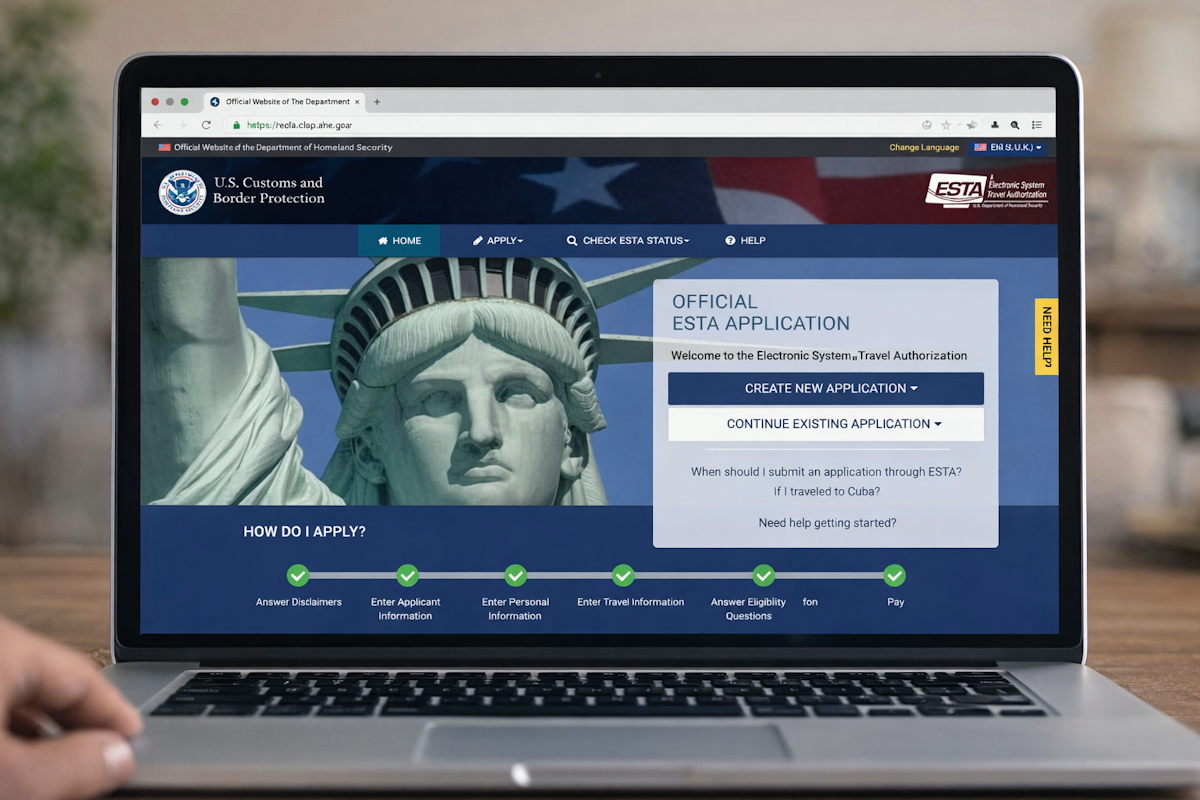
ESTA stands for Electronic System for Travel Authorization. It’s not a visa, it’s a travel authorization that determines whether you’re eligible to travel to the United States under the Visa Waiver Program.
Think of it as a pre-screening process. You fill out an online application, the U.S. government checks your information against various databases, and if approved, you’re cleared to board a flight to the USA. The whole process is typically quick and straightforward.
How to Apply for ESTA
The application process happens entirely online through the official ESTA website. You’ll need:
- A valid Australian passport (must be an e-Passport with a digital chip)
- A credit or debit card to pay the application fee
- Your travel information (though you don’t need confirmed flights or accommodation)
- Employment information
- Emergency contact details
The application takes about 20 minutes to complete. You’ll answer questions about your passport, travel plans, and background, including questions about criminal history, previous immigration violations, and health conditions.
Most applications are approved within minutes, though some can take up to 72 hours. I’d recommend applying at least a week before your planned departure, just to be safe.
ESTA Validity and Cost
Once approved, your ESTA is valid for two years or until your passport expires, whichever comes first. During this period, you can make multiple trips to the USA without reapplying, as long as each stay is 90 days or less.
The cost is $40 USD per application (as of September 30, 2025). Be careful here, there are many third-party websites that charge significantly more (sometimes $80-100+) to submit your ESTA application. These sites aren’t affiliated with the U.S. government and offer no additional benefit. Always use the official government website.
| ESTA Feature | Details |
| Application Fee | $40 USD |
| Validity Period | 2 years or until passport expires |
| Processing Time | Usually instant, up to 72 hours |
| Multiple Entries | Yes, unlimited trips within validity period |
| Maximum Stay | 90 days per visit |
| Extension Possible | No, you must leave after 90 days |
When to Update Your ESTA
You’ll need to update your ESTA if certain information changes, even if it’s still valid.
This includes:
- Getting a new passport (you’ll need a new ESTA)
- Changing your name
- Changing your gender
- Changes in your criminal record or eligibility status
According to the U.S. Department of State, you don’t need to update your ESTA if your travel plans change, your address changes, or your phone number changes. The system only cares about information that affects your eligibility.
Passport Requirements for Australian Travelers
Not all passports are created equal when it comes to the Visa Waiver Program. You must have an e-Passport, that’s a passport with an embedded electronic chip that stores your biographic information.
All Australian passports issued since 2005 are e-Passports, so if yours was issued in the last two decades, you’re good to go. You can identify an e-Passport by the small rectangular symbol on the front cover.
Your passport must be valid for the duration of your stay in the United States. The USA requires Australian passports to be valid on arrival and throughout your stay.
Emergency and Temporary Passports
Here’s where things get tricky. If you’ve lost your passport while traveling and obtained an emergency or temporary passport, you cannot use the Visa Waiver Program with that document.
Emergency passports issued by Australian consulates don’t contain the electronic chip required for ESTA eligibility. You’d need to apply for a traditional visa at the nearest U.S. Embassy or Consulate, which isn’t ideal when you’re trying to catch a flight.
Real talk: make sure you have a regular passport before traveling, and keep it secure during your trip.
When Australian Citizens Do Need a USA Visa
Okay, so we’ve established that most Australian tourists don’t need a visa. But what about situations where you actually do?
B-1/B-2 Visitor Visas
If you’re planning to stay longer than 90 days for tourism or business purposes, you’ll need to apply for a B-1 (business) or B-2 (tourism) visa. It’s noteworthy that consular officers may question why you need a visa instead of using ESTA if you qualify for the Visa Waiver Program.
That said, there are legitimate reasons to apply for a B-1/B-2:
- You want to stay longer than 90 days
- You’ve been denied ESTA authorization
- You have travel history to restricted countries
- You want the ability to extend your stay while in the USA (not possible with ESTA)
Work Visas for Australians
This is where Australia has a unique advantage. Australian citizens have access to the E-3 visa classification, which is specifically designed for Australians working in specialty occupations in the United States.
According to the U.S. Citizenship and Immigration Services (USCIS), the E-3 visa is available to
Australian nationals and requires:
- A legitimate job offer from a U.S. employer
- Work in a specialty occupation requiring a bachelor’s degree or higher
- Possession of the necessary qualifications for the position
The E-3 visa is similar to the H-1B visa but is available for Australians, with 10,500 visas available annually. Unlike the H-1B lottery system, E-3 visas are rarely fully subscribed, making it a more reliable option for skilled Australian workers.
USCIS expanded premium processing service to E-3 petitioners, allowing for faster processing times when filing Form I-129 for change or extension of status.
Other work visa categories available to Australians include:
- H-1B (specialty occupations, though more competitive)
- L-1 (intracompany transferees)
- E-1 (treaty traders)
- E-2 (treaty investors)
- J-1 (exchange visitors)
- O-1 (individuals with extraordinary ability)

Student Visas
If you’re planning to study in the United States, you’ll need either an F-1 (academic studies) or M-1 (vocational studies) visa. You cannot study on the Visa Waiver Program, even for short courses.
The student visa process requires:
- Acceptance to a SEVP-approved school
- Form I-20 issued by your school
- Proof of financial ability to cover tuition and living expenses
- Intent to return to Australia after your studies
- In-person interview at the U.S. Embassy or Consulate
| Visa Type | Purpose | Max Initial Stay | Extension Possible |
| ESTA/VWP | Tourism, business visits | 90 days | No |
| B-1/B-2 | Tourism, business (longer stays) | 6 months typically | Yes |
| E-3 | Specialty occupation work | 2 years | Yes (indefinite 2-year increments) |
| F-1 | Academic study | Duration of program | Yes |
| J-1 | Exchange visitor programs | Varies by program | Limited |

Streamline Your Application with The Visa Services
While the ESTA is a great tool for short holidays, we know that applying for a formal B-1/B-2 or student visa can be a stressful, time-consuming ordeal. Our team at The Visa Services specializes in navigating these complexities, offering an urgent US visa service that can secure your appointment and documentation in as little as two weeks. With over 20,000 visas processed and a global reputation for excellence, we provide a dedicated personal assistant to ensure your forms are error-free and your travel itinerary is perfectly organized.
We take the guesswork out of the embassy process, helping our clients achieve a 45% increase in approval rates by focusing on meticulous document selection and preparation. Whether you are planning to attend the FIFA 2026 World Cup or need a long-term visitor visa for an extended American road trip, we handle the heavy lifting so you can focus on your itinerary. Don’t let administrative hurdles delay your plans; let our experts manage the paperwork and significantly reduce your wait time.
What Happens at U.S. Customs and Border Protection?
Having an approved ESTA doesn’t guarantee entry to the United States. When you arrive, you’ll still need to go through inspection by U.S. Customs and Border Protection (CBP) officers.
The officer will verify your identity, review your travel authorization, and ask questions about your trip.
Common questions include:
- What’s the purpose of your visit?
- Where are you staying?
- How long do you plan to stay?
- What do you do for work in Australia?
- Do you have return tickets?
Be honest and straightforward in your answers. CBP officers have significant discretion to deny entry if they believe you’re inadmissible or if you pose any risk.
Travelers often find it helpful to have accommodation details and return flight information readily available, even though they’re not technically required for ESTA approval.
Global Entry for Frequent Travelers
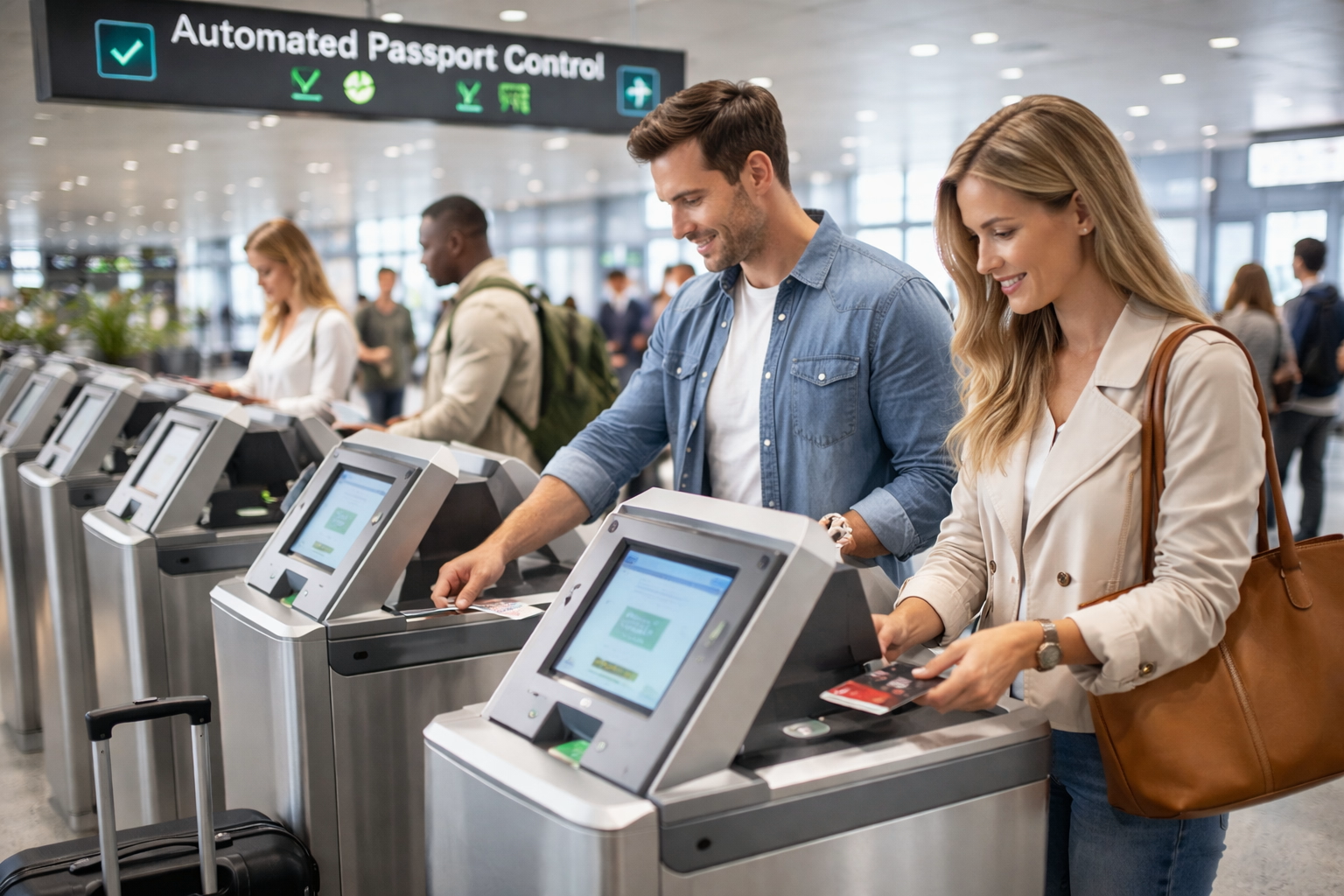
If you travel to the USA frequently, consider applying for Global Entry. This trusted traveler program allows pre-approved, low-risk travelers to use expedited kiosks at major U.S. airports, significantly reducing immigration processing time.
Australian citizens are eligible for Global Entry, which costs $120 USD and is valid for five years. The application process includes an online application, background check, and in-person interview.
The benefit? You’ll skip the regular immigration lines and use automated kiosks instead. For frequent business travelers or people with connecting flights, it’s absolutely worth it.
Common Mistakes Australian Travelers Make
Let me share some of the most common errors I’ve seen Australian travelers make when planning trips to the USA:
Applying for ESTA Too Late
While most ESTA applications are approved instantly, some require additional processing time. Don’t wait until the day before your flight to apply. Give yourself at least a week, preferably longer.
Using Third-Party ESTA Websites
These sites charge substantial markups for doing exactly what you can do yourself. They’re not scams per se, but they’re certainly not necessary. Stick with the official U.S. government website.
Overstaying the 90-Day Limit
This is serious. If you overstay your VWP authorization, even by a day, you’ll be barred from using the Visa Waiver Program in the future. You could also face difficulties entering other countries.
The 90 days starts counting from the day you arrive, not from when you pass through immigration. And no, you can’t reset the clock by taking a quick trip to Mexico or Canada, those days count toward your 90-day total.
Assuming ESTA Means You Can Work
You absolutely cannot work in the United States on the Visa Waiver Program. This includes remote work for Australian employers, freelance gigs, or any activity where you’re receiving compensation.
Business meetings, conferences, and contract negotiations are fine. Actual work is not. If you’re caught working on an ESTA, you’ll be deported and likely banned from re-entering the USA.
Not Checking Passport Expiry
Make sure your passport is valid for the entire duration of your stay. While the USA only requires validity through your departure date, you don’t want to risk any complications.
Dual Citizens and Special Situations
If you hold dual citizenship with Australia and another country, pay attention to which passport you use. Community discussions reveal some confusion about this topic.
If you’re an Australian-American dual citizen, you must enter the United States using your U.S. passport, not your Australian one. U.S. law requires U.S. citizens to enter and exit the country on their American passport.
If you’re a dual citizen of Australia and a non-VWP country, you can still use your Australian passport and ESTA to enter the USA, provided you meet all other requirements.
Previous Immigration Violations
If you’ve previously been denied a visa, deported, or removed from the United States (or any country), your ESTA application will likely be denied. In these cases, you’ll need to apply for a visa at the U.S. Embassy or Consulate, where you can explain the circumstances.
Being honest on your ESTA application is crucial. Lying about previous violations or criminal history will result in permanent inadmissibility to the United States.
Traveling with Children
Each traveler, regardless of age, needs their own ESTA authorization. This includes infants and children traveling on their own passports.
Parents or guardians can complete ESTA applications on behalf of minors, but each child must have:
- Their own Australian e-Passport
- Their own approved ESTA
- The $40 application fee paid
If you’re traveling with children who aren’t accompanied by both parents, CBP may ask for additional documentation proving you have permission to travel with the child. It’s not required, but having a letter of consent from the absent parent can prevent potential headaches at immigration.
Final Thoughts: Making Your USA Trip Smooth
So here’s the bottom line: Australian citizens don’t need a traditional visa for short tourism or business trips to the United States, but you do need to navigate the ESTA system correctly.
The process is straightforward if you plan ahead. Apply for your ESTA at least a week before departure, make sure your passport meets the requirements, and be prepared for the CBP inspection when you arrive. For most Australian travelers, entering the USA is remarkably simple compared to visa requirements for many other countries.
Where things get more complicated is when you’re planning to work, study, or stay longer than 90 days. In those situations, you’ll need to explore appropriate visa categories, whether that’s the uniquely Australian E-3 work visa, a student visa, or another classification that fits your circumstances.
The key is being honest about your intentions and choosing the right authorization type for your actual travel purpose. Don’t try to squeeze a square peg into a round hole by using ESTA when you really need a visa.
Ready to start planning your American adventure? Get your ESTA application sorted first, then focus on the fun stuff, whether that’s exploring national parks, catching a Broadway show, or closing that business deal you’ve been working toward.
The United States welcomes millions of Australian visitors every year, and with the right preparation, you’ll be among them without any immigration headaches.
Frequently Asked Questions
Most ESTA applications are approved within minutes of submission. However, some applications may be placed in “pending” status and can take up to 72 hours for a decision. Apply at least one week before your planned departure to avoid any last-minute stress.
No, you cannot extend your stay under the Visa Waiver Program. The 90-day limit is strict, and there are no extensions available. If you need to stay longer, you would need to leave the United States and apply for an appropriate visa category before returning.
If your ESTA application is denied, you’ll need to apply for a B-1/B-2 visitor visa at the U.S. Embassy or Consulate in Australia. This process involves completing the DS-160 form, paying the visa fee, and attending an in-person interview. The denial doesn’t necessarily mean you can’t travel to the USA, it just means you need to go through the traditional visa process.
Yes, even if you’re just transiting through a U.S. airport to reach another international destination, you need an approved ESTA. Everyone entering the United States must pass through immigration, regardless of whether they’re leaving the airport.
This is a gray area, but technically you shouldn’t be performing any work, even remote work for a foreign employer, while in the USA on the Visa Waiver Program. The safest approach is to take vacation time or arrange your work schedule so you’re not working during your U.S. visit. If your trip involves work activities, consider whether you need a B-1 business visa instead.
There’s no official minimum time you must wait between visits, but CBP officers may question travelers who make frequent extended stays. If you’re spending more time in the USA than in Australia, officers might suspect you’re trying to live in the United States without proper authorization. Space out your visits and ensure you have strong ties to Australia (employment, property, family) to demonstrate you’re a genuine temporary visitor.
Travel insurance isn’t required for ESTA approval or entry to the United States, but it’s highly recommended. Medical treatment in the USA is extremely expensive, and your Australian Medicare coverage doesn’t extend to America. A single emergency room visit can cost thousands of dollars. Comprehensive travel insurance covering medical emergencies, trip cancellation, and lost luggage is worth the investment.