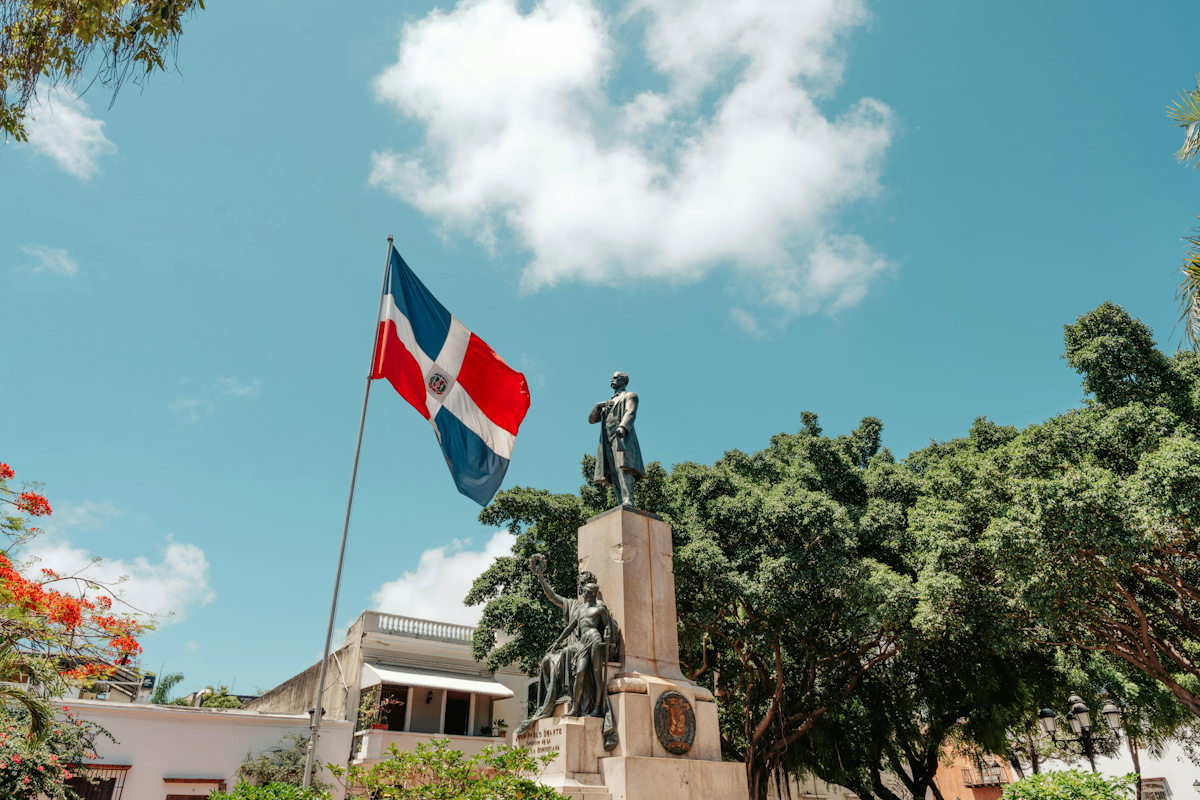
If you hold a passport from Dominica and you’re planning a trip to the United States, here’s the short answer: yes, you need a visa.
That hasn’t changed. What has changed recently is how the process works and what you should expect. There are new screening measures in place, and in some cases, applicants may need to post a bond before a visa is issued. It’s not a travel ban, but it’s also not as straightforward as it used to be.
Let’s break it down in simple terms.
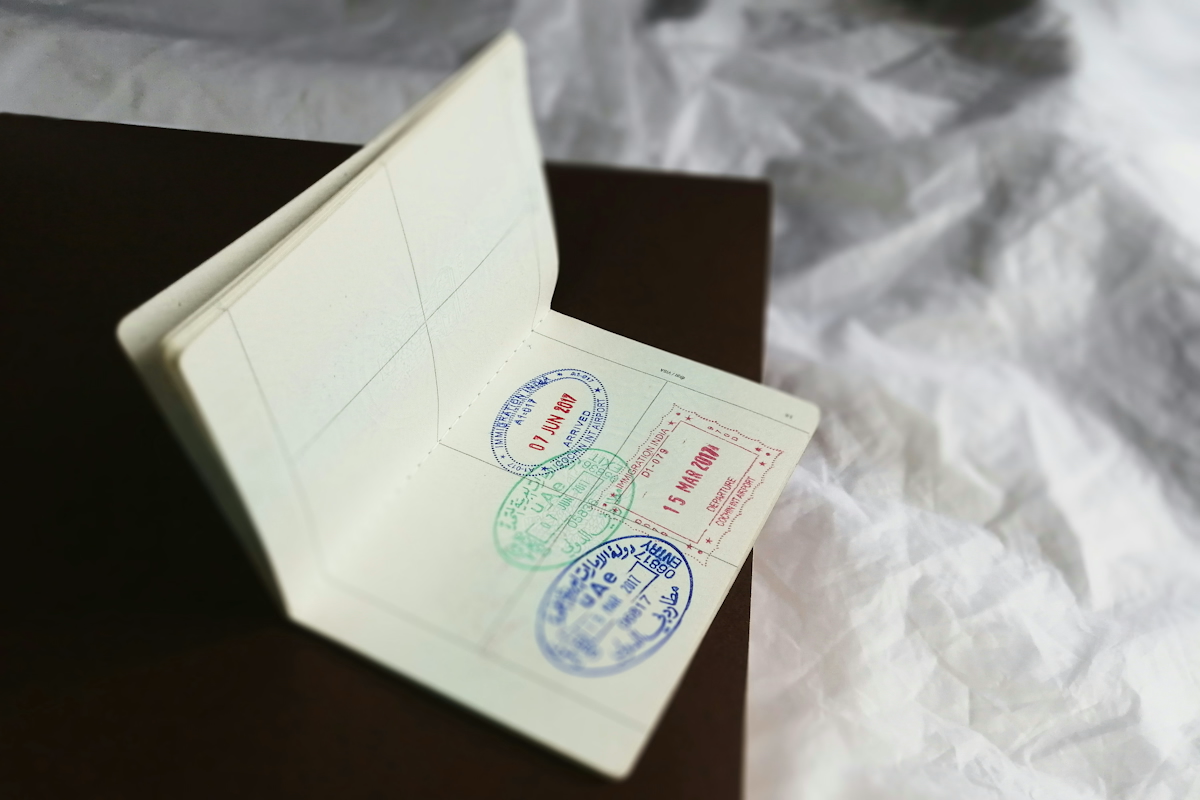
Visa Requirement for Dominica Passport Holders
Citizens of Dominica must obtain a U.S. visa before traveling to the United States for tourism, business, study, or immigration.
Dominica is not part of the U.S. Visa Waiver Program. This means you cannot apply for ESTA and travel without a visa. An approved visa must be placed in your passport before you board a flight to the United States.
For most short-term trips, travelers apply under the visitor visa category.
The Most Common Option – B1/B2 Visitor Visa
For short visits, the B1/B2 visa is the standard choice for Dominica citizens.
Here is how it works in practice:
- B1 visa: for business-related activities such as meetings, conferences, negotiations, or professional events.
- B2 visa: for tourism, visiting family or friends, medical treatment, or vacation travel.
If approved, the visa can be valid for up to 10 years. During that time, you may enter the United States multiple times.
However, visa validity is not the same as how long you are allowed to stay. Each visit is typically granted for up to 6 months, but the final decision is made by U.S. border officers when you arrive at the port of entry.
In short, the visa lets you travel to the U.S., but the length of each stay is determined separately every time you enter.

The Visa Services: Professional Support for Your U.S. Visa Process
Applying for a U.S. visa as a Dominica passport holder now requires more attention to detail. With current procedures becoming more structured, careful preparation is essential. At The Visa Services, we assist applicants at every stage of the process, whether it is an urgent U.S. visa, a regular B1 or B2 application, a renewal, or a U.S. student visa. Our team reviews documentation in detail, ensures forms are completed correctly, and helps arrange the required bookings and interview appointments without unnecessary stress.
Beyond U.S. visas, we provide support for Schengen, UK, Japan, Canada, and other destinations, along with UAE-based services such as residency permits, business setup, digital nomad visas, and bank account opening. Our focus remains the same – reduce errors, improve approval chances, and save clients valuable time by managing the paperwork properly from the start.
2026 Updates for Dominica Citizens
Beginning in January 2026, new entry measures were introduced under a U.S. presidential proclamation affecting several Caribbean countries, including Dominica and Antigua and Barbuda. These changes are classified as partial restrictions.
This is not a suspension of travel. Visa applications are still accepted, and interviews continue to be scheduled. However, additional review procedures now apply to certain applicants.
What Partial Restrictions Mean in Practice
Under the updated framework, applications from Dominica nationals may be subject to enhanced screening. This may involve broader background checks, a more detailed review of travel history, additional verification of identity documents, and in some cases, administrative processing.
For applicants, this can lead to longer processing times. Some cases are finalized quickly, while others require extended review depending on individual circumstances.
Processing Times Under the Updated System
There is no fixed timeline under the 2026 procedures. Some visas are issued within a few days, while others may enter administrative processing. In certain cases, review can take several weeks or longer.
Because timelines vary, applicants with fixed travel plans should apply well in advance. Booking non-refundable flights before visa approval carries financial risk.
The B1/B2 Visa Bond Requirement
Under the pilot program effective January 21, 2026, a Maintenance of Status and Departure Bond is mandatory for all first-time B1/B2 visa applicants from Dominica, unless a specific waiver, such as a humanitarian exception, is granted.
This means the bond is no longer imposed selectively. For eligible first-time applicants, it is a required part of the process. The consular officer’s discretion applies mainly to determining the bond amount, not to whether the bond must be imposed.
Key Points to Know
- The bond is mandatory for all first-time B1/B2 applicants from Dominica under the 2026 Pilot Program.
- The requirement applies regardless of the country where the visa interview takes place.
- The consular officer determines the bond amount, which may be $5,000, $10,000, or up to $15,000.
- A waiver may be granted in limited cases, such as humanitarian circumstances.
- The visa will not be issued until the bond is paid, if required.
- Payment must only be made if officially instructed by the US embassy or consulate.
- Bonds must not be paid through third-party or unofficial websites.
Why These Measures Were Introduced
According to U.S. authorities, the updated procedures are based on administrative and security reviews rather than diplomatic or political penalties. The evaluation focused on information-sharing systems between governments, passport issuance standards, the reliability of civil record systems, data related to visa overstays, and the effectiveness of fraud prevention and screening tools.
The broader objective is stronger identity verification and improved compliance monitoring. For applicants, the practical takeaway is simple: accurate documentation, transparency, and consistency now carry even greater weight in the visa review process.
How to Apply for a U.S. Visa as a Dominica Citizen
Let’s move to the practical side. If you’re applying for a B1/B2 visa, here is the typical process.
Step 1 – Complete the DS-160 Form
The DS-160 is the online nonimmigrant visa application. You’ll answer questions about:
- Personal background
- Employment
- Travel history
- Security questions
- Social media identifiers
Accuracy is critical. Inconsistencies can delay processing or result in refusal.
Step 2 – Pay the Visa Fee
The application fee is non-refundable. Even if your visa is denied, the fee is not returned.
Step 3 – Schedule Your Interview
Applicants generally attend their interview at the U.S. Embassy in Barbados, which handles services for Dominica and several other Eastern Caribbean nations.
Interview wait times vary. Always check current availability before making travel plans.
Step 4 – Prepare Your Documents
While the DS-160 contains most information, supporting documents strengthen your case.
Common documents include:
- Valid passport with at least six months validity
- Appointment confirmation
- Passport photo
- Employment letter or proof of business
- Bank statements
- Travel plan
- Evidence of ties to Dominica
Strong ties can include property ownership, steady employment, family obligations, or business commitments.
Step 5 – Attend the Interview
This is where many people get nervous. In reality, most interviews are brief.
Be clear. Be honest. Answer what is asked. Avoid volunteering unnecessary details.
If approved, your passport will be returned with the visa stamp. If additional processing is required, you may be asked to wait.
Permanent Relocation, Special Categories and U.S. Border Control
Beyond short-term visits, it is important to understand how current policies affect long-term immigration plans, certain traveler categories, and the final stage of entry into the United States. These aspects operate under separate procedures and should be viewed independently from standard visitor visa rules.
Immigrant Visa Processing
For individuals intending to relocate permanently, immigrant visa issuance for nationals of several Eastern Caribbean countries, including Dominica, is currently paused. Applicants are still permitted to file petitions, attend interviews, and complete all required documentation. However, even after completing these steps, final visa issuance may be temporarily suspended depending on policy implementation.
Although this measure does not directly change short-term travel procedures, it reflects a stricter overall review environment across immigration channels.
Categories Facing Fewer Complications
Certain groups are generally less impacted by these procedural adjustments. This includes U.S. permanent residents, diplomats traveling on official assignments, and individuals who already possess valid U.S. visas.
However, fewer complications does not mean automatic clearance. Each traveler is still subject to inspection upon arrival.
Inspection at the Port of Entry
A visa functions as permission to travel to a U.S. port of entry, not as a guaranteed right to enter the country. Upon arrival, a Customs and Border Protection officer evaluates the purpose of travel, intended stay, supporting documentation, return arrangements, and previous travel history.
When the information provided is consistent and aligned with the approved visa category, admission is typically straightforward. In some situations, additional questioning may occur. Maintaining consistency between your visa application and your answers at the border remains essential.
What to Expect and How to Prepare
The U.S. visa process for Dominica citizens is stricter than before, but approvals are still happening every day. It is not closed. It is simply more controlled and more detail-oriented.
Practical Advice
- Apply early. Waiting until the last minute creates unnecessary pressure.
- Check every answer on your DS-160 before submitting it. Small inconsistencies can cause delays.
- Bring clear and organized documents to your interview.
- Do not book expensive, non-refundable flights before your visa is approved.
- Be honest about your travel history.
- If a bond is required, follow only the official instructions given by the consular officer.
Most delays happen because of missing documents, unclear employment details, weak financial proof, or inconsistent answers. Preparation matters.
Can Dominica Citizens Still Get 10-Year U.S. Visas?
Yes, it is still possible.
The standard B1/B2 visa for Dominica nationals can be valid for up to 10 years, allowing multiple entries.
However, approval depends on individual evaluation. A 10-year visa is not guaranteed.
Even with new screening measures, many applicants continue to receive multi-entry visas.
Is the Process More Difficult?
In practical terms, the process is stricter than before. It is not closed or impossible, but it is more structured and closely reviewed. Applicants who present clear documentation and demonstrate genuine temporary travel intentions are still approved.
Challenges usually arise when there is weak financial evidence, unclear employment status, previous overstays in other countries, or inconsistent information. The system operates on risk evaluation rather than chance, which means well-prepared applicants remain in a strong position.
Conclusion
So, do Dominica citizens need a visa for the USA? Yes, they do. That part is simple. What is less simple is how the process now works in practice. The rules have tightened, reviews are more detailed, and in some cases additional requirements may apply. None of this means travel is off the table. It just means preparation matters more than it used to.
If the paperwork is clear, your travel purpose makes sense, and your documents are consistent, approvals are still happening every day. The system is structured, not arbitrary. Treat the application seriously, apply early, and avoid shortcuts. A U.S. visa is still very much within reach for Dominica passport holders who approach it properly.
FAQ
Yes. Even for a short vacation or family visit, Dominica passport holders must apply for a U.S. visa before traveling. The Visa Waiver Program does not apply to Dominica.
Yes, it is possible to receive a B1 or B2 visa valid for up to 10 years. However, validity depends on individual assessment. A long-term visa is common but not guaranteed.
No. A visa allows you to travel to a U.S. port of entry, but final admission is decided by the border officer. If your purpose of travel matches your visa type and documents are in order, entry is usually straightforward.
The review process is stricter and more detailed, but it is not impossible. Applications are assessed based on documentation, travel history, and proof of temporary intent. Strong, consistent applications continue to be approved.
It is wise to apply several weeks or even months before your planned travel date. Processing times vary, and delays can happen, especially if additional review is required. Planning ahead reduces unnecessary stress.