Hello, my name is Tamara. I am a passionate traveler and so far I have visited 50 countries.
This time I want to share my experience of Japan. Japan was one of my dream countries for many years, and after this trip it became my number one favorite.
This article is not a classic tourist guide. Here I collected historical places, cities, shopping spots, restaurants and everyday details that I personally look for when I travel. Everything is based on my own experience. I invite you to discover Japan with me, through my eyes, not in a very typical tourist way. I also truly hope this guide will help you plan your trip and feel more confident when you visit Japan.
Important Things to Know Before Visiting Japan
Before going to Japan, I strongly suggest learning about their rules and lifestyle. This is very important and helps you avoid uncomfortable moments.
For example, in Japanese restaurants they do not take tips at all. Leaving tips can even feel strange for them. People almost never use strong perfume, because respecting personal space is very important. In public transport people do not talk on the phone and usually speak very quietly. Silence is seen as respect, not coldness.
On escalators people stand and walk on different sides so they do not disturb each other. Cleanliness is another big part of daily life. You will notice there are very few trash bins, but streets are still very clean. People simply take their trash with them.
Japanese people always try to do everything perfectly. They even have a special way of thinking and living for this, called kodawari. It means doing things with care, focus and pride. I really recommend learning about it before your trip.
How Many Days Do You Need for Japan?
Now let’s talk about how many days you need for Japan. If, like me, you spend 10 or more hours flying to get there, I suggest planning at least 14 days. Japan is not a country you should rush. This way you can give enough time to each city and also have real rest, not only moving from one place to another.
Tokyo: Where to Stay and How to Plan Your Time
Let’s start with Tokyo. One of the most important things in Tokyo is choosing the right area to stay. Tokyo is huge, very dynamic and full of contrasts.
My advice is to first make a list of everything you want to do in Tokyo and only after that choose the area and hotel. This will help you save time and energy.
Tokyo Areas for First-Time Visitors
- Shinjuku – This is the Tokyo you see in movies. Very dynamic, active, full of lights, shopping malls and business life. Perfect if you want to feel the energy of the city.
- Shibuya – Similar to Shinjuku but more youthful and creative. If you are in your twenties or love street culture, this area is a great choice.
- Ginza – This is the luxury shopping area. Beautiful buildings, brand stores and a very elegant atmosphere. Calm but very stylish.
- Asakusa – A small Kyoto inside Tokyo. You are close to temples and traditional streets. The area is calmer and more authentic.
How Many Days to Spend in Tokyo
Once we know where to stay, let’s talk about how many days you need for Tokyo. We spent five days and it was enough to really enjoy the city without stress.
Historical Places in Tokyo
- Imperial Palace – This is the heart of Tokyo. Even if you only walk around it, it is worth visiting.
- Meiji Shrine – A peaceful place surrounded by nature, very different from the busy city around it.
- Asakusa Temple – The oldest and main Buddhist temple in Tokyo. Do not forget to buy souvenirs here and try street food nearby.
Art and Museums in Tokyo
For art lovers:
- TeamLab Borderless at Mori Building Digital Art Museum – Buy tickets in advance to avoid long lines. This place feels like another world.
- Nezu Museum – Very beautiful space with a calm garden and a nice cafe inside.
- Edo Tokyo Museum – Perfect if you want to understand how Tokyo changed through history.
- NACT – Great place for architecture lovers and for taking beautiful photos inside.
Shopping in Tokyo
Shopping in Japan is on another level. Even simple shops care about design, service and packaging. Shopping here feels like an experience, not just buying things.
- Ginza area – Best for brand stores, from mid range to luxury
- UNIQLO – Going to Tokyo and not going to UNIQLO is almost a crime. It is a symbol of Japan and you will see it everywhere
- Onitsuka Tiger – A must if you like sneakers and Japanese design
- Nose Shop – Perfect for perfume lovers who want something unique
- Vintage stores – Tokyo is a paradise for vintage lovers. Paradise Vintage, BOOKoff Super Bazaar, Ragtag, Vintage Qoo, Oedo Antique Market, Brand Collect
- Tamburins and Gentle Monster – Their store designs are famous all over the world. Even if you do not buy anything, it is worth visiting
- Don Quijote – Best place for skincare and everyday shopping. Huge choice and good prices
Where to Eat in Tokyo
- Suba VS
- A Happy Pancake
- The Original Pancake House
- Chachakoubou Futatsume
- Mugi to Mensuke
- Tsukiji Jogai Market
- Manten Sushi
- Fuunji
- Hatoya Asakusa
- Ebizo
Best Matcha Places in Tokyo
I am a big matcha lover, so I could not skip these places.
- Gokago
- Atelier Matcha
- The Matcha Tokyo
- Ogawa Coffee Laboratory
- Matcha Stand
Other Things to Do in Tokyo
- Shibuya Crossing
- Shibuya Tower
- Roppongi Hills
- Akihabara
- Karaoke clubs
- Game centers
How to Move Around Tokyo
The best way is by metro. Tokyo’s metro system is very advanced and easy to use. If you plan to use buses, always have cash with you. Cash is also needed in many restaurants.
Be ready that English is not spoken very well in Tokyo. Many people do not speak it at all. Using ChatGPT for communication helped a lot.
Kyoto: Calm, History and Mindfulness
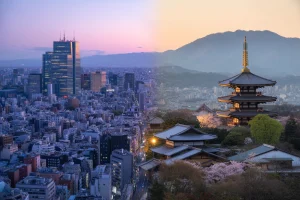
After five days in Tokyo, it is time for historical Kyoto. If Tokyo is dynamic, loud and fast, Kyoto is calm, quiet and deep. Here nature and people live together in harmony. Walking here feels slower and more mindful.
I suggest spending five days in Kyoto as well. There is a lot to see and no need to rush.
Historical Places in Kyoto
- Zen Buddhist Temple
- Ryoanji Rock Garden
- Golden Pavilion Temple
- Fushimi Inari Shrine
Shopping in Kyoto
- Malls and local shops
- Le Labo store
- Takashimaya department store
Food and Matcha in Kyoto
- Archi Coffee and Wine
- 2050 Coffee
- Comfy
- Actual Kyoto
- Matcha House
- Gokago
- Yakiniku Toku
- Izuu
- Gion Tanto
- Music Bar Universe
- Nishiki Market
Other Things to Do in Kyoto
- Try to see geishas in the Gion area
- Join a matcha ceremony
- Try cucumber and mandarin kimchi
- Visit the souvenir street near Kiyomizu Dera Temple
- Stay in a traditional style place
- Visit MOMA
How to Move Around Kyoto
We mostly used taxis and it was quite affordable. Use GO or Uber apps. In Kyoto, more people speak English compared to Tokyo.
Arashiyama: Nature and Peace
One day you must go to Arashiyama if you want to fully feel Kyoto. Nature there feels unreal and very peaceful.
Things to do in Arashiyama:
- Walk along the Hozugawa River
- Tenryu Ji Temple garden
- Bamboo forest walk
- Monkey Park Iwatayama
- Rent traditional Japanese clothes and take a boat ride
- Rurikoin
Nara: A Half-Day Trip with Deer and Temples
After falling in love with Kyoto, I suggest going for half a day to Nara. You can see deer walking freely and visit Todaiji Temple nearby. Half a day is enough in Nara.
Osaka: Food Capital of Japan
After that, go to Osaka, the favorite city for young people. Osaka is very different from Tokyo and Kyoto. It is dynamic, loud and full of life. It is also known as the food capital of Japan.
You must visit Dotonbori Street. I do not recommend visiting the castle, because time in Osaka is limited. It is better to walk, explore and eat well.
Where to Eat in Osaka
- Sushi Atsuya
- Ichiran Umeda
- Kura Sushi
- Katsukura
- Wagyu Idaten
- Fumiyoshi Shokudo
Final Thoughts and Travel Inspiration
Three and a half days in Osaka is enough. If you have more time, definitely visit Okinawa or Kamakura. And do not miss seeing Mount Fuji up close.
This is everything I wanted to share in this article. Japan stayed with me long after the trip ended. It is a country that changes the way you look at travel and everyday life. I hope this guide helps you feel inspired and confident.
I wish you a beautiful, interesting and unforgettable journey.
Visa to Japan for UAE Residents
If you live in the UAE and are planning a trip to Japan, you need to arrange your visa in advance. For residents of Dubai and Abu Dhabi, a Japanese tourist visa is issued through the consulate, and the requirements are quite strict.
Japan pays close attention to details. Even small mistakes in the application, an unclear itinerary, weak financial documents, or inconsistencies in paperwork can lead to a refusal, even for experienced travelers.
What documents are usually required
In most cases, the following documents are needed:
- a valid passport and UAE residence visa
- a completed application form
- a detailed travel itinerary
- hotel and flight bookings
- a bank statement
- proof of employment or business in the UAE
Requirements may vary depending on nationality, travel history, and purpose of travel.
Why many travelers use a visa service
Japanese visas often cause difficulties not because of the number of documents, but because of how they are structured and presented. The consulate expects a clear, logical, and transparent travel story.
A professional visa service helps:
- prepare and review documents correctly
- create an itinerary that meets Japanese requirements
- reduce the risk of refusal
- save a significant amount of time
When to start the application process
It is recommended to start the visa process several weeks before your trip. During high season, processing times may increase, and correcting mistakes after submission is not always possible.
If you are planning a trip to Japan and would like to handle your visa process without unnecessary stress, you can contact our team. We work with residents of Dubai and Abu Dhabi, understand the requirements of the Japanese consulate, and support our clients at every stage — from the initial consultation to document submission. Leave a request, and our consultant will contact you at a convenient time to review your case and travel timeline.
FAQ: Practical Questions About Traveling to Japan
No. This is a personal travel experience based on the author’s own impressions of Japan. It focuses on places, cities, restaurants, shopping spots, and everyday details that the author personally looks for when traveling, rather than following a standard tourist guide format.
Understanding local rules helps avoid uncomfortable situations. In Japan, people highly value quietness, personal space, and respect for others. Some things that are normal in other countries may feel inappropriate here.
Yes. Tipping is not practiced in Japan and may feel strange to locals. Good service is considered standard, not something that requires an extra reward.
People do not talk on the phone and usually speak very quietly on public transport. Silence is seen as a sign of respect, not coldness.
There are indeed very few trash bins, but people take their trash with them. Cleanliness is part of daily culture and personal responsibility.
Kodawari is a Japanese way of thinking that means doing things with care, focus, and pride. It influences food, service, design, daily life, and work culture throughout the country.
If your flight takes 10 hours or more, it is best to plan at least 14 days. Japan is not a country to rush, and a slower pace makes the experience much more enjoyable.
The author spent five days in Tokyo, which was enough to enjoy the city without stress.
First, make a list of what you want to see and do in Tokyo. Only after that should you choose the area and hotel, as this helps save time and energy.
For a first visit, good areas include:
Shinjuku – dynamic and energetic
Shibuya – youthful and creative
Ginza – calm and luxurious
Asakusa – traditional and authentic
In addition to temples and museums, Tokyo offers:
– game centers,
– karaoke clubs,
– areas like Akihabara and Roppongi,
– observation decks with city views.
Even simple stores pay great attention to design, service, and packaging. Shopping feels like an experience, not just a purchase.
Yes. For example, TeamLab Borderless tickets should be purchased in advance to avoid long queues.
In general, English is not widely spoken, especially in Tokyo. Many people do not speak it at all, so translation apps and AI tools can be very helpful.
The easiest way is by metro. If you plan to use buses, it is better to have cash. Cash is also needed in many restaurants.
If Tokyo is fast and dynamic, Kyoto is calm, quiet, and deeply historical. It offers a strong sense of harmony between nature and daily life.
The author recommends five days to explore Kyoto without rushing.
Yes. Arashiyama is a must-visit if you want to fully experience Kyoto’s nature and peaceful atmosphere.
Yes. Half a day in Nara is enough to see the freely roaming deer and visit Todai-ji Temple.
Osaka is lively, noisy, and known as Japan’s food capital. It is best enjoyed through walking, exploring, and eating well.
The author does not recommend it if your time is limited. It is better to focus on exploring the city and enjoying the food.