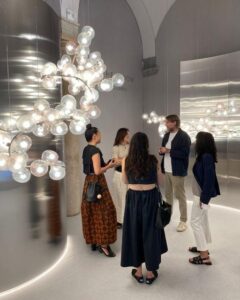
Once a year, Milan changes. For six days from 21 to 26 April 2026 the city turns into a gallery of design. Designers, brands, collectors, all come together for Milan Design Week, also known as Salone del Mobile. You get to see Milan in ways that are not obvious. Historic courtyards turn into galleries. Old industrial lofts become showrooms that pop up for a few days and then disappear.
For travellers from Dubai, Abu Dhabi, and across the UAE, this week offers a rare mix: serious design, late-night parties, and the chance to see Milan in its most creative way. This guide is for those who want to experience it all – from the big brand launches to the hidden courtyards that only locals know about.
Getting there and getting around
The Malpensa and Linate airports in Milan have direct flights from the UAE, sо this is the еasiest way to gеt here. You can сhооse: Malpensa is larger аnd handles most international arrivals, but Linate is closer to the city centre – about 20 minutes by taxi. Your possible ways to the city are below.
From Malpensa:
- Private car – around €100–130 for a ride to the centre of Milan. We kindly advise you to book it ahead during the Design Week.
- Malpensa Express train – €13 one way to Milano Centrale station, then take a taxi or metro to your hotel. This way feels more complicated, but it has almost no traffic jams.
From Linate:
- Taxi – about €25–35 to the city centre. The journey takes twenty minutes on weekends, but requires extra time during the week.
Where to stay in Milan
It is just a month before the exhibition, so the best hotels and apartments in central Milan are in high demand. But instead of rushing to book something non‑refundable, let us finalise your visa first, then book your accommodation with complete peace of mind.
We’ve helped many UAE travellers navigate this exact time. Our team can easily find visa appointment slots within 3–4 days of your first inquiry. Once your visa is confirmed, you’ll have the confidence to choose exactly where you want to stay, whether it’s a boutique hotel in Brera or a stylish apartment near the Navigli canals.
Don’t know how to choose accommodation? Below is a short information about each area, so you can decide where to go.
Brera. The heart of Design Week’s Fuorisalone. Historic palazzi, interesting workshops, and a relaxed village atmosphere. Here you’ll find Palazzo Parigi Hotel & Grand Spa – a palace with courtyard garden, perfect for luxury enjoyers. And if you are into the beautiful views and atmosphere of old money, choose Sina De La Ville with a rooftop bar.
Centro Storico. Some travellers prefer to stay right in the city centre, close to the Duomo. You get cultural landmarks and high‑end shopping steps away. Consider the Mandarin Oriental on Via Andegari – it has an excellent spa and a quiet garden.
Porta Nuova and Porta Garibaldi. These are Milan’s modern business districts. The famous Bosco Verticale – those towers covered in trees – is here. The area feels upscale and quiet on weekends. Good for those who like contemporary architecture. You could book The Square Milano Duomo for its minimalist look and rooftop pool. Or go with Room Mate Giulia for its colourful design.
Navigli. This is the canal district, with a bohemian vibe. If you enjoy independent galleries and spending time by the water, this area works well. The boutique hotels here are smaller than in other districts, but still cozy. Take Hotel Magna Pars Suites – it used to be a perfume factory. The suites are spacious, and there is a private garden. A good pick if you like design with industrial touches.
Pro tip: some visitors make the mistake of booking near Rho Fiera, where the Salone is held. Do not do this. Rho is a suburban exhibition centre with nothing around it. Stay in Milan and take the train or taxi to the fair.
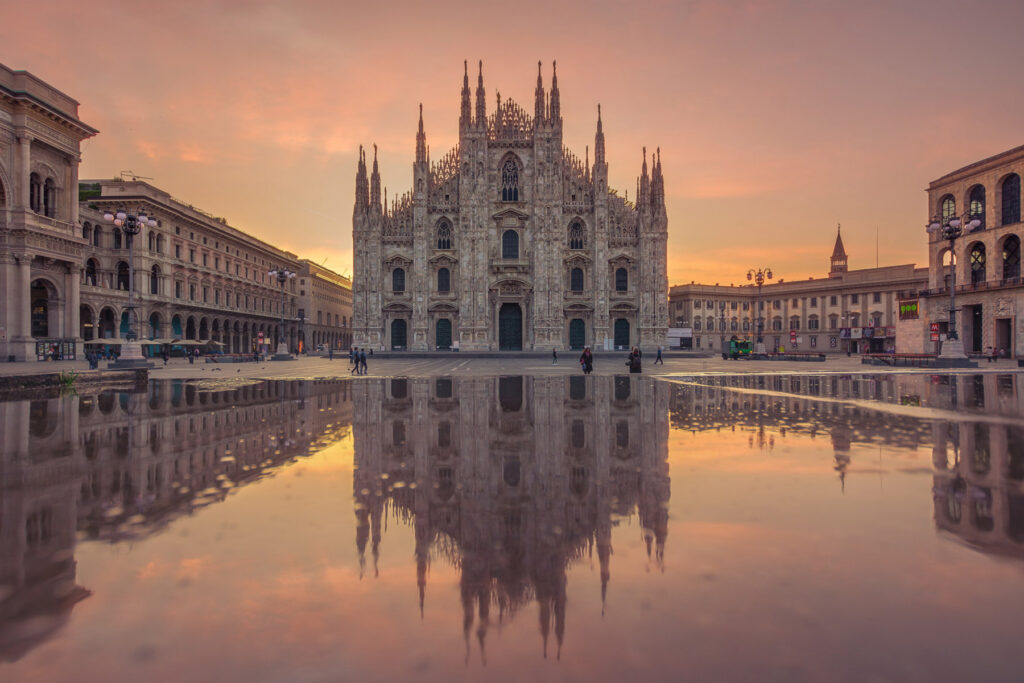
The main event: Salone del Mobile at Rho Fiera
The official fair runs from Tuesday to Sunday. It is really big: over 2000 exhibitors performed on more than 200 000 square metres. Can you see everything in one day? Of course, no, and you actually barely can explore the whole fair during the week, so pick your priorities.
The big names: Kartell, B&B Italia, Poliform, Cassina, Flos always have spectacular stands. In 2026, expect new collaborations and anniversary collections, Kartell is rumoured to be showing a re‑edition of a classic Philippe Starck piece. B&B Italia will likely unveil a new outdoor collection designed with contemporary architects.
But the fair is not just about famous brands. This week is a good chance for truly talented designers and small studios to get noticed. Don’t be shy, explore it all.
Entry is around €40–50 for a day pass. Book online in advance because the ticket office queues can be long. Dress comfortably – you will walk kilometres.
Why is Milan Design Week worth every moment
During design week, Milan becomes a city of discovery. Of course, the Salone is the main part of the week, but if you want to feel the soul of it all, the Fuorisalone is essential. It means “outside the fair” – hundreds of events, installations, showrooms, and parties across Milan’s neighbourhoods. Most of them are free to enter, some require invitations. Here are the main districts to explore.
Brera
It is the оldest part of Fuorisalone and also the most polished one. The mаin street, Via Solferino, gets packed with showrooms of top-level designers: Hermes, Louis Vuitton, Molteni, and others. Old palazzi open their courtyards for installations. Palazzo Cusani, for instance, usually hosts sоmething big from a major brand. You walk in and suddenly you are inside a piece of art.
A good walk through Brera: start at Piazza San Marco, then head down Via Solferino towards Piazza Cavour. If you see an open doorway that looks interesting – go in. That is how you find the best stuff. Stop for coffee at Pasticceria Marchesi on Piazza della Scala. It belongs to Prada, and the pastries are actually good, not just pretty. Afterwards, wander around Via Fiori Chiari and Via Madonnina. Those little streets have a lot of character.
Where to eat in Brera:
- Casa Del Jazz – live music, solid food, and a courtyard. We recommend you reserve a table ahead because the place is popular and can be crowded.
- Nerino Dieci Trattoria – classic Milanese cuisine, friendly vibe, and a wine list that locals do like.
- Dry Milano – cocktail bar that also does pizza. Not touristy at all, and surprisingly good.
Tortona
Tortona feels like Brera’s younger sibling. This used to be an industrial zone near Porta Genova station. Now it hosts two big event spaces – Superstudio Piu and Opificio 31, where emerging designers and streetwear brands come together. Expect experimental installations, pop‑up shops, and plenty of young people dressed in black.
What to look for: Superstudio’s Wallpaper Handmade exhibition is worth your time. Also keep an eye on Nike or Adidas – they often put up temporary installations around here.
Where to eat in Tortona:
- Ratana – really good Italian food in a relaxed atmosphere. Their risotto alla Milanese alone is worth the trip.
- Osteria del Binari – rustic, charming, a bit hidden: you should find it like a secret place. Better book ahead.
5Vie (Five Streets)
5Vie is the smallest of the Fuorisalone districts. It sits between the Duomo and the Navigli, with narrow medieval streets and small artisan workshops. The exhibitions here focus on crafts, materials, and design that doesn’t rush. Fewer crowds than Brera or Tortona – which is a blessing, honestly.
What to look for: find a local info point and pick up the 5Vie Design Week map. A lot of exhibitions are inside private apartments and studios that only open their doors during Design Week.
Where to eat in 5Vie:
- Ristorante Cracco – Carlo Cracco’s place with two Michelin stars near the Duomo. Formal, luxurious, and unforgettable.
- Trattoria Milanese – simple, old‑school, and genuinely good. Try the cotoletta alla Milanese.
Isola
Isola used to be a working‑class neighbourhood. Now it’s home to independent studios and younger designers. The atmosphere is more relaxed than Brera and way less commercial. You will find small galleries, co‑working spaces, and street art.
Walking route: start near the Bosco Verticale (that’s in Porta Nuova) and walk north into Isola. Explore Via Thaon di Revel and the side streets. Stop at Café Gorille for coffee and a bit of people‑watching.
Where to eat in Isola:
- Al Matarel – a historic Milanese restaurant, family‑run since 1946. The ossobuco is legendary.
- Pizzeria Assaje – Neapolitan pizza, seriously good, and open late.
Navigli
Navigli comes alive at night. During the day, you can visit small galleries and vintage furniture shops along the canals. But the real energy comes in the evening, when aperitivo takes over. Just order a drink, pay a little extra for the buffet, and stand outside with everyone else.
Where to go for aperitivo:
- Rita – a classic Navigli spot. Cocktails are good, buffet is fine.
- Mag Cafe – smaller, cozier, and usually less crowded.
For dinner:
- El Brellin – right by the canal, with romantic views. They serve Northern Italian cuisine.
- Trattoria Madonnina – straightforward Milanese food, fair prices, no fuss.
Pro tip: download the Fuorisalone app to navigate, but leave room for wandering. Some of the most memorable moments happen when you turn down a small alley and discover a courtyard with champagne brunch.
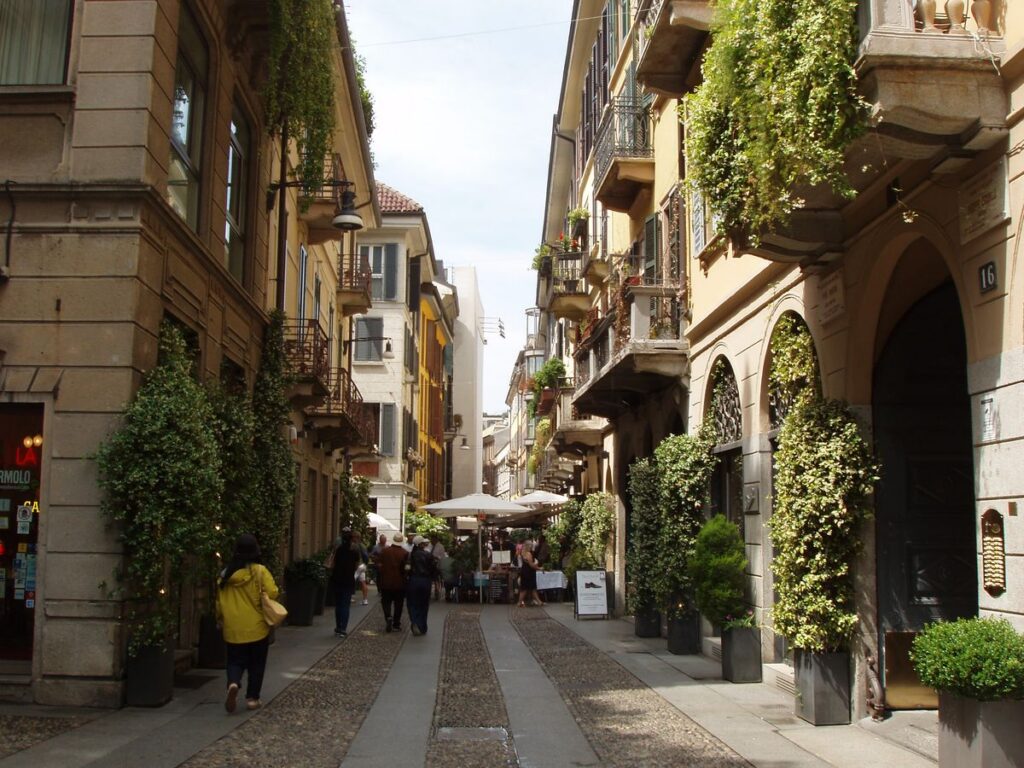
Design Week parties and nightlife
The evenings during Design Week are almost as important as the days. Many brands host invitation-only parties, but there are also some open events. Keep an eye on social media and the Fuorisalone app for last‑minute announcements.
Usually open to the public:
- Rossana Orlandi – a legendary gallery and garden space in the Magenta district. They host evening events with drinks and music.
- Palazzo Litta – a baroque palace in Corso Magenta that often hosts installations with evening openings.
- Bar Basso – this is where the Negroni Sbagliato was invented. During Design Week, it becomes a meeting point for designers and journalists.
Shopping beyond design
Milan is a fashion capital, and during Design Week, the boutiques feel especially well put together.
- Via Montenapoleone, Via della Spiga, Via Sant’Andrea – the quintessence of luxury. Prada, Gucci, Fendi, Valentino, Bottega Veneta – they are all there.
- Galleria Vittorio Emanuele II – the old arcade right next to the Duomo. Louis Vuitton has a beautiful store inside. So does Prada and Borsalino.
- Corso Como 10 – a concept store that mixes fashion, design, and books. The courtyard cafe is a nice spot to take a break. Close by the Villa Necchi Campiglio, a 1930s villa with its original furniture. You can visit it. A quiet place away from the crowds.
A quick escape to Switzerland
One of the pleasures of a Schengen visa is the freedom to explore beyond your main destination. Milan is just a few hours by car to Switzerland. Imagine spending four days inspired by the design, then taking a drive to Lugano, Zermatt or even the Alps for a completely different landscape. If you’re planning a multi‑country journey, we’ll make sure your visa supports it seamlessly. Many of our clients from the UAE combine Milan with other destinations, and we handle the visa details so they can enjoy the trip.
Ready to experience Milan Design Week?
Whether you’re planning to focus on the Salone, explore the Fuorisalone neighbourhoods, or combine Milan with a Swiss getaway, it’s time to start your Schengen visa. We know your time is valuable. On average, we save our clients over 30 hours – nearly an entire workweek – by handling every detail of the visa process. We’re based right here in Dubai, serving clients across the UAE.
Contact us today and we will handle the visa logistics while you look forward to the world’s most creative week. Let’s make it happen together.