



Quick Summary: Yes, Iranian citizens need a visa to visit the United States for any purpose. Iran is not part of the U.S. Visa Waiver Program, meaning all Iranian nationals must apply for and obtain either a nonimmigrant visa (for temporary visits) or an immigrant visa (for permanent residence) before traveling to the U.S. The application process involves submitting documents, attending an interview at a U.S. embassy in a third country, and meeting all eligibility requirements.
Planning a trip to the United States from Iran? The visa question isn’t just important—it’s mandatory. Unlike citizens from countries participating in the Visa Waiver Program, Iranian nationals cannot simply board a plane to America.
Here’s the thing: every Iranian citizen must secure a visa before entering U.S. territory. No exceptions. The process involves navigating application forms, interviews, and documentation requirements that differ based on the trip’s purpose.
This guide breaks down everything Iranian nationals need to know about obtaining a U.S. visa in 2026, including recent policy updates and practical application steps.
Understanding U.S. Visa Requirements for Iranian Nationals
The United States maintains strict entry requirements for Iranian citizens. Because diplomatic relations between the U.S. and Iran remain severed since 1980, there’s no American embassy in Tehran to process visa applications.
According to the U.S. State Department, Iranian nationals must apply for visas at U.S. embassies in third countries. The most common locations include Ankara (Turkey), Abu Dhabi (United Arab Emirates), and Yerevan (Armenia).
Iranian citizens face additional scrutiny compared to nationals from countries with normal diplomatic ties. This doesn’t make obtaining a visa impossible, but it does require thorough preparation and documentation.
Why Iranians Cannot Use the Visa Waiver Program
The Visa Waiver Program allows citizens from 40 participating countries to visit the U.S. for up to 90 days without obtaining a visa. Iran is not among these countries.
But there’s more. Even dual nationals who hold citizenship from a Visa Waiver Program country may face restrictions if they’re also Iranian nationals or have recently traveled to Iran.
The Visa Waiver Program Improvement and Terrorist Travel Prevention Act places additional limitations on individuals with Iranian nationality or recent travel history to Iran after March 1, 2011. These travelers typically cannot use the program and must apply for standard visas instead.
Types of U.S. Visas Available to Iranian Citizens
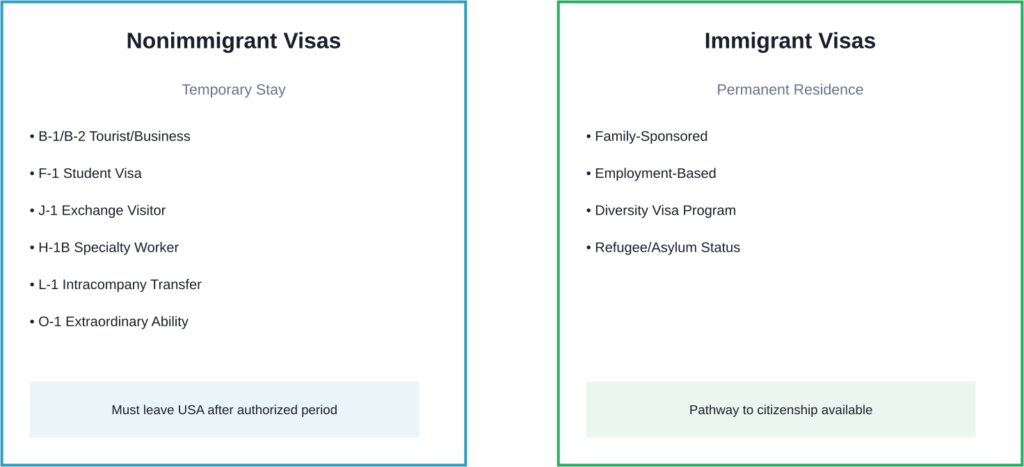
Iranian nationals can apply for various visa categories depending on their travel purpose. The U.S. immigration system divides visas into two main groups: nonimmigrant and immigrant visas.
Nonimmigrant Visas for Temporary Visits
Nonimmigrant visas allow temporary stays in the United States. These include:
- B-1/B-2 Visitor Visas: For tourism, business meetings, or medical treatment. The standard application fee is $185 for B-1/B-2 visitor visas.
- F-1 Student Visas: For academic studies at accredited U.S. institutions.
- J-1 Exchange Visitor Visas: For educational and cultural exchange programs.
- H-1B Work Visas: For specialty occupations requiring specialized knowledge.
- L-1 Visas: For intracompany transfers, though Iranian nationals lost eligibility for certain treaty-based visas.
Important note: As of October 2018, the U.S. terminated the 1955 Treaty of Amity with Iran. According to USCIS, Iranian nationals are no longer eligible for E-1 treaty trader and E-2 treaty investor visas based on that treaty.
Visa validity periods vary. According to the State Department, if a visa has a 60-month validity period, it remains valid for 60 months from the issuance date. But this doesn’t determine how long someone can stay—that’s decided at the port of entry.
Immigrant Visas for Permanent Residence
Iranian citizens seeking to live permanently in the United States must obtain immigrant visas. Common categories include:
- Family-Sponsored: Through immediate relatives who are U.S. citizens or lawful permanent residents.
- Employment-Based: Through job offers from U.S. employers willing to sponsor the applicant.
- Diversity Visa Program: The annual lottery that provides up to 55,000 visas, though no single country may receive more than 7 percent.
Real talk: immigrant visa processing for Iranians faces significant hurdles in 2026. Effective January 21, 2026, the State Department paused immigrant visa issuances to nationals of countries, including Iran, whose immigrants have a high rate of collecting public assistance.
Applicants from affected countries may still submit applications and attend interviews, but visa issuance remains suspended pending further review.
The U.S. Visa Application Process for Iranians
Obtaining a U.S. visa requires multiple steps. Iranian applicants should expect a lengthier process than nationals from countries with U.S. embassies.
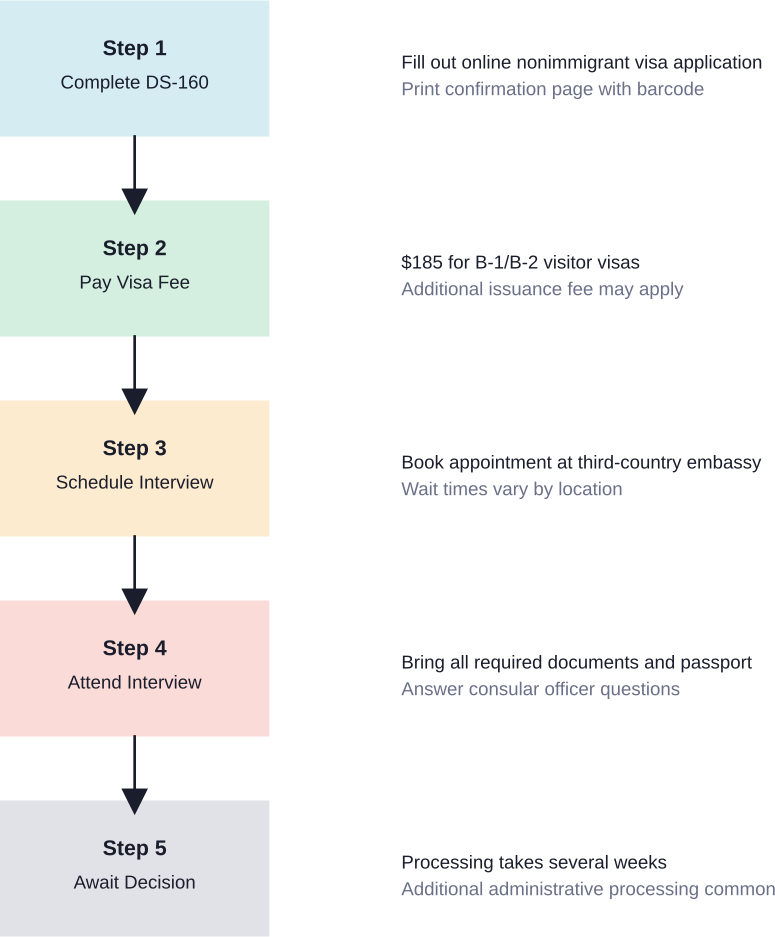
Step 1: Complete the DS-160 Form
All nonimmigrant visa applicants must complete the DS-160 Online Nonimmigrant Visa Application. This comprehensive form collects biographical information, travel plans, and background details.
After submitting the form, print the confirmation page with the barcode. This is required for the visa interview.
Step 2: Pay the Application Fee
The visa application fee varies by visa type. For B-1/B-2 visitor visas, the fee is $185. Depending on the applicant’s nationality and visa classification, additional issuance fees may apply after approval.
Payment methods depend on the embassy location where the application is processed.
Step 3: Schedule Your Interview
Iranian applicants must schedule visa interviews at U.S. embassies in third countries. According to State Department guidance, applicants should schedule appointments at the embassy in their country of nationality or residence when possible.
For Iranians, this typically means embassies in Ankara, Abu Dhabi, or Yerevan. Wait times for interview appointments vary significantly by location and season.
Step 4: Attend the Visa Interview
Bring all required documents to the interview:
- Valid passport with at least six months validity beyond the intended stay
- DS-160 confirmation page
- Application fee payment receipt
- Passport-sized photograph meeting U.S. requirements
- Supporting documents demonstrating ties to Iran and ability to fund the trip
Consular officers will ask questions about the travel purpose, financial situation, and plans to return to Iran. Answer honestly and directly.
Step 5: Await the Decision
Visa processing times for Iranian nationals typically extend beyond standard processing periods. Additional administrative processing is common and can add weeks or months to the timeline.
If approved, the visa will be placed in the passport. If denied, applicants receive a written explanation of the reason.
Current Restrictions and Policy Updates for Iranian Nationals
Understanding recent policy changes is critical for Iranian visa applicants in 2026.
Immigrant Visa Suspension
As noted earlier, the State Department paused immigrant visa issuances to Iranian nationals on January 21, 2026. This affects family-sponsored and employment-based immigrant visas.
The pause stems from concerns about high rates of public assistance collection. While applications can still be submitted and interviews scheduled, actual visa issuance remains on hold pending policy review.
Security Alerts and Travel Warnings
The U.S. Virtual Embassy Iran issues regular security alerts. Following recent U.S. combat operations in Iran, Americans worldwide—especially in the Middle East—should follow guidance from the nearest U.S. embassy or consulate.
These security situations can affect visa processing timelines and interview scheduling at regional embassies.
Visa Restrictions on Specific Individuals
On February 18, 2026, pursuant to Section 212(a)(3)(C) of the Immigration and Nationality Act, Secretary Rubio took steps to impose visa restrictions against 18 Iranian regime officials and telecommunications industry leaders, as well as their immediate family members. These targeted restrictions fall under the same legal authority.
These targeted sanctions don’t affect general Iranian citizens applying for standard visitor or immigrant visas.
Where Iranian Citizens Can Apply for U.S. Visas
Since the U.S. has no embassy in Iran, applicants must travel to third countries for visa interviews.
| Embassy Location | Advantages | Considerations |
|---|---|---|
| Ankara, Turkey | Proximity to Iran, established Iranian applicant procedures | Higher volume may mean longer wait times |
| Abu Dhabi, UAE | Modern facilities, English widely spoken | Travel costs higher than Turkey |
| Yerevan, Armenia | Growing option for Iranian applicants | Smaller embassy with fewer appointment slots |
Applicants should check current appointment availability and processing times at each location before booking travel.
No Processing in Iran
Since May 21, 1980, Switzerland has served as the Protecting Power for U.S. interests in Iran. The Swiss Embassy’s Foreign Interests Section in Tehran provides limited consular services to U.S. citizens but does not process visa applications for Iranian nationals.
All visa processing must occur outside Iran.
Tips for Strengthening Your Visa Application
Iranian applicants face heightened scrutiny. Strengthening the application increases approval chances.
Demonstrate Strong Ties to Iran
Consular officers evaluate whether applicants will return to Iran after their authorized U.S. stay. Strong evidence includes:
- Stable employment with a letter from the employer
- Property ownership or lease agreements
- Family relationships and responsibilities in Iran
- Educational enrollment with plans to return
- Bank statements showing financial stability
Provide Complete Documentation
Missing documents raise red flags. Prepare comprehensive financial records, travel itineraries, invitation letters from U.S. contacts, and any other supporting materials relevant to the visa category.
Be Truthful and Consistent
Inconsistencies between the DS-160 form, interview answers, and supporting documents can lead to denial. Prepare thoroughly and answer questions honestly.
Understand the Visa Category Requirements
Each visa type has specific eligibility criteria. A tourist visa requires different documentation than a student visa. Research the specific requirements for the intended visa category.
Alternatives and Special Considerations
Some Iranian nationals may have additional pathways or restrictions.
Dual Nationals
Iranian citizens who also hold citizenship from Visa Waiver Program countries face limitations. Recent travel to Iran or dual Iranian nationality typically disqualifies individuals from using the Visa Waiver Program.
These dual nationals must apply for standard visas even if their other nationality would normally allow visa-free travel.
Green Card Holders
Lawful permanent residents of the U.S. who are Iranian nationals don’t need visas to return to the United States. But they must maintain their permanent resident status and carry valid green cards.
Refugee and Asylum Seekers
Iranians seeking protection in the U.S. can apply for refugee status or asylum. These pathways have separate application processes outside the standard visa system.
Frequently Asked Questions
No. Iranian citizens cannot visit the United States without a visa. Iran is not part of the Visa Waiver Program, and all Iranian nationals must obtain appropriate visas before traveling to the U.S., regardless of the trip’s purpose or duration.
Processing times vary significantly. After the interview, standard processing takes several weeks. But Iranian applicants commonly face additional administrative processing that can extend the timeline by several months. Plan well in advance of intended travel dates.
Iranian nationals must apply at U.S. embassies in third countries since there’s no American embassy in Iran. The most common locations are Ankara (Turkey), Abu Dhabi (United Arab Emirates), and Yerevan (Armenia). Applicants should apply at the embassy in their country of residence or nationality.
The State Department doesn’t publish approval rates by nationality. Success depends on individual circumstances, documentation quality, and demonstrated ties to Iran. Thorough preparation and complete documentation improve approval chances.
Yes. Iranian students accepted to accredited U.S. institutions can apply for F-1 student visas. They must demonstrate acceptance to a Student and Exchange Visitor Program-certified school, sufficient financial resources, and intent to return to Iran after studies.
Since the 2018 termination of the Treaty of Amity between the U.S. and Iran, Iranian nationals cannot obtain E-1 treaty trader or E-2 treaty investor visas based on that treaty. Most other visa categories remain available, though immigrant visas face temporary issuance suspension as of January 2026.
Visa denials include written explanations citing the legal basis. Applicants can reapply if circumstances change or if additional documentation addresses the denial reasons. Some denials result from missing documents rather than ineligibility, making reapplication worthwhile after correcting deficiencies.
Conclusion: Navigating the U.S. Visa Process as an Iranian Citizen
Iranian citizens absolutely need visas to visit the United States. The process is more complex than for nationals of countries with normal U.S. diplomatic relations, but obtaining approval remains achievable with proper preparation.
Start early. Visa processing for Iranians takes longer than standard timelines, and additional administrative processing is common. Gather comprehensive documentation demonstrating strong ties to Iran and the specific requirements for the intended visa category.
Stay informed about policy changes. The suspension of immigrant visa issuances and ongoing security situations affect processing timelines and procedures. Check the U.S. Virtual Embassy Iran website for current updates before applying.
Ready to begin the visa application process? Visit the official State Department website to access the DS-160 form, review current visa fees, and find detailed instructions for scheduling interviews at U.S. embassies in third countries. Thorough preparation makes the difference between approval and denial.